
Kemet Yoga is one of the oldest movement systems on Earth, and it draws its name and philosophy directly from Kemet, which is the ancient Egyptian word for “the black land. If you’ve ever wondered where yoga truly began, it offers a unique answer rooted in Nile Valley civilization, long before yoga postures were codified in India. In this article, we will delve into what Kemet Yoga is, where it came from, which poses define it, and how one can start practicing it safely — even as a complete beginner.
Besides fast-paced fitness trends, Kemet Yoga is a slow flow yoga system based on breath, symbolism, and intentional movement. It connects with the body to ancient wisdom while extending measurable modern-day benefits like improved flexibility, reduced stress, and better posture. Now, let us explore its roots, its poses, and why so many practitioners are turning to it today.
What is Kemet Yoga?
Let us know what Kemet Yoga is, exactly. Fundamentally, it is a movement practice inspired by postures depicted in ancient Egyptian temple carvings, tomb art, and papyrus scrolls dating back thousands of years. The word “Kemet” refers to ancient Egypt itself, and Kemet Yoga was revived in the 20th century by scholars and practitioners studying Egyptian art and spiritual symbolism.
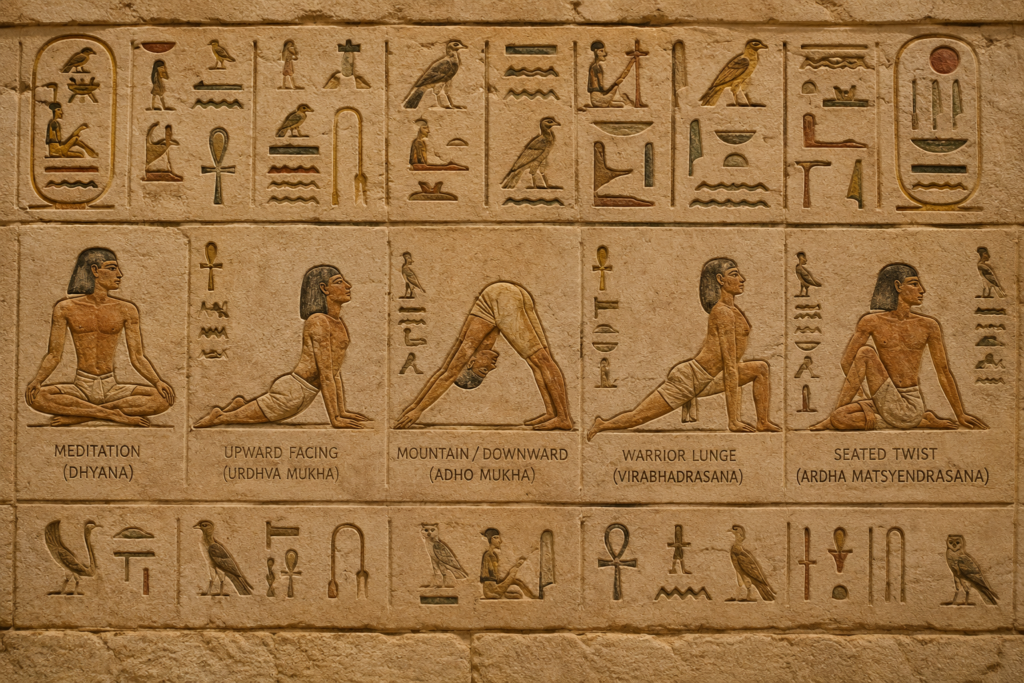
Kemet Yoga differs from mainstream Vinyasa or Hatha yoga in three key ways:
- Symbolic posture names — poses are often named after Egyptian deities, animals, or natural elements (e.g., the Sphinx, the Scarab, the Lotus).
- Slow, deliberate transitions—movements mirror a slow-flow yoga rhythm rather than rapid sequencing.
- Breath-centered philosophy — breath (or “ankh,” meaning life force) is treated as the primary engine of the practice, not a secondary component.
The Meaning Behind Kemet Yoga
The term Kemet translates to “black land,” referring to the fertile soil deposited by the Nile River’s annual flooding. Ancient Egyptians associated this fertility with rebirth, balance, and cosmic order—concepts directly embedded into Kemet Yoga sequences. Every posture is designed to align the practitioner with this same sense of internal balance.
Kemet Yoga History: Tracing Roots to Ancient Egypt:
Its history stretches back over 4,000 years, with visual evidence found in tomb paintings at sites like Saqqara and Beni Hasan. These carvings show figures in postures strikingly similar to modern yoga asanas — seated forward folds, warrior-like standing poses, and balancing postures.
Modern history credits researchers such as Dr. Yirser Ra Hotep, who in the 1970s began systematically studying these Egyptian artworks and developing a structured practice from them. His work laid the foundation for the Kemet yoga taught in studios worldwide today.
Ancient Egyptian Yoga and the Nile Valley Civilization
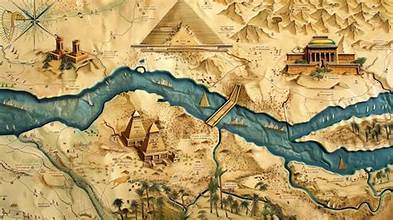
Ancient Egyptian yoga wasn’t practiced in isolation. Historians note that trade and cultural exchange between the Nile Valley and the Indus Valley civilizations may have influenced early movement and meditation practices in both regions. While direct historical linkage remains debated among scholars, the visual parallels between Egyptian temple art and early yogic postures are well documented in Egyptological research.
This connection matters because it reframes yoga not as a single-origin practice but as a shared human pursuit of physical and spiritual balance—with ancient Egyptian yoga representing one of its earliest visual records.
Key historical facts:
- Tomb art at Beni Hasan (circa 1900 BCE) depicts over 200 distinct body positions.
- Egyptian priests reportedly used movement and breathwork in temple rituals.
- The ankh symbol, representing life, is central to Kemet Yoga’s breathing philosophy.
Kemetic Yoga Poses You Should Know
Kemetic Yoga poses are typically named after Egyptian gods, animals, and sacred objects. Below are foundational Kemetic Yoga poses practiced in most beginner classes.
Core Kemetic Yoga Poses for Beginners
- The Sphinx — a gentle backbend that opens the chest and strengthens the spine.
- The Scarab — a grounding pose that mimics the beetle’s protective stance, improving core stability.
- The Lotus (Sesen)—a seated posture symbolizing rebirth, ideal for meditation and breathwork.
- The Pyramid — a standing forward fold that stretches the hamstrings and calms the nervous system.
- The Cobra (Wadjet)—a heart-opening backbend representing protection and vitality.
Sun Salutation-Style Movements in Kemet Yoga
While traditional sun salutations come from Hatha yoga, they also include a dedicated flow called the “slow flow,” honoring Ra, the Egyptian sun god. This sequence links breath to movement in a slow, continuous pattern—a hallmark of slow-flow yoga practice.
Practical tip: Hold each of these yoga poses for 5–8 breaths rather than rushing through transitions. This slower pace is what sets it apart from faster vinyasa-style classes and allows for deeper muscular engagement.
Kemet Yoga Benefits
Kemet Yoga benefits extend across physical, mental, and emotional health. Research on slow, breath-focused movement practices consistently shows measurable improvements in flexibility, stress reduction, and cardiovascular markers.
Physical Benefits
- Improves spinal flexibility and posture through backbend-focused poses like the Sphinx and Cobra.
- Builds core strength via grounding postures such as the Scarab.
- Enhances balance and joint stability through slow, controlled transitions.
- Supports lymphatic flow and circulation due to sustained breathing patterns.
Mental and Emotional Benefits
- Reduces cortisol levels through slow, rhythmic breathing (a documented effect of paced-breathing practices).
- Improves focus and mindfulness through symbolic, meditative posture work.
- Encourages emotional grounding by connecting movement to ancient symbolism and intention.
One of the most cited Kemet yoga benefits is its accessibility. Because the pacing is slower than power yoga, it’s suitable for people recovering from injury, older adults, and anyone new to structured movement practices.
Kemet Yoga for Beginners: How to Start
Kemet Yoga for beginners doesn’t require flexibility, prior yoga experience, or special equipment — just a mat, comfortable clothing, and 15–20 minutes.
Step-by-Step Beginner Routine
- Start seated in the Lotus pose. Close your eyes and take five slow breaths, inhaling for four counts and exhaling for six.
- Move into the Sphinx pose. Hold for 6–8 breaths, keeping shoulders relaxed away from the ears.
- Transition to the Scarab pose. Engage your core and hold for 5 breaths.
- Fold forward into the pyramid pose. Let your head hang heavy for 6 breaths to release tension in the neck.
- Finish in the Cobra pose. Lift gently through the chest, holding for 5 breaths before returning to a seated position.
This beginner sequence is intentionally simple, reflecting how Kemet Yoga for beginners should feel: unhurried, breath-led, and grounding rather than physically demanding.
Common Mistakes Beginners Make
- Rushing transitions—Kemet Yoga is a slow flow yoga practice; speeding through poses defeats its purpose.
- Ignoring breath cues—breath should always lead the movement, not follow it.
- Skipping warm-up — even gentle backbends like the Sphinx require a warmed-up spine to avoid strain.
Expert recommendation: If you’re new to Kemet Yoga, practice 2–3 times per week for four weeks before increasing session length. This gradual approach builds body awareness without overwhelming untrained muscles.
Kemet Yoga vs. Slow Flow Yoga: What’s the Difference?
Kemet yoga is often categorized under the broader umbrella of slow flow yoga, but it has distinct cultural and symbolic roots. “Slow flow yoga” generally refers to any practice emphasizing gradual transitions and breath synchronization, regardless of origin. Kemet Yoga, by contrast, specifically draws its poses, names, and philosophy from ancient Egyptian art and spirituality.
Pros and Cons of Kemet Yoga
Pros:
- Low-impact and beginner-friendly
- Rich historical and cultural context
- Effective stress and flexibility benefits
- Requires no special equipment
Cons:
- Fewer certified instructors compared to mainstream yoga styles
- Limited scientific research specific to Kemet Yoga (most evidence comes from broader slow-movement studies)
- May feel too slow-paced for those seeking high-intensity workouts
Expert Insight: Why Practitioners Recommend Kemet Yoga
Longtime instructors note that clients often report better sleep and reduced lower-back tension within the first month of consistent practice. This aligns with broader research on slow, breath-focused movement reducing sympathetic nervous system activity—the “fight or flight” response tied to chronic stress.
A common real-world example: office workers with sedentary jobs frequently experience tight hip flexors and rounded shoulders. Kemet Yoga’s emphasis on backbends (sphinx and cobra) and forward folds (pyramid) directly counteracts these postural imbalances, making it a practical, targeted solution rather than a generic wellness trend.
Conclusion
Kemet Yoga offers a rare combination: measurable physical benefits and a genuine connection to one of the world’s oldest civilizations. Whether you’re drawn to Kemet yoga for its slow flow yoga pacing, its symbolic Kemetic yoga poses, or its roots in ancient Egyptian yoga history, this practice rewards patience and consistency. Start with the beginner routine above, commit to three sessions this week, and notice how your body responds to movement designed thousands of years ago and still relevant today.
Ready to begin? Roll out your mat, take five deep breaths, and try the Sphinx pose right now—the first step into Kemet Yoga starts with a single breath.
FQA:
Q1: What is Kemet Yoga? Kemet Yoga is a movement practice based on postures found in ancient Egyptian art, emphasizing slow, breath-led transitions and symbolic poses named after Egyptian deities and natural elements.
Q2: Is Kemet Yoga good for beginners? Yes. Kemet Yoga for beginners is considered highly accessible because of its slow pacing, low-impact postures, and breath-focused structure, making it suitable for people with no prior yoga experience.
Q3: What are the main Kemet Yoga benefits? Kemet Yoga benefits include improved spinal flexibility, better posture, reduced stress, enhanced core strength, and greater mindfulness through breath-centered practice.
Q4: How is Kemet Yoga different from regular yoga? Kemet Yoga is rooted specifically in ancient Egyptian symbolism and art, while mainstream yoga styles typically trace back to Indian traditions. Both share breath-focused, posture-based philosophies.
Q5: What are common Kemetic Yoga poses? Common Kemetic yoga poses include the Sphinx, the Scarab, the Lotus, the Pyramid, and the Cobra—each named after Egyptian symbols and designed for specific physical and spiritual benefits.
Q6: Does Kemet yoga history connect to modern yoga? Kemet Yoga history dates back over 4,000 years to Egyptian tomb art, and while a direct historical link to Indian yoga remains debated among scholars, both traditions share striking visual and philosophical parallels.