Introduction: Nowadays, various types of fitness exercises/yoga postures are available throughout the world, ranging from ancient classical yoga to modern yoga. Maybe you are a new entrant in the exercise world/yoga world and curious to know about mat Pilates for increasing your strength and mobility, or you intend to be an instructor or want to know what Mat Pilates sets the foundation for in the fitness world. Today, in this busy world, Mat Pilates is being practiced worldwide, and this exercise has gained ground because it builds real functional strength with minimal equipment requirements, making it ideal for beginners and advanced practitioners as well.
Pilates has grown exponentially, competing with other yoga/exercise postures over the past decade, and has become an entry point for deeper learning. Many practitioners continue to go on to explore variations like reformer Pilates or breath-based approaches to movement in spite of experiencing the benefits of starting on the mat. We have seen that, through breath-based education (Pranayama), practitioners deepen their skills through consistent practice.
What is Mat Pilates?
Many experts describe this in different ways, but the crux is that Mat Pilates is a form of exercise to strengthen muscles, increase flexibility, and improve body alignment. While discussing Mat Pilates, we should know “how it originated and from where”. To answer this, the Pilates method was first brought to light by a German-born man named Joseph Pilates, who intended to develop a specialized form of exercise/fitness training that could help injured soldiers to rehabilitate from their deteriorating health condition and recover from their injuries. Later on, Mr. Joseph Pilates moved from Germany to New York City, where he opened the first Pilates studio. He termed this training method “Contrology” and designed it to include stretching and strengthening based on the principle of mindful practice, which builds the body.
Generally, there are six core principles of Pilates:
- Centering
- Control
- Concentration
- Flow
- Precision
- Breathing
While discussing Pilates, we have to mention the difference between Mat Pilates and Reformer Pilates.
Difference between Mat Pilates and Reformer Pilates:
Both these two types of Pilates, mat Pilates and reformer Pilates, are purely based on the core principle of Joseph Pilates for controlling movement, breathing, concentration, precision, and core management. The main difference is the equipment used and the type of resistance.
Mat Pilates is practiced on a cushioned mat and obviously without the help of a machine. Mat Pilates is practiced to control body weight and reduce abdominal muscles, hips, thighs, legs, back, and shoulders. Small props can also be used, such as resistance bands, Pilates balls, or rings, for the convenience of practicing at home, in any studio, or while travelling.
On the other hand, Reformer Pilates uses a specialized machine called a Reformer. It has a moving carriage, springs, ropes or steps, a foobar, and other components that allow resistance to be adjusted.
This equipment makes certain exercises more challenging while supporting a particular movement. Reformer Pilates is highly adaptable to various fitness levels.
Precisely, Mat Pilates uses the mat and the practitioner’s body weight; on the other hand, Reformer Pilates uses certain specialized equipment with adjustable resistance. Neither of these two is universally “better”—the right choice depends on the practitioner’s goal, experience, budget, and access to equipment.
Here is a table of distinctions:
| Aspect | Mat Pilates | Reformer Pilates | ||
| Equipment | Mainly uses a Pilates mat and body weight | Uses a specialized Reformer machine | ||
| Resistance | Primarily body weight and gravity | Springs, straps, pulleys, and body weight | ||
| Accessibility | Easy to practise at home | Usually requires access to a Pilates studio or Reformer | ||
| Cost |
|
Usually more expensive because of equipment and studio sessions | ||
| Core Strength |
|
Strong core training with adjustable resistance | ||
| Exercise Variety | Wide range of floor-based movements | Offers more movement and resistance variations | ||
| Support | The floor provides a stable surface | The carriage and springs can provide support or resistance | ||
| Difficulty | Can range from beginner to advanced | Can also range from beginner to advanced | ||
| Portability | Highly portable | Not portable | ||
| Best for | Home workouts, beginners, and convenient practice | Those wanting adjustable resistance, equipment-assisted movement, and greater exercise variety |
Mat Pilates vs. Yoga:
Both Mat Pilates and Yoga are low-intensity workouts that improve strength, flexibility, balance, and body awareness, but these two have different foundations and goals. Mat Pilates, developed by Joseph Pilates, focuses primarily on core strength, posture, stability, controlled movement, and muscular endurance. But on the other hand, yoga is an ancient Indian practice based on a broader approach by combining various physical postures.
Here is a table of distinctions: Yoga vs. Pilates
| Aspect | Yoga | Pilates |
| Origin | Ancient India | Developed by Joseph Pilates in the early 20th century. | ||
| Primary Focus | Mind, body, breath, flexibility, and spiritual awareness | Core strength, stability, posture, and controlled movement | ||
| Main Goal | Overall physical, mental, and spiritual well-being | Physical conditioning, strength, alignment, and body control | ||
| Philosophy | Traditionally connected with meditation, self-awareness, and spiritual practice | Primarily focused on physical movement and body conditioning | ||
| Breathing | Breathing practices can range from simple breath awareness to advanced Pranayama | Controlled breathing is coordinated with movement | ||
| Flexibility | Strong emphasis on stretching and improving flexibility | Improves flexibility, but strength and stability are usually emphasized | ||
| Core Strength | Core engagement varies by style and pose | Core activation is central to many exercises | ||
| Movement Style | Can include static poses, flowing sequences, and dynamic movements | Typically involves precise, repetitive, controlled movements | ||
| Balance | Strong focus on physical and mental balance | Focuses mainly on physical balance and stability | ||
| Meditation | Often an integral component, depending on the tradition or class | Generally not a central component | ||
| Spiritual Dimension | May include philosophy, meditation, ethics, and spiritual practices | Generally has a fitness and physical-conditioning orientation | ||
| Equipment | Often requires only a mat; blocks, straps, and bolsters may be used | Mat Pilates can require little equipment; Reformer Pilates uses specialised equipment | ||
| Posture and Alignment | Alignment is important, especially in therapeutic and traditional practices | Alignment and precise body positioning are fundamental | ||
| Intensity | Ranges from gentle to highly vigorous depending on the style | Ranges from gentle to challenging depending on the exercises and equipment | ||
| Best known for | Flexibility, mindfulness, relaxation, mobility, and holistic well-being | Core strength, stability, posture, muscular endurance, and controlled movement | ||
| Common Styles |
|
Mat Pilates, Reformer Pilates, Clinical Pilates | ||
| Suitability | People seeking physical fitness, flexibility, relaxation, mindfulness, or spiritual practice | People seeking core conditioning, strength, posture, and movement control |
Precisely, yoga has a broader scope, combining physical exercise with breathing, meditation, philosophy, and a spiritual dimension. Whereas Pilates is primarily responsible for a movement and conditioning system with particular emphasis on core strength, stability, posture, precision, and controlled movement.
Benefits of Mat Pilates:
Physical Benefits:
Core strength: Mat Pilates exercises have been designed to increase the muscles of the core, which includes the muscles of the abdomen, lower back, hips, and pelvis. Small and precise movements make a big difference. Two exercises are important in this context.
- The Hundred: The practitioner should lie on their back in an e-curve posture where the head and shoulders are lifted, the legs are lifted off the ground, and the arms are pumped up and down with deep breathing. It is called the “hundred” because you do 100 arm pumps while holding the position.
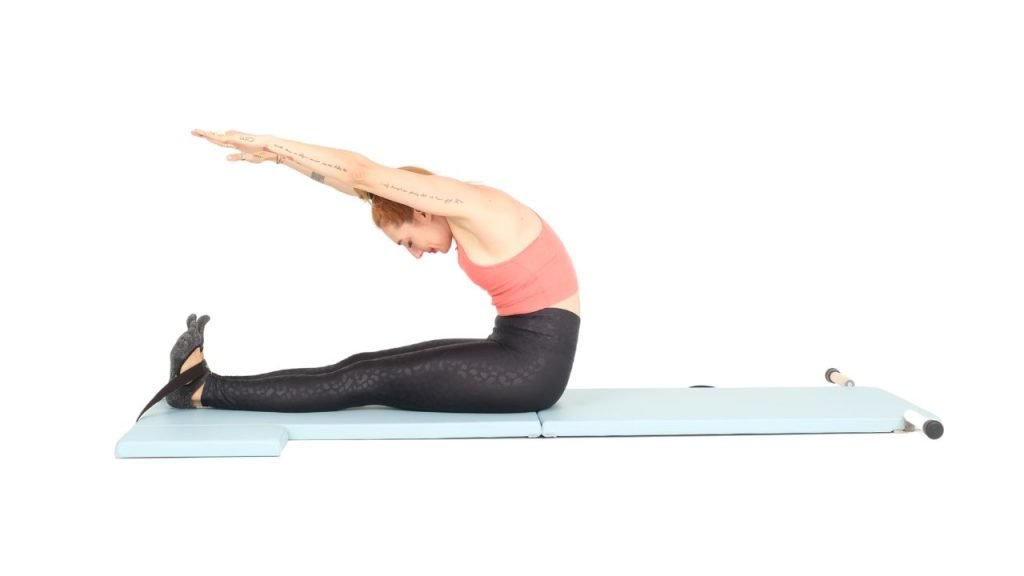
- The Roll Up: Initially, the practitioner should lie on their back with arms extended overhead. From this position, the practitioner should gradually lift their head, neck, and shoulders from the mat and then roll up the body until sitting upright with arms reaching towards the toes. Then slowly back down to the starting position and repeat thereafter.
Mental and Lifestyle Benefits of Mat Pilates:
- Mat Pilates promotes mindful movement by combining concentration, controlled breathing, and deliberate exercises. Regular practice may help to ease everyday stress, improve focus, and strengthen awareness of posture and body movement. Its structured approach can also encourage discipline, confidence, and consistency. Since it requires little equipment and can be practiced almost anywhere, Mat Pilates is easy to incorporate into a busy daily routine. Over time, it may support healthier movement habits and contribute to a more balanced approach to physical and mental well-being.
- Better Joint Health:
Regular movement can support joint mobility, flexibility, and stability, helping the body move more comfortably during daily activities. It may also promote better posture and coordination while reducing stiffness associated with inactivity.
Best Mat Pilates exercises for beginners:
The beginner-friendly Mat Pilates exercises are as follows:
- The Hundred
- Pilates Roll-Up
- Single-Leg Stretch
- Double-Leg Stretch
- Glute Bridge
- Swimming
- Spine Stretch Forward
- Leg Circles
- Plank
A short list of the above Mat Pilates exercises is given as follows:
The Hundred: The Hundred is a classic Mat Pilates exercise designed to activate the core, improve abdominal endurance, and coordinate breathing with controlled arm movements. It is usually performed lying on the back with the legs raised or extended while the arms pulse rhythmically.
The Pilates Roll-Up: The Pilates Roll-Up is a controlled mat Pilates exercise that strengthens the abdominal and core muscles while improving spinal mobility and flexibility. Starting from a lying position, you slowly roll the spine upward to reach toward the legs, then return to the starting position with control.
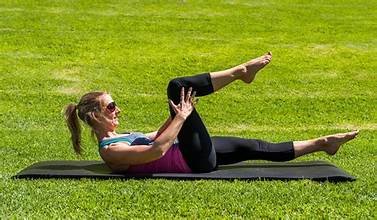
Single Leg Stretch: The Single-Leg Stretch is a classic Mat Pilates exercise that strengthens the abdominal muscles while improving core stability and coordination. Performed while lying on the back, it involves extending one leg while drawing the other toward the body, alternating the legs with slow, controlled movements.
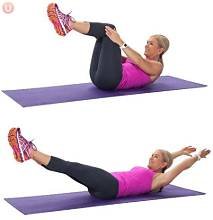
Double Leg Stretch: The Double-Leg Stretch is a classic mat Pilates exercise that strengthens the abdominal and core muscles while improving coordination and body control. It involves drawing both knees toward the chest and then extending the arms and legs outward before returning to the starting position in a slow, controlled motion.
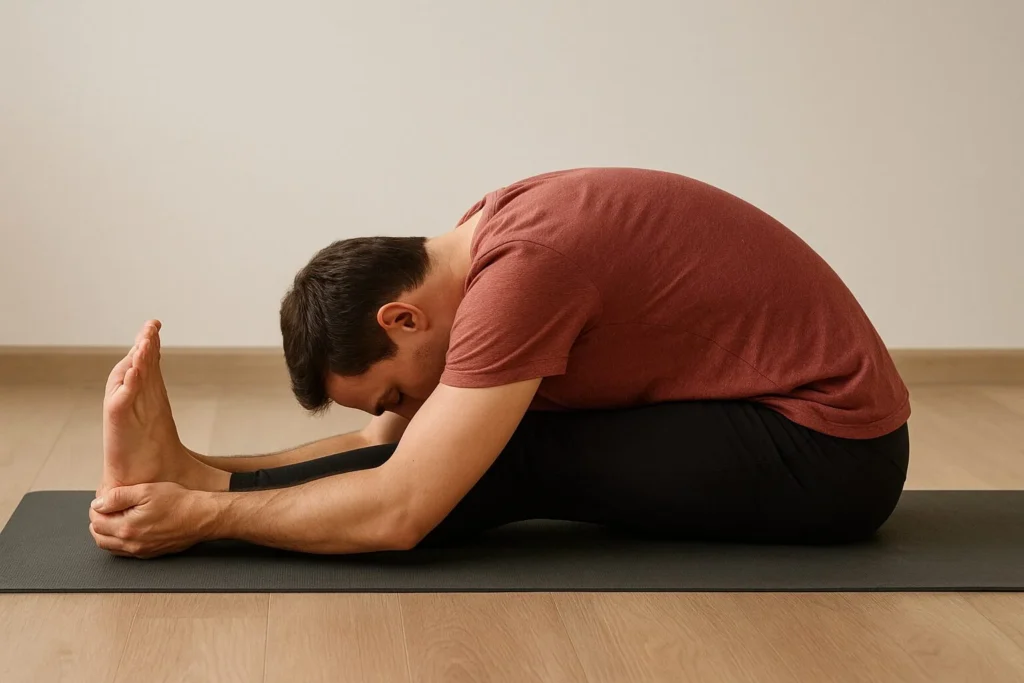
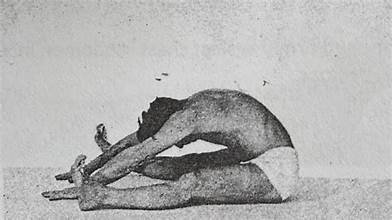
Spine Stretch Forward: Spine Stretch Forward is a classic Mat Pilates exercise that promotes spinal mobility, improves flexibility, and strengthens the core. Performed while seated with the legs extended, you gently round the spine forward while reaching toward the legs, then return to an upright position with controlled movement.
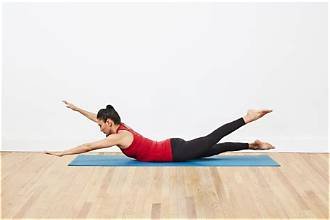
Swimming: Swimming is a Mat Pilates exercise that strengthens the back, glutes, shoulders, and core while improving coordination and spinal stability. Performed lying on the stomach, it involves lifting opposite arms and legs and alternating them in a controlled, rhythmic movement, similar to swimming.
Glute Bridge: The Glute Bridge is a simple mat Pilates exercise that strengthens the glutes, hamstrings, and core while supporting hip mobility and pelvic stability. Performed lying on the back with the knees bent, you lift the hips slowly from the floor and lower them with controlled movement.
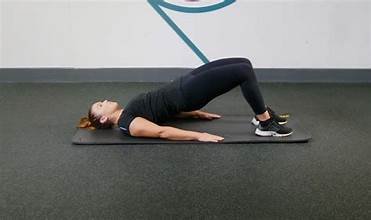
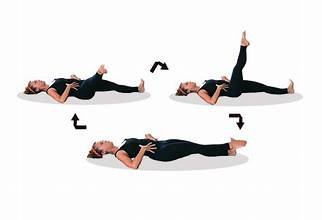
Leg Circles: Leg Circles is a mat Pilates exercise that strengthens the core while improving hip mobility, leg control, and pelvic stability. Performed while lying on the back, one leg is extended upward and moved in controlled circular motions while keeping the pelvis stable and the movement smooth.
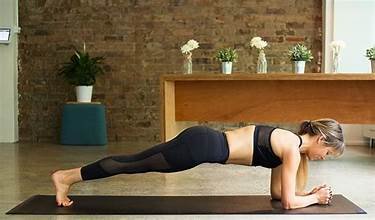
Plank: The plank is a Mat Pilates exercise that strengthens the core, shoulders, arms, back, and legs while improving overall stability and body alignment. By holding the body in a straight, supported position, it develops muscular endurance and encourages controlled, mindful movement.
How to start Mat Pilates at Home:
It is an easy process to start Mat Pilates at home. It requires one comfortable Pilates mat and a quiet space where the practitioner can move freely. Initially, start with 10-15 minutes, and do that 2-3 times/week. Special focus should be on The Hundred, Glute Bridge, Leg Circles, and Spine Stretch with controlled breathing and body alignment rather than speed and repetition. Gradually increase the duration, keeping in view the difficulty in practice.
A Simple 20-Minute Mat Pilates Routine:
A beginner-friendly routine:
- Warm-up
- Core activation
- Lower-body exercises
- Upper-body/core exercises
- Stretching and cool-down
Include approximate repetitions or time for each movement.
Common Mistakes to Avoid: Practitioners should avoid rushing through exercises, holding their breath as per limitations, or using momentum instead of controlling movement. Should maintain proper posture and alignment, engage the core correctly, and avoid overextending joints. Beginners should avoid advanced exercises soon. Focus should be paid on technique, breathing, and control rather than the number of repetitions.
Conclusion: Mat Pilates is a simple, low-intensity exercise that can improve core strength, flexibility, balance, posture, and body control. Minimal equipment is required, and it can be practiced at home or in a studio. With consistent practice and controlled movement, proper breathing is the key factor for gaining the most from Mat Pilates practices. Whether you are a beginner or an experienced fitness enthusiast, Mat Pilates can be a true addition to a balanced and active lifestyle.
FAQ:
What is Mat Pilates?
Ans: Mat Pilates is a form of Pilates performed on a floor mat (rather than on specialized equipment like the Reformer). It was developed by Joseph Pilates in the early 20th century as the original form of the exercises (equipment-based Pilates came later). It’s low-impact, requires minimal equipment (just a mat), and is great for building core strength, improving flexibility, and enhancing overall body awareness—suitable for most fitness levels.
Is Mat Pilates Good for Beginners?
Ans: Yes—Mat Pilates is beginner-friendly since it’s low-impact, requires no equipment, and moves can be scaled to your fitness level. Just start with a basic class or beginner routine to learn proper form first.
Do you need equipment for Mat Pilates?
Ans: No — just a mat. Optional extras like a small pillow, resistance band, or Pilates ring can add variety, but they’re not required.
Can Mat Pilates be practiced at home?
Ans: Yes—all you need is a mat and a bit of floor space, making it one of the easiest workouts to do at home. Many free routines and videos online can guide you through it.
How long does it take to see results?
Ans: With consistent practice (2–3 times a week), you can notice improved core strength and posture within 4–6 weeks, though visible body changes may take a bit longer.
Is Mat Pilates better than yoga?
Ans: Neither is strictly “better”—Mat Pilates focuses more on core strength and muscle toning, whereas Yoga emphasizes flexibility, breathing, and mind-body relaxation. The best choice depends on personal goals.
Can I practice Mat Pilates every day?
Ans: Yes, it’s generally safe to practice daily since it’s low-impact, but 3–4 sessions a week with rest days is often recommended to let muscles recover and avoid overuse.