
Here, we will go threadbare on the topic of the future of yoga, at a time when we have reached the intersection of a 5,000-year-old tradition and technology that didn’t exist five years ago. A thumping number of people throughout the world are at the crossroads of yoga, the gym, or tech-driven yoga. Therefore, they have been searching for “the future of yoga” and also asking a bigger question: can an ancient practice built on breath, stillness, and self-awareness survive and thrive in a world of AI, hybrid work, and digital burnout? The evidence says yes. Studios are adding smart mats. Hospitals are prescribing yoga alongside medication. Corporations are budgeting for it as they budget for health insurance and corporate social responsibility. The future of yoga isn’t a prediction anymore; it’s already unfolding in gyms, clinics, and living rooms around the world.
This article will break down exactly where yoga is headed, backed by real trends, expert insight, and practical steps you can take today.
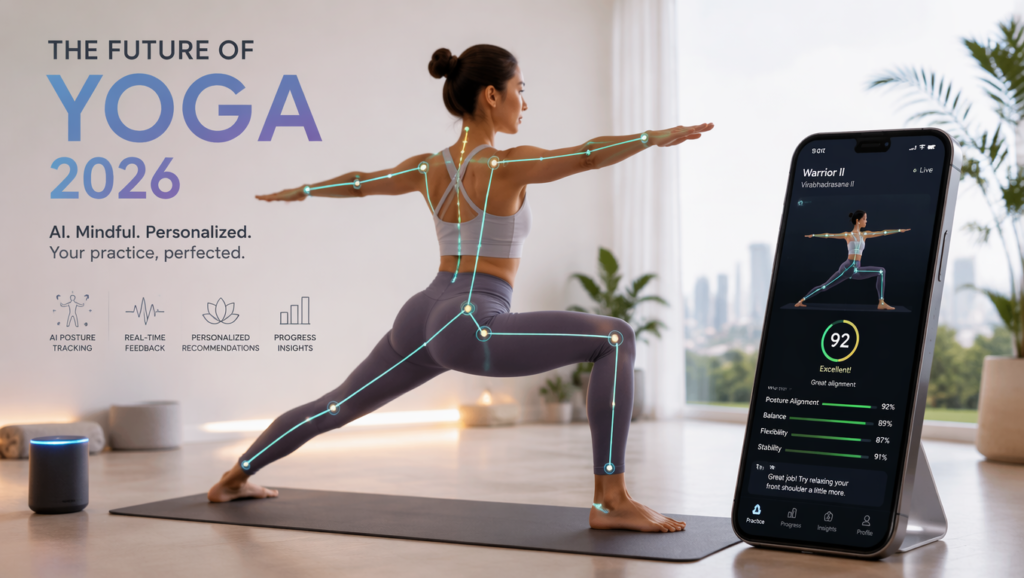
Why 2026 Could Be a Landmark Year for Yoga
Every so often, an ancient practice hits a tipping point. The future of yoga in 2026 looks like one of those years for yoga.
Three forces are converging:
- Mental health awareness has gone mainstream, and yoga sits at the center of non-drug interventions.
- Workplace wellness budgets are growing, with corporate yoga programs becoming standard rather than optional.
- AI-powered fitness tools are making personalized instruction accessible to anyone with a phone.
Why 2026 could be a landmark for yoga comes down to timing. The wellness economy is now valued in the trillions globally, and yoga — unlike many fitness trends — has 5,000 years of credibility behind it. That combination of ancient trust and modern demand is rare, and it’s exactly why this year matters.
Top Yoga Trends Shaping the Future of Yoga in 2026
Understanding the top yoga trends shaping the future of yoga in 2026 helps practitioners, teachers, and studio owners prepare rather than react.
Personalized, Data-Driven Practice
Wearables and apps now track heart rate variability, flexibility progress, and breath patterns during practice, adjusting sequences in real time.
Micro-Sessions Over Long Classes
Busy schedules are pushing demand toward 10–15-minute sessions rather than the traditional 60–90-minute class.
Hybrid Studios
Physical studios are pairing in-person classes with on-demand libraries, giving members flexibility without losing community.
Therapeutic Specialization
Teachers are increasingly certifying in trauma-informed yoga, prenatal yoga, and yoga for chronic pain—narrow niches with strong demand.
These top yoga trends shaping the future of yoga in 2026 share one theme: personalization at scale, without losing the human element that makes yoga effective in the first place.
How Artificial Intelligence Is Transforming Yoga
How artificial intelligence is transforming yoga is one of the most-searched questions in the wellness space right now, and that too for good reason.
AI tools today can:
- Analyze posture through a phone camera and flag alignment issues instantly
- Generate custom sequences based on injury history, goals, or available time
- Translate instructions in real time, opening classes to global, multilingual audiences
- Predict burnout or overtraining using biometric data from wearables
Last year, an industry survey by the Global Wellness Institute found that fitness apps using AI-driven personalization saw user retention rates roughly 30–40% higher than static, one-size-fits-all programs. That’s a meaningful signal: how artificial intelligence is transforming yoga isn’t about replacing teachers — it’s about giving them better tools and giving students better feedback between classes.
The Limits of AI in Yoga
AI can correct a pose. It cannot replace a teacher’s ability to sense when a student is emotionally overwhelmed, physically unsafe, or ready to be pushed further. The best programs in 2026 use AI as an assistant, not a substitute.
The Future of Yoga in Online Yoga Classes
The future of online yoga classes looks less like a pandemic-era workaround and more like a permanent, sophisticated category of its own.
What’s changing:
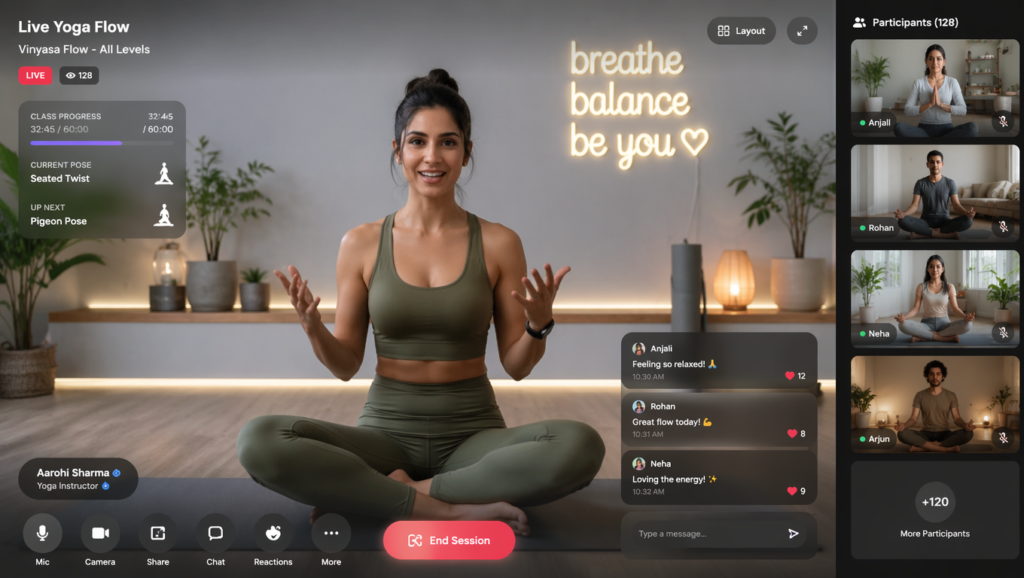
- Live interactive classes with real-time form correction via camera
- On-demand libraries organized by goal (sleep, flexibility, stress, strength) rather than just style
- Community features — leaderboards, group challenges, and accountability partners
- Subscription bundles combining yoga with meditation, nutrition, and sleep coaching
The future of yoga in online yoga classes also means lower barriers to entry. Someone in a small town with no studio nearby now has access to world-class instruction. That democratization is arguably the single biggest shift in how yoga will be taught over the next decade.
Yoga and Mental Health in 2026
Yoga and mental health in 2026 are more tightly linked in public conversation and clinical research than at any point in the practice’s modern history.
Studies published in journals like Frontiers in Psychiatry have repeatedly linked regular yoga practice to reduced cortisol levels, lower reported anxiety, and improved sleep quality. As anxiety and burnout rates climb globally, yoga and mental health in 2026 are being discussed not as a lifestyle choice but as a legitimate, low-cost intervention.
Key applications include:
- Anxiety and stress management through breathwork (pranayama)
- Trauma recovery, especially trauma-sensitive yoga programs
- Sleep improvement via restorative and yin styles
- Workplace burnout prevention, tied closely to corporate programs
Therapists are increasingly recommending yoga as a complementary practice alongside talk therapy — not a replacement for professional mental health care, but a powerful addition to it.
Corporate Yoga Will Continue to Expand
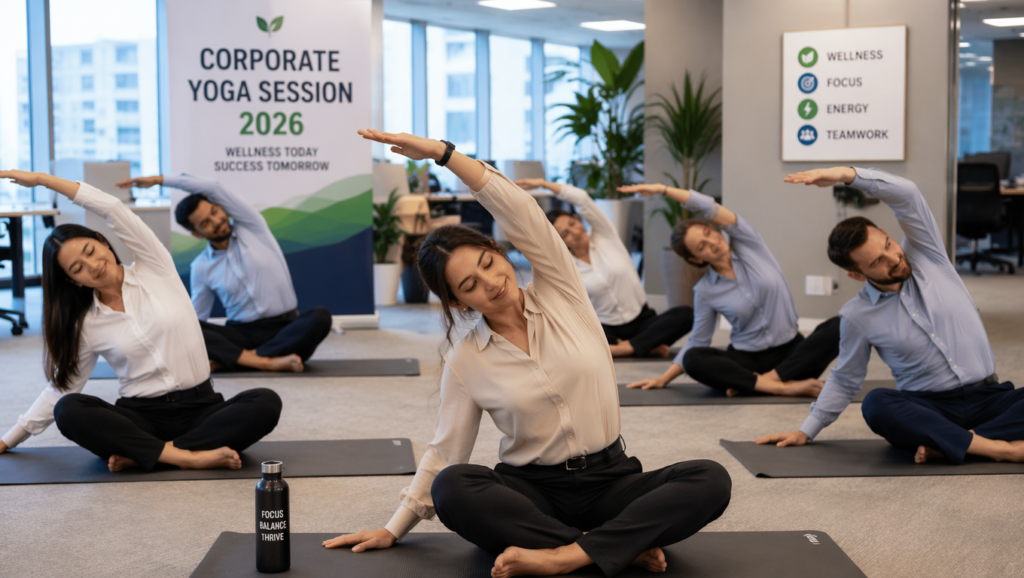
Corporate yoga will continue to expand in 2026 as companies compete for talent in a tight labor market.
Why companies are investing:
- Lower reported absenteeism among employees in wellness programs
- Improved focus and reduced workplace stress
- Stronger retention in competitive industries like tech and finance
- A visible signal of company culture during recruitment
Corporate yoga will continue to expand beyond just tech giants. Mid-sized companies, hospitals, and even manufacturing firms are adding short on-site or virtual sessions, often just 15–20 minutes during a workday, recognizing that a short reset can meaningfully impact afternoon productivity.
The Growing Role of Yoga in Healthcare
The growing role of yoga in healthcare is perhaps the most credibility-building trend of all.
Hospitals and clinics are now integrating yoga into treatment plans for the following:
- Chronic lower back pain, where yoga has shown results comparable to physical therapy in several clinical trials
- Cardiac rehabilitation, using gentle yoga to support recovery
- Cancer care, where restorative yoga helps manage fatigue and stress during treatment
- Prenatal and postnatal recovery programs
The growing role of yoga in healthcare means insurance coverage is slowly expanding too, with some providers in the US and Europe now reimbursing yoga therapy sessions when prescribed by a physician. This shift from “alternative” to “integrative” medicine is a major marker of how far yoga has come.
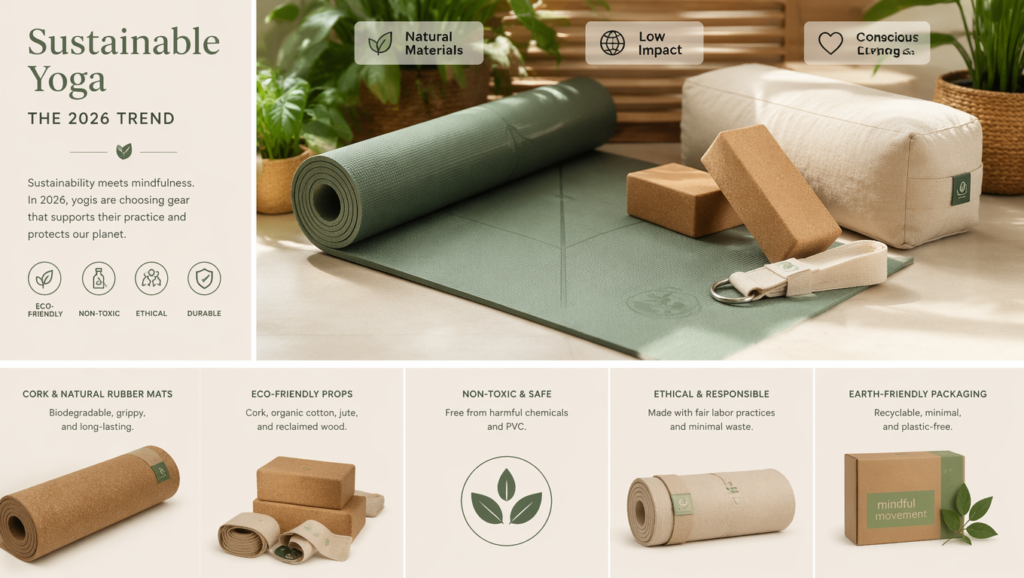
Sustainable Yoga: A Major Trend in 2026
Sustainable yoga — a major trend in 2026 — reflects a broader consumer shift toward eco-conscious choices.
This includes:
- Eco-friendly mats made from natural rubber, cork, or recycled materials instead of PVC
- Studios reducing energy use, from lighting to heating systems
- Ethical, fair-trade yoga apparel replacing fast-fashion activewear
- Locally sourced, small-batch props over mass-produced plastic blocks
Sustainable yoga as a major trend in 2026 also ties back to yoga philosophy itself. The Yamas—yoga’s ethical guidelines—include Ahimsa (non-harm), which naturally extends to how practitioners treat the planet. It’s less a new idea than an old principle finally catching up with modern manufacturing.
Traditional Yoga Meets Modern Innovation
Traditional yoga meets modern innovation in a way that honors both sides rather than picking one over the other.
Classical elements holding strong:
- Sanskrit terminology and traditional sequencing (like Ashtanga’s fixed series)
- Philosophical study of texts such as the Yoga Sutras of Patanjali
- Emphasis on breath (pranayama) and meditation, not just physical postures
Modern additions layered on top:
- App-based tracking and AI feedback
- Studio design informed by biophilic and acoustic science
- Blended class formats mixing strength training with traditional asana
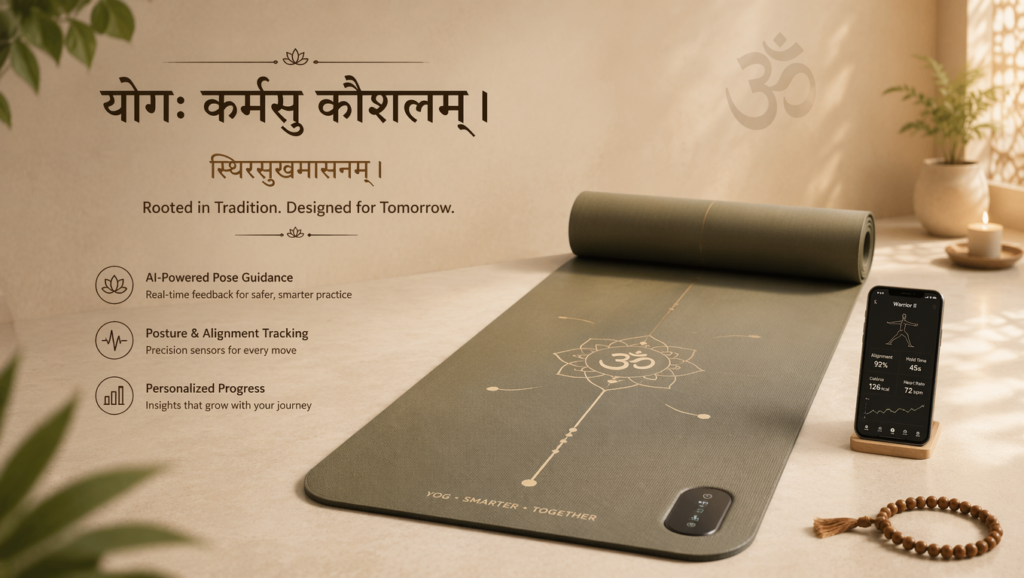
Traditional yoga meets modern innovation most successfully when teachers use technology to deepen understanding of the practice rather than distract from it.
Future Career Opportunities in the Yoga Industry
Future career opportunities in the yoga industry are expanding well beyond the traditional path of “get certified, teach classes.”
Emerging roles include:
- Corporate wellness consultant — designing programs for companies
- Yoga therapist — working alongside doctors and physical therapists in clinical settings
- App content creator — building sequences and voiceovers for on-demand platforms
- Sustainability-focused studio owner — running eco-conscious business models
- Specialized instructor — prenatal, trauma-informed, or chronic pain-focused teaching
Future career opportunities in the yoga industry increasingly reward specialization and business skills, not just deep asana knowledge. Teachers who understand marketing, healthcare partnerships, or app development will have a real edge.
Challenges Facing the Future of Yoga in 2026
It wouldn’t be honest to only talk about growth. Challenges facing the future of yoga are real and worth naming directly.
- Market saturation — with so many apps and studios, standing out is harder than ever
- Cultural dilution — concerns that commercialization strips yoga of its philosophical roots
- Instructor burnout — teaching many back-to-back classes for low pay remains common
- Access and equity gaps—quality instruction still costs money many people don’t have
- Injury risk from unqualified instruction, especially on unregulated online platforms
Challenges facing the future of yoga won’t disappear on their own. They require intentional effort from studios, teacher training programs, and platforms to keep quality and authenticity intact as the industry scales.
Experts’ Predictions
Experts’ predictions for the coming years point toward convergence rather than replacement — technology and tradition working together, not competing.
Common themes among wellness researchers and industry leaders:
- Yoga will be prescribed more frequently by doctors, not just recommended informally
- Hybrid (in-person plus digital) will become the default studio business model, not a backup plan
- Specialized, therapeutic yoga will grow faster than general fitness-style classes
- Sustainability credentials will become a real competitive advantage for studios and brands
Experts’ predictions consistently emphasize one point: the practices that survive and grow will be the ones that stay rooted in yoga’s original purpose — reducing suffering and building awareness — while adapting their delivery method.
Practical Tips to Prepare for the Future of Yoga
Whether you’re a practitioner, teacher, or studio owner, here are practical tips to prepare for the future of yoga:
For practitioners:
- Try one AI-assisted app to supplement (not replace) in-person classes
- Ask your doctor whether yoga therapy could support an existing health condition
- Choose sustainable props and apparel when replacing old gear
For teachers:
- Get certified in a specialized niche (trauma-informed, prenatal, therapeutic)
- Learn basic content creation skills for online teaching
- Build relationships with local healthcare providers for referral partnerships
For studio owners:
- Invest in a hybrid model combining live and on-demand offerings
- Audit your studio’s environmental footprint and communicate improvements to members
- Track student outcomes, not just attendance, to build credibility
These practical tips to prepare for the future of yoga apply whether you’re deepening a personal practice or building a business around one.
Conclusion
The future of yoga in 2026 isn’t about choosing between ancient tradition and modern technology — it’s about combining them thoughtfully. AI tools, online platforms, corporate wellness budgets, and healthcare integration are expanding access to yoga faster than at any point in its history. At the same time, the core of the practice—breath, awareness, and reducing suffering—remains unchanged after thousands of years.
Anyone paying attention to the future of yoga in 2026 will notice the same pattern across trends: personalization, accessibility, and legitimacy are all rising together. Whether you’re stepping onto a mat for the first time or you’ve taught for twenty years, now is the moment to adapt intentionally rather than get left behind. Start with one small step this week—try a specialized class, ask about yoga therapy, or simply commit to ten mindful minutes a day—and let the future of yoga 2026 become part of your own story.
FAQ:
- What is the future of yoga in 2026? The future of yoga in 2026 centers on AI-assisted personalization, hybrid online-offline classes, expanding corporate wellness programs, and deeper integration into healthcare — all while preserving traditional philosophy and technique.
- How is artificial intelligence changing yoga practice? AI is transforming yoga through real-time posture correction via camera, personalized sequence generation based on goals or injuries, and biometric tracking that helps prevent overtraining. Teachers remain essential for safety and emotional guidance that AI can’t replicate.
- Is yoga being used in medical treatment in 2026? Yes. Hospitals increasingly use yoga therapy for chronic pain, cardiac rehabilitation, cancer care support, and prenatal recovery. Some insurance providers have started reimbursing physician-prescribed yoga therapy sessions.
- Will corporate yoga programs keep growing? Yes. Corporate yoga will continue to expand as companies use wellness programs to reduce absenteeism, lower employee stress, and improve retention in competitive job markets.
- What career options exist in the future yoga industry? Emerging roles include corporate wellness consultant, clinical yoga therapist, online content creator, sustainability-focused studio owner, and specialized instructor positions in prenatal, trauma-informed, or chronic pain yoga.
- What are the biggest challenges facing yoga’s future? Key challenges include market saturation from apps and studios, concerns about cultural dilution as yoga commercializes, instructor burnout, unequal access to quality instruction, and injury risk from unregulated online teaching.