
Yoga benefits for seniors go far beyond simple stretching. For adults over 60, a consistent yoga practice can improve balance, strengthen muscles, ease chronic pain, sharpen mental focus, and support emotional well-being—all at the same time. Unlike high-impact exercise, yoga works with the aging body rather than against it.
In recent years, yoga has become increasingly popular among older adults as more seniors discover its wide-ranging physical and mental health advantages. Unlike high-impact exercises, yoga offers a gentle and adaptable way to stay active, making it suitable for people of all fitness levels and mobility ranges. Many seniors are turning to yoga to improve flexibility, strength, balance, and overall well-being while reducing stress and anxiety. Therefore, they are turning their attention towards the yoga benefits for seniors.
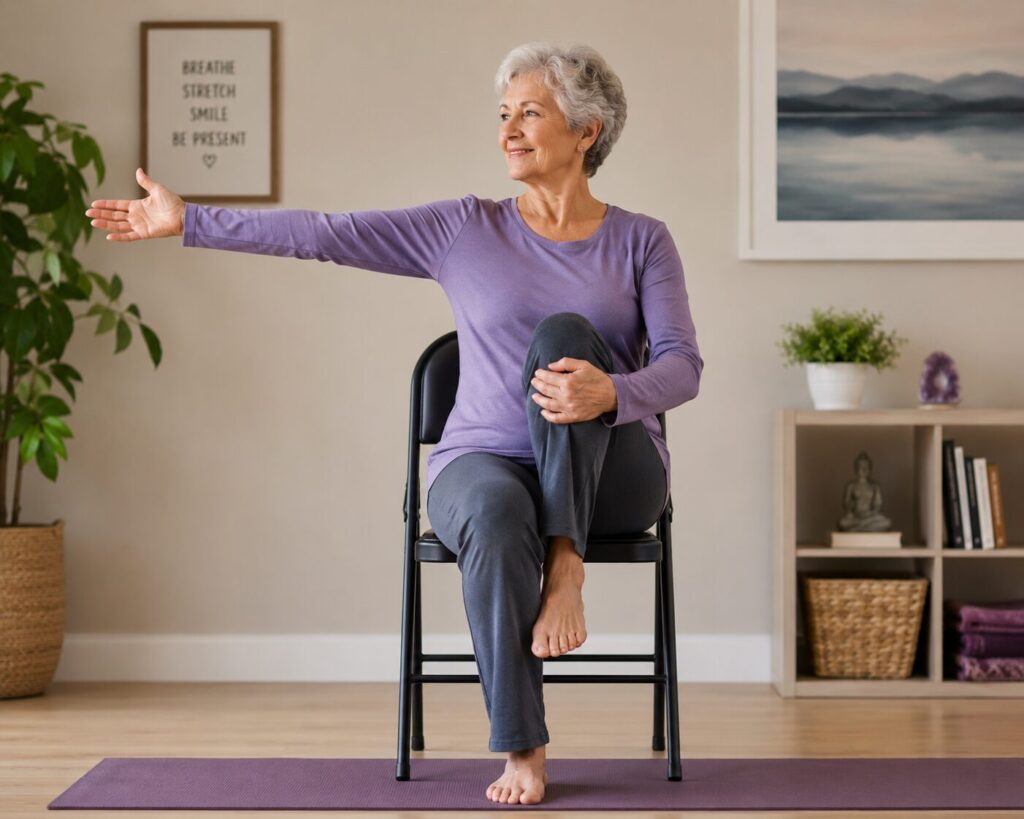
One of the main reasons for this growing interest is the increasing awareness of the yoga benefits for seniors, which include better joint health, improved posture, enhanced cardiovascular function, and greater emotional resilience. Yoga classes specifically designed for older adults, such as chair yoga and restorative yoga, have also made the practice more accessible. Additionally, healthcare professionals often recommend yoga as a complementary activity to support healthy aging. As a result, more seniors are embracing yoga as a safe, effective, and enjoyable way to maintain independence, vitality, and quality of life in their later years.
Millions of older adults around the world are discovering what clinical research has confirmed for years: yoga is one of the safest, most comprehensive wellness tools available for aging gracefully. Whether you are 65 or 85, a complete beginner or someone returning to movement after years away, there is a form of yoga designed for your body and your goals.
We will discuss here every dimension of the yoga benefits of seniors along with precautions, safe practice for older adults, expert guidance, and how to start yoga safely.
What Are the Top Yoga Benefits for Seniors?
Research published in the International Journal of Yoga Therapy identifies over a dozen clinically meaningful benefits of regular yoga practice in adults over 60. Here is what the evidence shows most clearly:
- Improved balance and fall prevention: Falls are the leading cause of injury-related death in adults over 65 (CDC, 2023). Studies show yoga reduces fall risk by up to 35% through better proprioception and lower-body strength.
- Increased flexibility and range of motion: Tight hips, hamstrings, and shoulders are common complaints after 60. Yoga directly targets these areas through held stretches and controlled movement.
- Reduced chronic pain: A 2017 meta-analysis in the Journal of Pain Research found yoga significantly reduced pain in older adults with arthritis, back pain, and fibromyalgia.
- Stronger muscles without joint stress: Chair yoga and gentle Hatha sequences build functional strength—the kind you need for daily tasks—without heavy loads on aging joints.
- Better cardiovascular health: Slow, rhythmic breathing and gentle flows can lower resting blood pressure and improve circulation.
- Sharper cognitive function: Yoga’s combination of breath control, movement, and mindfulness activates multiple brain regions, supporting memory and focus.
- Reduced stress and anxiety: The parasympathetic nervous system response triggered by yoga lowers cortisol levels, helping manage stress naturally.
Physical Health Benefits of Yoga for Seniors:
The physical health benefits of yoga for seniors are among the most well-documented in sports medicine and geriatric health research. Here is what happens to the body when seniors practice yoga regularly.
Balance, Stability, and Fall Prevention
Poses like Tree Pose (Vriksasana), Warrior I, and standing single-leg stretches train the deep stabilizer muscles around the ankles, knees, and core. Over time, this significantly reduces the risk of falls—which affect one in four Americans aged 65 and older each year.
A landmark study from the University of Oregon found that older adults who practiced yoga twice weekly for six months showed a 28% improvement in balance scores compared to a control group.
Joint Health and the Aches and Pain Benefits of Yoga for Seniors
The aches and pain benefits of yoga for seniors are particularly significant for those managing arthritis, osteoporosis, or general musculoskeletal discomfort. Yoga improves synovial fluid circulation inside joints, which acts like natural lubrication. This is especially valuable for:
- Knee and hip osteoarthritis
- Lower back pain and disc compression
- Shoulder stiffness and rotator cuff issues
- Plantar fasciitis and foot pain
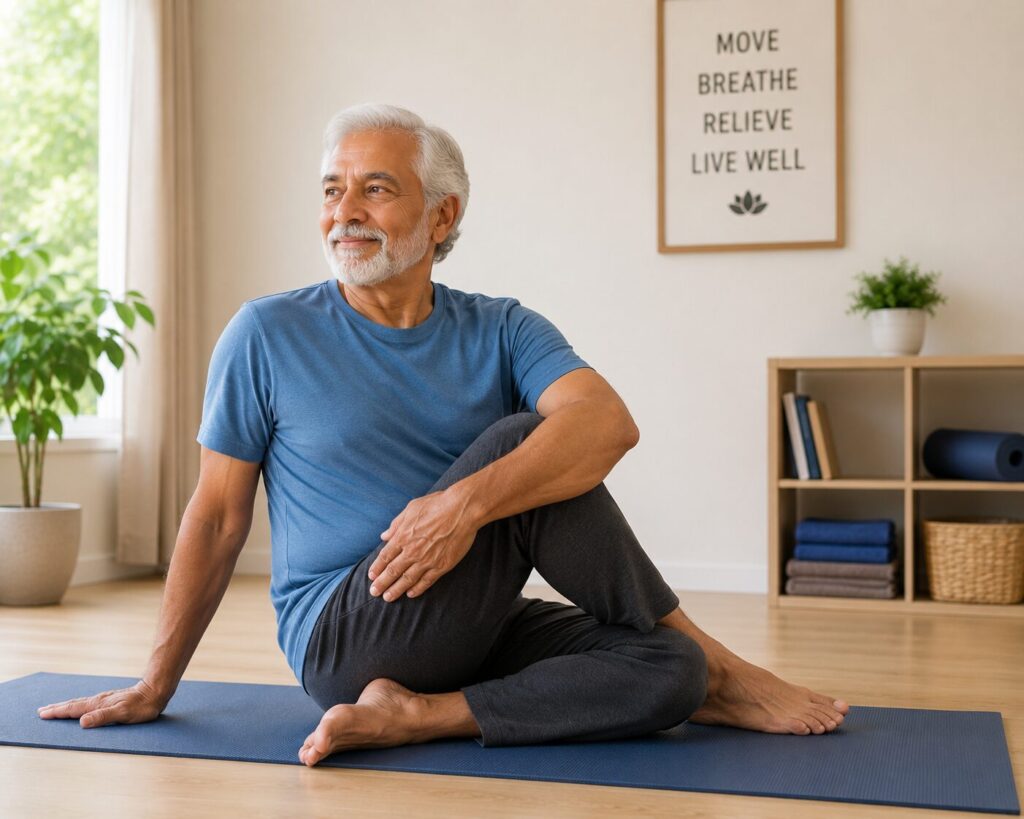
Gentle forward folds, cat-cow movements, and supine spinal twists decompress the spine and reduce inflammation without loading painful joints.
Bone Density and Muscle Strength
Weight-bearing yoga poses—including Warrior sequences, lunges, and Downward-Facing Dog—apply safe mechanical stress to bones, which stimulates bone cell formation. A 10-year study published in Topics in Geriatric Rehabilitation found that daily yoga practice increased bone mineral density in the spine and femur of participants averaging 68 years old.
Mental Health Benefits of Yoga for Seniors
Mental decline is not inevitable with aging, and the mental health benefits of yoga for seniors offer a powerful counter-narrative. Yoga activates the prefrontal cortex—the brain’s center for executive function—while calming the amygdala’s stress response.
Cognitive Sharpness and Memory Protection
A 2019 study in the journal Frontiers in Aging Neuroscience found that seniors who practiced yoga and meditation for 12 weeks showed measurable improvements in verbal memory and cognitive flexibility compared to those who did standard memory training exercises alone.
The breath-movement synchronization required in yoga creates a unique form of moving meditation that keeps neural pathways active and responsive.
Mood, Anxiety, and Depression Relief
Depression affects roughly 7 million adults over 65 in the United States, and many are undertreated. Yoga’s influence on serotonin and GABA levels makes it a clinically supported complementary therapy for mood disorders. Restorative yoga and yoga nidra (yogic sleep) are particularly effective for seniors dealing with:
- Grief and loss
- Social isolation and loneliness
- Generalized anxiety
- Post-surgical depression
Sleep Quality Improvement
Sleep disorders affect more than half of all older adults. Evening yoga sequences—particularly those emphasizing slow breathing (pranayama) and supine poses—have been shown to reduce the time it takes to fall asleep and improve sleep continuity. Even 15 minutes of gentle yoga before bed can signal the nervous system to shift into rest-and-repair mode.
Anti-Aging Benefits of Yoga for Seniors
The anti-aging benefits of yoga for seniors operate at a cellular level, not just in appearance or fitness. Here is what the science reveals:
Telomere Protection
Telomeres are the protective caps on DNA strands that shorten with age and stress. Research published in Oxidative Medicine and Cellular Longevity found that long-term yoga practitioners had significantly longer telomeres and lower oxidative stress markers than age-matched non-practitioners—a direct indicator of biological age being lower than chronological age.
Hormonal Balance
Menopause and andropause bring hormonal shifts that affect energy, weight, mood, and bone health. Yoga’s influence on the hypothalamic-pituitary-adrenal (HPA) axis helps regulate cortisol, estrogen, and testosterone—supporting hormonal equilibrium naturally.
Posture and Spinal Health
The forward head posture and thoracic kyphosis (rounded upper back) common in older adults are largely preventable and reversible with consistent practice. Poses like Cobra, Bridge, and chest-opening sequences counteract the effects of decades of desk work and forward-facing activities.
Best Types of Yoga for Seniors
Not all yoga styles are equally appropriate for older adults. The best types of yoga for seniors are those that prioritize safety, accessibility, and gradual progression.
| Yoga Style | What It Involves | Best For |
| Chair Yoga | All poses are done seated or with chair support; no floor work required | Limited mobility, post-surgery recovery |
| Restorative Yoga | Passive poses held 5–10 minutes with bolsters and blankets | Stress relief, sleep, chronic fatigue |
| Gentle Hatha Yoga | Slow, deliberate postures with extended holds; no flow sequences | Beginners, joint pain, low stamina |
| Yin Yoga | Deep stretching of connective tissue held 3–5 minutes | Flexibility, hip health, deep relaxation |
| Viniyoga | Individualized sequencing adapted to each student’s needs | Post-injury rehab, medical conditions |
How Seniors Can Start a Safe Yoga Practice
Starting yoga after 60 requires a slightly different approach than starting at 30. Here is how seniors can start a safe yoga practice and avoid the most common mistakes:
- Step 1: Consult your doctor first: If you have osteoporosis, cardiovascular disease, a recent surgery, or severe arthritis, get medical clearance before beginning. Share your yoga plans and ask about any movements to avoid.
- Step 2: Choose the right style: Chair yoga or gentle Hatha yoga is the safest entry points for most seniors. Avoid Bikram (hot yoga), power yoga, or Ashtanga, which are intensity-focused and not designed for older beginners.
- Step 3: Find a qualified instructor: Look for a Registered Yoga Teacher (RYT) with additional certification in senior yoga or yoga for aging adults. Many community centers, YMCAs, and senior centers offer specialized classes.
- Step 4: Start with short sessions: Begin with 20–30-minute sessions two to three times per week. Consistency matters more than duration. Gradually extend sessions as your body adapts.
- Step 5: Use props freely: Yoga blocks, straps, bolsters, and blankets are not signs of weakness—they are tools for proper alignment and injury prevention. A good instructor will encourage you to use them.
- Step 6: Listen to your body: Distinguish between productive discomfort (a gentle stretch) and pain (a sharp, burning, or joint sensation). The rule: if it hurts, stop. Yoga should never cause pain.
Simple Yoga Poses for Seniors to Start With
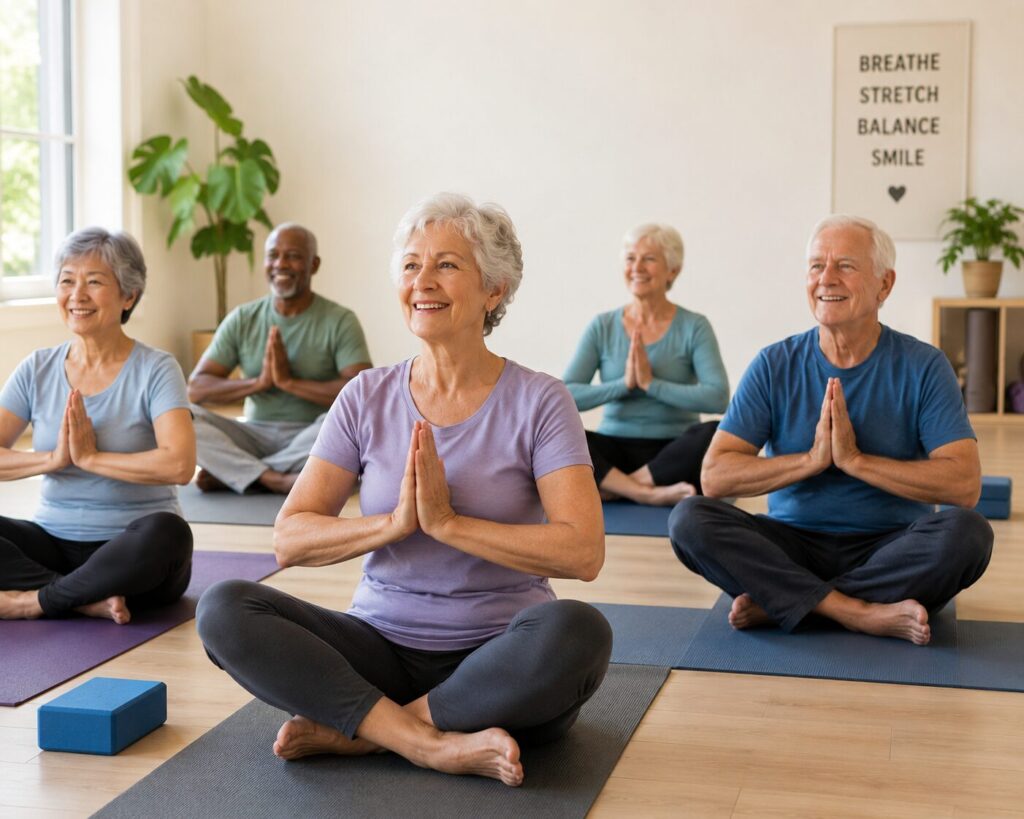
These five simple yoga poses for seniors are safe, accessible, and effective. Each one can be modified for different ability levels.
- Mountain Pose (Tadasana): Improves posture and body awareness. Stand tall, feet hip-width apart, arms at your sides, weight evenly distributed. Hold for 30–60 seconds. Can be done seated.
- Cat-Cow Stretch (Marjaryasana-Bitilasana): Relieves back stiffness and increases spinal mobility. On all fours (or seated), alternate between arching and rounding the back with each breath.
- Seated Forward Fold: Stretches hamstrings and lower back. Sit in a chair, hinge forward at the hips (not the waist) toward your legs. Hold 20–30 seconds. Never force the movement.
- Warrior I (Modified): Builds leg strength and opens the chest. Stand with feet wide, front knee bent, arms raised. Use a chair for balance support if needed.
- Legs Up the Wall (Viparita Karani): Reduces leg swelling, calms the nervous system, and promotes circulation. Lie near a wall, extend legs upward, and hold for 5–10 minutes.
Expert Insight: What Geriatric Health Specialists Say
Dr. Loren Fishman, a Columbia University professor of rehabilitation medicine and one of the world’s foremost experts on yoga and aging, has spent over two decades studying yoga’s effect on bone density, scoliosis, and rotator cuff injuries in older adults.
His clinical trial, tracking 700 participants over ten years, found that a 12-minute daily yoga sequence significantly increased bone density in the spine, hips, and femur in participants with osteoporosis and osteopenia—conditions commonly considered contraindications to vigorous exercise.
The American College of Sports Medicine now includes yoga among its recommended forms of exercise for older adults, alongside aerobic activity and strength training. Their position statement recognizes yoga’s unique contribution to “multicomponent training”—the combination of strength, flexibility, balance, and neuromotor work in a single practice. The Yoga Benefits for Seniors include improved flexibility, balance, strength, heart health, and mental well-being
Conclusion
The yoga benefits for seniors are broad, clinically supported, and accessible to virtually every older adult regardless of current fitness level. From stronger bones and pain-free joints to sharper memory, better sleep, and deeper emotional resilience, yoga offers a complete framework for healthy aging—not just a workout.
The key is to start gently, choose the right style, work with a qualified teacher, and treat the practice as a long-term investment rather than a quick fix. Even 20 minutes three times a week can produce measurable changes in flexibility, balance, and mental clarity within six to eight weeks.
Aging well is not about fighting the body—it is about understanding it. Yoga gives seniors the tools to do exactly that.
FAQ
1. Is yoga safe for seniors with osteoporosis?
Yes, with appropriate modifications. Weight-bearing yoga poses are actually beneficial for bone density, as shown in clinical research by Dr. Loren Fishman. However, seniors with osteoporosis should avoid deep forward folds, twisting at the waist, and poses that round the spine. Always consult your doctor and work with a certified yoga instructor who understands bone health.
2. How often should seniors practice yoga to see results?
Most studies showing measurable physical and mental benefits used a frequency of two to three sessions per week. Consistency matters more than duration. Even 20–30-minute sessions at this frequency produce improvements in balance, flexibility, and mood within six to eight weeks.
3. What is the best type of yoga for seniors with limited mobility?
Chair yoga is the most accessible option for seniors with limited mobility, recent surgery, or significant joint pain. Every pose is performed while seated or using a chair for support, making it safe for people who cannot comfortably get up and down from the floor.
4. Can yoga help with arthritis pain in seniors?
Yes. Multiple peer-reviewed studies, including a 2017 meta-analysis in the Journal of Pain Research, confirm that yoga significantly reduces arthritis-related pain and improves joint function in older adults. Gentle movement improves synovial fluid circulation, reduces inflammation, and strengthens the muscles that support affected joints.
Do I need any equipment to start yoga as a senior?
You need very little to start. A non-slip yoga mat is the most important item. For seniors, adding a set of two yoga blocks, a yoga strap, and a folded blanket or bolster dramatically increases both safety and comfort. If starting with chair yoga, any sturdy, non-wheeled chair will do.
1 thought on “Yoga Benefits for Seniors: A complete guide to Healthy Aging through Yoga:”