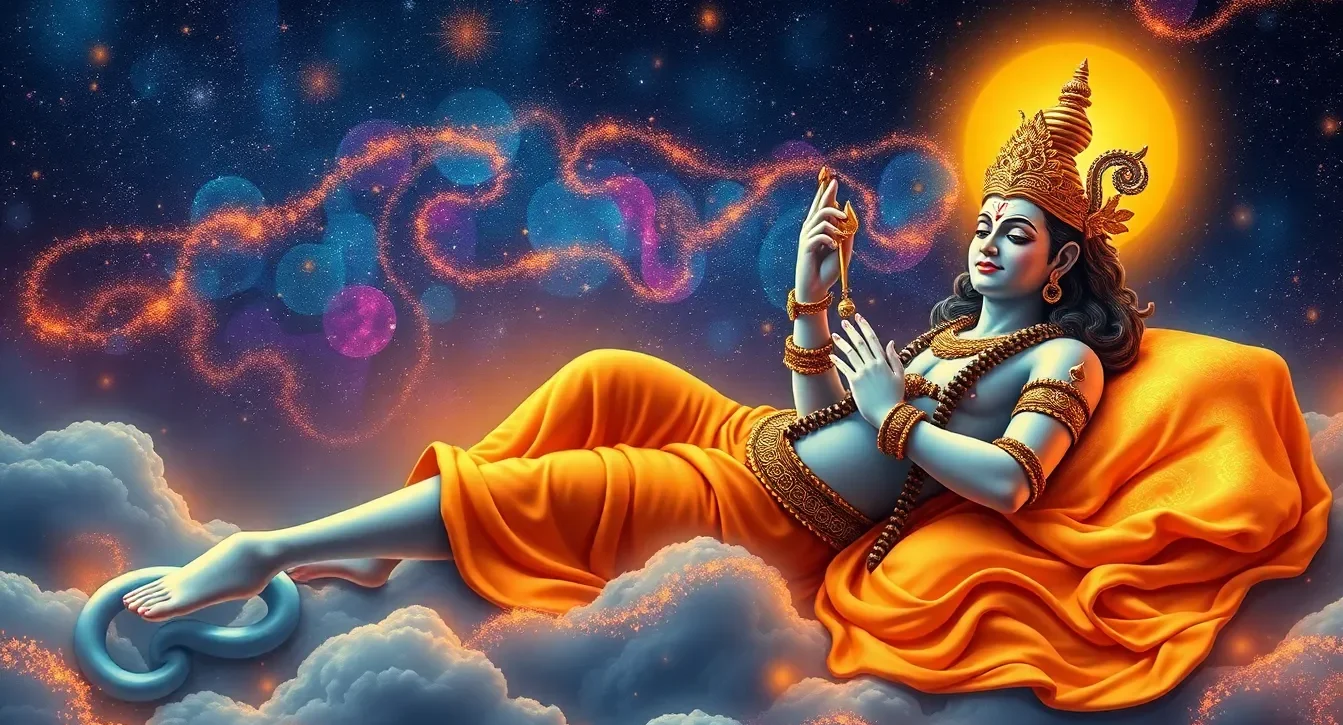
Himalaya has been derived from two Sanskrit words – Hima means “Snow,” and Alaya means “Abode. From ancient times, the glaciated heights of mountains have attracted various Pilgrims from India and other countries. This is not merely a mountain range, but it is a living symbol of divine consciousness rising from the depths of the earth towards the heavens.
For thousands of years, various renowned sages, mystics, and seekers have trekked into its silent folds to uncover its eternal truths. For thousands of years, the Himalaya has held a profound significance for the people of South Asia, as their literature, mythologies, and religion reflect. In recent times, the Himalaya has offered the greatest attraction and the greatest challenges to mountaineers throughout the world.
From a scientific perspective, it stands as one of the youngest yet mightiest mythological creations on our planet, embodying both the mystery of creation and the majesty of evolution.
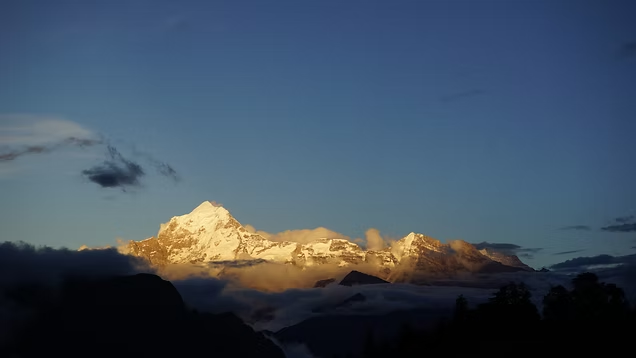
About 50- 60 million years ago, a unique event unfolded under the ocean that changed the entire map of the world. The Indian Tectonic Plate, which was a part of the ancient supercontinent Gondwana, began to move towards the north and collided with the Eurasian Plate, and the impact of this collision did not destroy but gave birth.
The seabed rose upward and transformed into towering snow peaks, deep valleys, and vast plateaus. Even today, the Himalaya is growing 5-6 millimeters every year, reminding us that evolution, both geological and spiritual, is quite an unending process. This continuous rise of the Himalaya is more than a geological phenomenon, but it symbolizes the ascent of our Soul towards higher consciousness.
01. The Vast Expanse of Himalaya for Divinity and Life:
The Himalaya stretches around 2400 Kilometers from Nanga Parbat of Pakistan to Namcha Barwa of Tibet, and it covers around 5,95,000 square kilometers. The Himalaya forms the natural crown of the Indian subcontinent, dividing the Tibetan Plateau from the Indo-Gangetic Plains.
This vast range of the Himalaya is composed of three main divisions:
- The Great Himalaya – Himadri
- The Lesser Himalaya – Himachal
- The Outer Himalaya – Siwalik
These mountains of the Himalaya are the main source of living for a hundred million people of both India and Tibet. The Great rivers like the Ganga, the Yamuna, the Indus, the Brahmaputra, etc. have originated from the glaciers of the Himalaya, nurturing a vast civilization. On the other hand, scientifically, the Himalaya influences the Asian monsoon and acts as a climate regulator, and harbors one of the richest biodiversity zones on Earth. The Himalaya acts as Earth’s Pranic Center, radiating stillness, purity, and power.
Mount Kailash – The Axis of Creation:
Amongst all the above peaks, Mount Kailash bears a profound sanctity, rising around 6,638 meters (21,778 feet) in the Tibetan which is Autonomous Region of China. The other mountains attract the climbers, but Mount Kailash attracts only Pilgrims from various corners of the world.
For Hindus, it is regarded as the Throne of Lord Shiva, the Eternal Yogi. For Buddhists, it is Mount Meru, the cosmic center of the universe. For Jains, it is regarded as the site of liberation of their First Tirthankar. For Bon practitioners, the Himalaya is the seat of universal spiritual energy.
Scientifically, it has been proven that Mount Kailash is the geographical center of the Earth’s landmass, aligned with many ancient sacred sites. The most important one is Gyanganj, for which many enlightened Yogis are trying to find the route physically through their Gurus. The modern researchers call it “Axis Mundi” – the center line where Earth’s energy flows intensely. Spiritually, Mount Kailash represents the Spinal column of the Planet, channeling Prana ( the vital life energy) through its towering form like the human Sushumna Nadi, which carries energy flow to the Crown Chakra (Shashrara Chakra) during our intense Meditation.

The Eternal Message of the Himalaya:
The Himalaya is not only a teacher but also a revered Temple to Hindus, Jains, Buddhists, and Bons. The snow-clad summit of the Himalaya whispers the message of its stillness, its Rivers teach flow and compassion, its caves invite its silence and self-discovery, and spirituality reveals its purpose. The Himalaya reminds humanity of the union between Earth and Heaven, Matter and Spirit, and Self and Soul.
2. History of Yoga in the Himalaya:
The Himalaya is often called the abode of Gods, Goddesses, and the abode of Snow. The Himalaya has long been revered as the spiritual heartland of Yoga. For several thousand years, various Sages, Ascetics, and Yogis have retreated in these sacred mountains to pursue inner transformation and divine realization. The quiet environment, pure air, and bright sunlight have made the Himalaya an ideal place of Meditation and Yoga Practice since ancient times.
The roots of Yoga can be traced back to the Himalaya from the Vedic Period, when various Rishis (Seers) and Munis (Sages) composed the sacred hymns of the Vedas and Upanishads while living in the Himalayan forests. Texts like the Rig Veda, various Upanishads, and Patanjali Sutra drew inspiration from this sacred region’s stillness and divine energy.
The Himalaya has become a living laboratory of Yoga where spiritual Masters like Vyas Deva, Adi Shankaracharya, Mahamuni Babaji, and several other Yogis practiced austerity and taught their disciples regarding the union of body, mind, and soul. Many ancient Yogic traditions, like Hatha Yoga, Kriya Yoga, and Raja Yoga, have been rooted in this region.
In the 19th century itself, the Himalaya drew global attention when Mahamuni Babaji (a deathless Yoga Master) initiated Shyamacharan Lahiri into Kriya Yoga (a combination of Hatha yoga and Raja yoga) at a well-known place for Yoga seekers at Babaji’s Cave at Kukuchina at Dwarahat of Uttarakhand in India. This event became a turning point, spreading Yoga beyond the boundaries of the Indian border through Paramahamsa Yoga.
Today, Himalaya remains the Epicenter of Yoga and spiritual awakening, attracting various Yoga seekers across the world who come to places like Haridwar, Rishikesh, Badrinath, Kedarnath, Dharmashala, Kaushani, and Kukuchina etc. Another profound spiritual realm often linked to the Himalayas is Shambhala—a mystical kingdom said to exist either within or beyond these sacred mountains.
Ancient traditions describe it as the dwelling place of enlightened masters, also known as the Brotherhood of Adepts, who silently guide humanity toward higher wisdom and spiritual evolution. Though its exact location remains hidden from the physical world, the mystery surrounding Shambhala only deepens its aura of divinity, symbolizing the inner kingdom of peace and enlightenment that every seeker strives to discover within.
There are several more Gupta Maths (Secret Yoga Centers) and Siddha Pithas that have still not come to the notice of the wider population.
Gyanganj is the most important one in Tibet. Gyanganj is still untraceable by the common people and researchers. Only the Siddha Yogis are aware of this place. Various texts define this place as God gifted Siddhalok. Here, Yogis get their everlasting youth and fear of death. This is the abode of various Siddha Yogis, and it was created during the Vedic Period. The area is nearly 21 km. radius, sometimes it is enlarged and sometimes it is contracted to less than 1 Kilometer. This is the place where actual Yoga is taught. Many Yogis call this place as Human Library.
3. Why does Himalaya remain the sacred source of Spiritual Transformation:
The Himalaya is just not a geographical wonder but a spiritual powerhouse that continues to inspire and awaken seekers across the world. It means that the Himalaya holds a unique spiritual energy – a vibration of purity, silence, and divine presence that helps individuals transcend their ordinary existence and move toward the eternal consciousness.
For centuries, various Yogis, Sages, and pilgrims have travelled to the remote mountains to meditate, awaken inner awareness, and seek salvation. The Himalaya continues to serve as a timeless source of divine wisdom and inner evolution, guiding humanity towards peace, balance, and ultimate spiritual awakening.
4. Why do Yogis go to the Himalaya?
For centuries, the Himalaya has been more than a mere mountain range – it is a living temple of silence, purity, and divine energy. Various Yogis and seekers from all traditions have trekked to sacred peaks not merely to escape from the world but with an intention to connect themselves with God. The reasons are both spiritual and scientific, blending the outer landscape with the inner quest of liberation.
- The Himalaya radiates Powerful Spiritual Energy:
According to yogic philosophy, the Himalaya is regarded as the spiritual spine of the earth, like the pranic energy channeled through the Shusumna Nadi in the human body. The subtle vibrations of the mountains calm the mind and help to attain higher consciousness. Yogis prefer to meditate here because the natural energy field of the Himalaya accelerates inner transformation and supports deep meditation.
- Silence and Solitude for Inner Practice:
The Himalaya offers natural solitude – far from natural distractions, noise, and worldly desires. The silence in this range reflects the silence of the soul. This natural environment helps the yogis to practice deep meditation and experience the state of samadhi.
- Purity of Nature and Life-supporting environment:
The purest air is available in the Himalaya, which is rich in oxygen and positivity all around. The glacial rivers, dense forests, and untouched landscapes provide sustenance and balance. Staying close to nature helps Yogis align their physical rhythms with universal energy, supporting both health and spiritual clarity.
- To follow strictly the path of their Guru:
The Himalaya is the abode of countless sacred sites where their Gurus attained their Siddhis, like Mahavatar Babaji Maharaj, Shyamacharan Lahiri, Guru Gorakhnath, Adi Sankaracharya, Jesus Christ, Swami Rama, and lately Sankar Swamiji Maharaj, who returned physically from Gyanganj and other countless Siddha Yogis. Yogis journey here to walk the same sacred path, meditate according to their lineage for self-realization.
- The Himalayas as a symbol of Inner Ascent:
Spiritually, climbing the Himalaya is a symbol of the journey of the soul, rising from the lower plane of ego and desires to higher peaks of wisdom and self-realization. Each step to the mountain mirrors the yogic process of rising through the chakras from the root of existence to the crown of enlightenment.
- The Call of Divine Stillness:
Yogis believe that Himalaya calls certain purified souls – a divine invitation that can not be ignored. This call to the purified souls for their inner awakening. Once there, the visiting Yogis experience the inner peace that can not be expressed in words – an overwhelming sense of oneness with the cosmos, as if the mountains themselves are imbued with divine awareness.
In essence, the Yogis go to the Himalaya not to find God but to realize the God who is always within. Himalaya is both a destination and a state of consciousness that bears a sacred bridge between the Earth and Eternity.
5. How do Yogis sustain themselves for a long period in the Himalaya?
The life of a Yogi in the Himalaya is deep discipline, simplicity, and union with nature. Living in the high altitude where the temperature is much below zero degrees, where food is scanty, and isolation is complete, requires more than physical endurance. It requires mastery of body, mind, and life force. For centuries, yogis have been surviving at higher altitudes and even thriving in such conditions through their profound understanding of yogic science, inner energy control, and complete surrender to their Guru.

- Mastery of Prana (Inner Energy System):
The very essence of Yogi’s survival lies in the control of Prana (the vital force) that sustains all living beings. Through advanced practice of Pranayama, Khechari Mudra, Kumbhaka (a technique of breath retention), and Kundalini awakening, yogis learn to receive energy not from food or air alone, but directly from the Cosmic energy. With this mastery, Yogis can slow down their metabolism by practicing Bhastrika Pranayama to generate internal heat and maintain energy balance in extreme cold.
- The Power of Tummo (Tibetan Tradition):
Many Yogis practice this Tummo technique at higher altitudes in the Tibetan region to awaken their inner fire. Through focused breathing, visualization, and deep meditation, these Yogis ignite their subtle inner heat within the body. The Tibetan Monks can raise their body temperature by several degrees, enabling them to sit in ice without shivering. Such a type of Mastery helps them to remain in mountain caves or mountain peaks for years.
- Minimum Food and Water requirement:
With years of practice of austerity and self-control, Yogis train themselves to require very little nourishment. Many Yogis rely on wild herbs, berries, snow water, roots, and Shiajit, which are found in the mountain valley. Some of the advanced Yogis survive on Pranic energy alone (the process is called Bhojan Rahit Sadhana), where the energy is gained from breath and meditation.
- Protection through Meditation Awareness:
Deep Meditation helps the Yogis to remain in Samadhi, where physiological functions slow down drastically. In this Samadhi state, the heartbeat, respiration, and digestion of the Yogis completely cease. The body remains preserved in stillness preserved in balance, even in a harsh climate. This Samadhi protects the Yogis from hunger, fatigue, and cold, allowing the Yogis to remain in solitude for a longer duration.
- Spiritual Bliss Over Physical Needs:
Above all, the Yogi’s sustenance is spiritual rather than physical. Immersed in this bliss of deep Meditation and divine consciousness, the Yogis experience little identification with the body. When awareness transcends physical limits, hunger and cold lose their power. This state of Bliss (Ananda) and Detachment (Vairagya) makes the harshest winter feel like a sacred embrace.
In essence, Yogis sustain for a long period at a higher altitude in the Himalaya by leaving ordinary needs. Their survival is not a miracle, but it is the result of profound yogic wisdom and disciplined practice for a long time. By mastering the science of inner energy, they live in harmony with the Universe, proving that true life is not dependent on external comfort but on the eternal energy that flows within all creations.
Conclusion: The Eternal Strength of the Himalayan Yogi:
The endurance of Yogis in the Himalaya is a living example of the limitless power of human consciousness. It reveals that when mind, body, and spirit are perfectly aligned, a person can bear the harshest conditions of nature. The mountains merely do not test endurance, but the mountains refine the soul, removing all illusions and revealing the divine strength within.
There are many real-life examples that can be cited. I have gone through various books and experienced many real-life incidents. One such unique incident that I faced can be cited here for my readers.
“I heard various stories of the cosmic power of various Monks and Sadhus who are living in the caves of the Himalaya. At a later period, I was initiated by Late Ananda Mohan Adak, disciple of late revered Anilananda Ji Maharaj, who was initiated by late Motilal Mukherjee of Serampore, Hooghly of West Bengal, and late Motilal Mukherjee was initiated by Yukteswar Giri of Serampore, Hooghly, West Bengal.
During my initiation, when my revered Guruji kept his lotus feet at Moola Dhara Chakra and hands at Shahasra Chakra, I felt unconscious and didn’t know how long I was in that state. When I got my consciousness, my Guruji taught me another Kriya (Yoni Mudra). I was amazed to see the dancing lights surrounding one Black Spot. Later on, he explained in detail about my unconsciousness during initiation and to see the dancing colorful lights. Other realizations can’t be explained here. He cautioned, “Not to stop practicing”.
With the mounting work pressure and continuous hammering of my desire to visit Babaji’s Cave, I felt sick and bored. Almost every alternate night, I dreamt of that place. Day by day, this was becoming unbearable to me. I discussed this with my Guruji. He advised me to visit Babaji’s Cave, where our revered Shayamacharan Lahiri was initiated in Uttarakhand.
Accordingly, I fixed up my mind to visit Babaji’s Cave. My wife and my daughter accompanied me. PWD Guest House at Dwarahat had been booked, and a Train ticket up to Ramnagar was arranged. Ultimately, the journey date approached, and we started our journey keeping my long-cherished desire in mind.
Embarking on “my spiritual journey from Delhi to Dwarhat” in the Himalaya was an experience that transformed me in ways I never anticipated. Nestled in the heart of Uttarakhand, India, Dwarhat, a picturesque foothill of the Himalaya, offers a serene and tranquil environment, making it the perfect destination for anyone looking to delve into spirituality and self-discovery.
The journey began amidst the bustling streets of Delhi, a city teeming with life, history, and a palpable energy that both excites and overwhelms. As I set out from Delhi, the anticipation of what lay ahead on “my spiritual journey from Delhi to Dwarhat” and to find out my long-cherished place filled me with an inexplicable sense of peace and purpose.
The transition from the urban landscape of Delhi to the verdant, soothing vistas of Uttarakhand marked a significant shift not only in the scenery but in the very essence of “my spiritual journey to Dwarahat at the foothill of the Himalaya.” The further I traveled, the more I felt the cacophony of city life being replaced by an inner silence, a quietude that I had long sought but seldom found. The majestic Himalaya, with its towering peaks, seemed to echo the quest for spiritual awakening that had prompted “my spiritual journey from Delhi to Dwarhat.” Each mile traversed brought me closer to nature and, by extension, closer to myself.
Upon reaching Dwarhat, a nice, quiet, and peaceful place in the Himalaya, “my spiritual journey from Delhi to Dwarhat” took on a deeper, more profound significance. My actual purpose of the journey was to visit Kukuchina, where I had to reach Babaji’s Cave — a sacred site nestled deep in the Himalaya — which I had heard about earlier.
Dwarahat, with its ancient temples and spiritual heritage, felt like stepping back in time to an era where spirituality was the essence of existence. The air carried an ethereal quality, laden with the scent of pine and the chants of hymns that resonated with the soul.
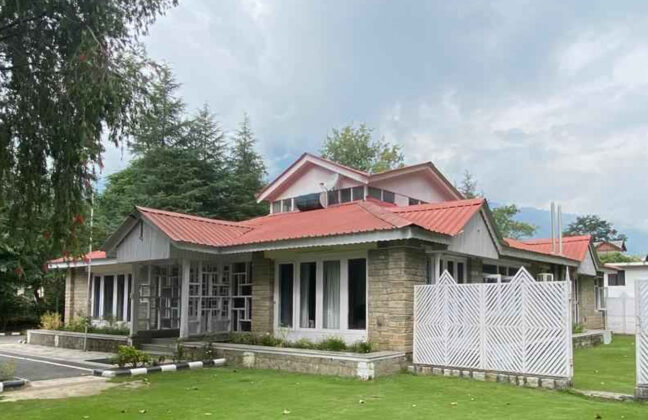
I reached there in the evening and stayed at a PWD Guest House in Pujakhet Road, Kalikholi, Dwarahat, which I had booked from Delhi. The Guest House stood as a serene abode in the Himalaya, surrounded by sky-kissing pine trees and lush vegetation. In front, the Guest House was bordered by attractive flowering plants and herbaceous shrubs. From the main entrance, pebbles were scattered and lay on one side, and at the back portion, there was a gorge of deep bushes overlooking the Himalaya. There was a large lawn with lush green grass.
The room we were allotted was spacious and comfortable. Since there was an erratic power supply, the Caretaker of the Guest House provided candles and lanterns. Both my family and our driver, Mann Singh, were hungry, so we were served an early dinner. Before going to bed, the Caretaker (Khusal) cautioned us “not to open the door,” as jungle foxes and cheetahs were frequently seen from the Himalaya region. Mann Singh was given a small room adjacent to ours for his stay. The Caretaker also provided us with a whistle to blow in case of danger. We went to bed early so I could rise at dawn to begin our onward journey to Babaji’s Cave. However, we spent the night very cautiously without any danger.
Earlier, I heard the name of a person who left his lucrative job at the State Bank’s Burrabazar Branch of Kolkata and started living at Kukuchina, a sacred region of the Himalaya, to serve the pilgrims upon instruction from Babaji. At about 10:30 a.m., we reached there and found a small tea stall and a tiny grocery shop in a cottage, which I later came to know was the last lap of the road, and there was no place to stay.
After taking tea and snacks, I met that great unknown man sitting in his lotus pose, who called me by my name. I was astonished to hear my name from him. Later, I asked how he came to know about my journey and my name. He told me, “I have been following you from Delhi to Kukuchina, sitting in my small room for your safe journey.” Then I realized that he knew everything about me, just as I had heard earlier.
The Great and Enlightened Man was Late Netraballav Joshi, the disciple of Late Mriganka Sekhar Bhattacharya of Silchar, Assam — a great Yogi who was initiated by Shyamacharan Lahiri. Mriganka Sekhar spent nearly 15 years at Kukuchina in the Himalaya and tried to construct a walkable road from Kukuchina to Babaji’s Cave. Upon mounting pressure from the villagers, he had to retreat. During his entire stay at Kukuchina, Joshiji looked after him with deep devotion. These facts are rarely known to the people who are visiting Babaji’s cave.
By this time, Joshiji had arranged our lunch and requested we stay back at his small cottage. We were provided a room for my wife and my daughter, and our driver, Mann Singh, was accommodated at their Grocery Shop. The night we spent at his small cottage is still remarkable to me. At midnight, I heard someone blowing his flute. I woke up and tried to find the source of the flute. I observed that the sound was coming from Joshiji’s room. I peeped at the door and found that he was engaged in deep meditation and performing Pranayama.
In the morning, I asked him, “How does this flute sound is coming”. He just smiled and replied that when any Yogi is performing higher Khechari Mudra, the breathing is performed through the vertebrae, not through the nostrils. However, he started our arrangement for starting our journey to Babaji’s Cave.
We started at about 7.30 a.m. He arranged a porter and guide for our safe journey to Babaji’s cave. He also said, “Babaji is still watching whether any of his followers is in danger. He rushes to the spot in any form and rescues them”. At that time, there was no proper road to climb up the steep Dunagiri Hill. After getting down about half a kilometer from his house, our climbing started. Only there was a Pagdandi (a narrow natural trail) of high and lows covered with stones and small pebbles. If slipped, the traveler will definitely fall into a deep gorge. However, very cautiously, we were climbing the hill following the Pagdandi.
After climbing about 1.5 km, my wife suddenly felt suffocated and became unconscious. There was no one to help except the guide. I was crying like a child, calling for help from Babaji in this remote altitude of the Pandukhuli range of Dunagiri. After a few minutes, I noticed a Sadhu (Monk) emerging from the misty slopes of Babaji’s Cave in the Himalaya.
He asked what had happened. I told him about the incident. He sprinkled some cold water on her face and placed his hands on her head until she regained consciousness. Within a few minutes, she opened her eyes. By that time, the guide had also arranged some water. The Sadhu of the Himalaya offered some sweets to my wife, asking her to eat. I hesitated, but he assured me that the sweet had already been offered to Babaji and could be taken without hesitation.

He then asked the purpose of my visit. I told him everything truthfully — that I was frantically trying to visit Babaji’s Cave, which I have been dreaming of. He listened calmly and said, “You will definitely reach there and get his blessings”.
After taking his blessings, we resumed our journey through the Pagdandi towards Babaji’s Cave. After nearly an hour and a half, we reached the sacred spot. I performed my rituals there, and after spending some quiet moments in devotion and deep Pranayam, we began our return journey.
I safely descended from Babaji’s Cave, where Shyamacharan Lahiri was incarnated by Babaji. Upon returning to Joshiji’s residence, I found him anxiously waiting for us. Before I could explain anything, he began recounting the incident as though he had witnessed it himself. We were astonished to hear him say that Babaji had come for our rescue. There have been many such miraculous incidents in the Pandukhuli range in the Himalaya, where Babaji appeared and saved his devotees in times of distress.”

FAQ:
- Do yogis still live in the Himalaya?
Thousands of yogis continue to live in the Himalayas today, representing a wide spectrum—from ancient ascetics devoted to solitude to modern spiritual teachers sharing yogic wisdom with the world. While global recognition and institutional support have brought new forms of practice and teaching, authentic traditions still thrive in the remote caves and villages of the mountains. Despite the growing influence of commercialization and government restrictions, these dedicated yogis preserve the timeless essence of Himalayan spirituality, keeping alive the original spirit of renunciation, meditation, and divine realization.
- Why do Yogis meditate and prefer the Himalaya?
Yogis meditate and prefer the Himalaya because it reflects the very qualities they seek within—stillness, purity, elevation, and divine connection. The mountains serve as both teacher and mirror, reminding the seeker that true peace is not found in comfort, but in communion with the infinite. The Himalaya, with its eternal silence and sacred energy, remains the ultimate destination for those who wish to ascend from human limitation to universal consciousness.
- Where is Babaji’s Cave Located?
Ans: Babaji’s Cave is located near Kukuchina village, about 5–6 kilometers from Dwarahat in the Almora district of Uttarakhand, India. Nestled deep in the Himalaya, this sacred cave sits at an altitude of around 6,400 feet and is surrounded by dense pine forests, offering a tranquil and meditative environment.
- Why is Babaji’s Cave considered sacred?
Ans: The cave is revered as the place where Mahavatar Babaji, the immortal Himalayan Yogi, initiated Shyamacharan Lahiri into the sacred science of Kriya Yoga in the 19th century. This initiation marked the revival of Kriya Yoga for householders and seekers worldwide, making Babaji’s Cave one of the holiest pilgrimage sites in the Himalaya.
- How can one reach Babaji’s Cave from Dwarahat or Kukuchina?
Ans: From Dwarahat, travelers can drive or hire a local jeep to Kukuchina village—the last motorable point. From there, the cave is a nearly 4.5-kilometer uphill trek through the scenic forests of the Himalaya. The trail is steep but beautifully serene, with panoramic mountain views that make the journey spiritually uplifting.
- Who is Mahavatar Babaji?
Ans: Mahavatar Babaji is a deathless master described in Autobiography of a Yogi by Paramhansa Yogananda. He is believed to reside in the Himalaya, guiding advanced yogis and silently blessing humanity. His mission is to uplift spiritual consciousness through Kriya Yoga, helping seekers realize their divine potential. Some of the highly enlightened Yogis say that he can be seen at Gyanganj also.
- What is the significance of Shyamacharan Lihiri’s initiation at Babaji’s Cave?
Ans: Lahiri Mahasaya’s initiation by Babaji at this cave symbolized the return of ancient yoga wisdom to the modern world. It bridged the gap between ascetic life and household spirituality. From this very spot in the Himalaya, the sacred teachings of Kriya Yoga began to spread globally, inspiring millions to meditate and seek higher truth.
- Are there any accommodations near Babaji’s Cave?
Ans: Yes, accommodation options are available in Dwarahat town, including the PWD Guest House, local lodges, and small homestays. Some spiritual travelers also stay at YSS (Yogoda Satsanga Society) Ashram Dwarahat, which provides clean lodging and a meditative atmosphere ideal for those visiting the Himalaya for spiritual purposes. Travellers can also ask for accommodation at Netra Ballabh Joshi’s cottage.
- What kind of experience can visitors expect at Babaji’s Cave?
Ans: Visitors often describe a profound sense of peace, stillness, and divine energy inside the cave. Many experience deep meditation, spontaneous calmness, or emotional release. Surrounded by the silence of the Himalaya, Babaji’s Cave serves as a spiritual vortex—a place where seekers feel a powerful connection to higher consciousness. But I am sure, the travelers can feel his presence if anyone falls into any danger.
- What spiritual message does Babaji’s Cave convey to pilgrims?
Ans: Babaji’s Cave reminds every pilgrim that true divinity lies within. The journey to this sacred site in the Himalaya symbolizes the inner climb toward self-realization. The stillness of the cave mirrors the stillness of the soul—a place where silence speaks, and seekers awaken to the eternal presence of Babaji’s blessings.
11. How credible are the claims that certain Yogis and Babas in the Himalayas have lived for 300 years or more?
I once met someone who shared an extraordinary story from his travels through a remote village. While journeying by bus, he was joined by a man who sat beside him and began speaking gently about spirituality and the deeper truths of life. The stranger appeared entirely ordinary—dressed like any local villager and seemingly in his mid-forties. Yet, as their conversation deepened, the man calmly revealed that he was over 300 years old. Before my acquaintance could fully grasp the claim, the man stood up, said it was time for him to leave, and then vanished into thin air, leaving behind an air of mystery and wonder.
Great content, thanks for posting.