
If your body feels stiff after long hours at a desk, travelling, exercising, or managing a busy day, gentle yoga stretching can support easier movement. The best yoga stretches should move your muscles and joints through a comfortable range while you breathe naturally. They can support flexibility and mobility in the hips, hamstrings, shoulders, spine, chest, and legs. A mild pulling sensation is normal, but sharp pain means you should stop. Here, we will explore 20 of the best yoga stretches for comfortable everyday movement.
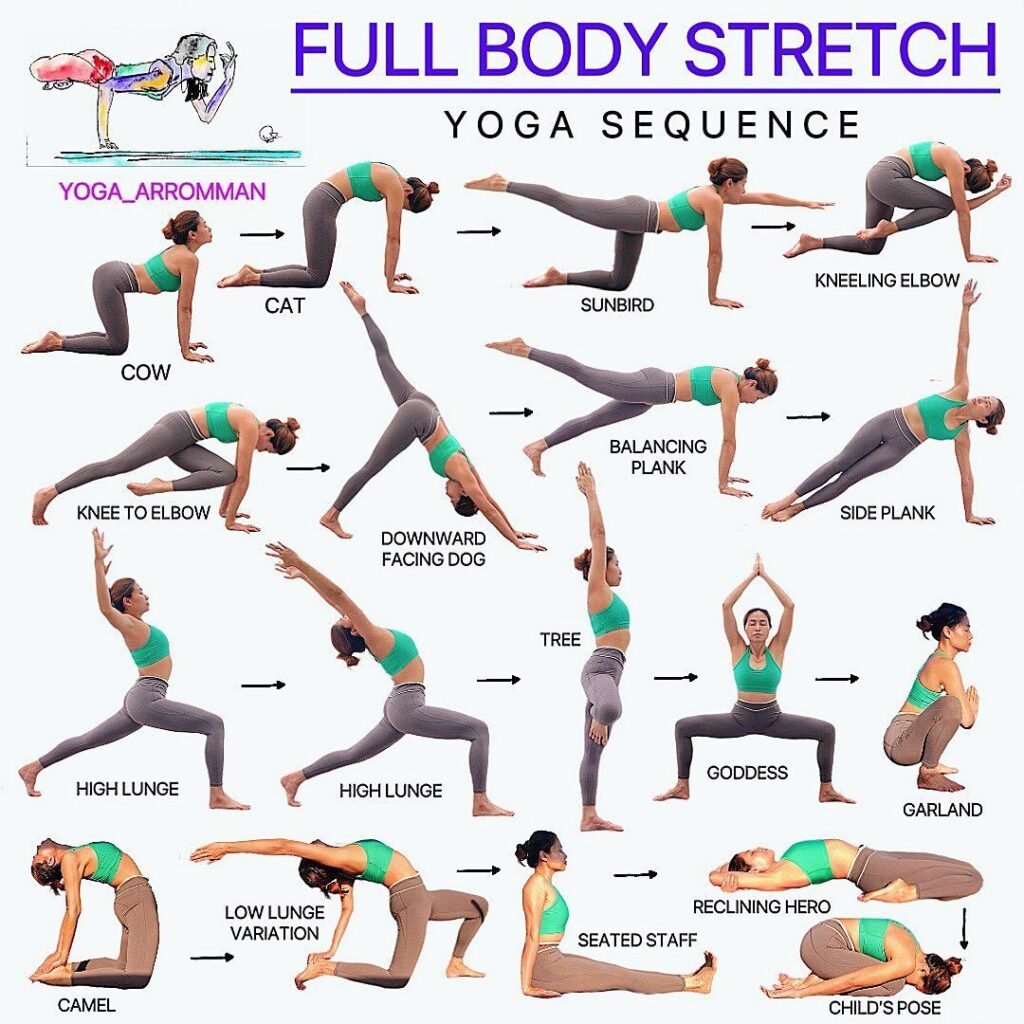
What are the best yoga stretches?
The best yoga stretches depend on your individual needs, flexibility, and daily routine. Forward folds, lunges, and hip-opening movements can support flexibility, while people who sit for long periods may benefit from stretches for the hips, hip flexors, spine, and shoulders. Beginners can start with gentle poses such as Cat-Cow, Child’s Pose, and Bridge Pose. Best yoga stretches can support flexibility, mobility, body awareness, and movement control. Choose movements that feel comfortable and controlled. Never force a stretch or push through sharp pain. If discomfort increases, ease out of the pose and stop.
20 Best Yoga Stretches/Poses for Flexibility and Mobility
- Cat-Cow Pose
For: Spine, back, and gentle mobility
Cat-Cow is one of the easiest movements for beginners and is particularly useful as a gentle warm-up before other yoga poses.
How to do Cat-Cow
- Come onto all fours.
- Place your hands approximately beneath your shoulders and your knees beneath your hips.
- Inhale and gently lift your chest while allowing your spine to move into a comfortable arch.
- Exhale and round your spine towards the ceiling.
- Move slowly between the two positions.
Try 5–10 comfortable repetitions while coordinating the movement with your breathing.
Fit & Well describes Cat-Cow as a beginner-friendly movement that encourages spinal mobility and breath awareness.
- Child’s Pose
Best for: Back, hips, shoulders, and relaxation
Child’s Pose is a gentle resting position that can be included between more active stretches.
How to do it
- Begin on all fours.
- Bring your big toes together.
- Slowly move your hips towards your heels.
- Extend your arms forward or place them alongside your body.
- Let your forehead move towards the mat if comfortable.
- Take several slow breaths.
If your hips do not comfortably reach your heels, place a cushion or folded blanket beneath your hips.
Prevention includes Child’s Pose among its daily yoga stretches for stiffness and describes it as a restorative position that can also open the shoulders.
- Downward-Facing Dog
Useful for: hamstrings, calves, shoulders, and back
Downward-Facing Dog is a familiar yoga pose that combines stretching with weight-bearing through the hands and feet.
How to do it
- Start on all fours.
- Tuck your toes under.
- Lift your hips towards the ceiling.
- Lengthen your spine.
- Keep your knees slightly bent if necessary.
- Press through your hands and allow your head to remain relaxed between your arms.
You do not need to force your heels towards the floor.
- Low Lunge
For: Hip flexors, thighs, and hips
Low lunge is particularly useful for people who spend long periods sitting.
How to do it
- Begin in a tabletop position.
- Step your right foot forward between your hands.
- Lower your left knee to the mat.
- Keep your right knee approximately above your ankle.
- Gently move your hips forward until you feel a comfortable stretch in the front of the left hip.
- Repeat on the other side.
Do not push the hips aggressively forward.
- Standing Forward Fold
For: Hamstrings, calves, and back body
Standing Forward Fold can be modified easily, making it suitable for many beginners.
How to do it
- Stand with your feet hip-width apart.
- Soften your knees.
- Hinge forward from your hips.
- Let your hands rest on your thighs, shins, blocks, or the floor.
- Relax your neck.
- Breathe slowly.
Your hands do not have to reach the floor.
- Wide-Legged Forward Fold
For: Inner thighs, hamstrings, hips, and back
This pose gives the legs a wider position and can be adjusted according to your flexibility.
How to do it
- Stand with your feet wider than hip-width apart.
- Keep your feet stable.
- Bend your knees slightly.
- Hinge forward from your hips.
- Place your hands on the floor, blocks, or legs.
- Take several slow breaths.
Fitwell includes wide-legged forward bending among its mobility-focused yoga movements and notes its use for the inner thighs and hamstrings.
- Butterfly Pose
For: Inner thighs, hips, and groin
The butterfly pose is a simple seated stretch that requires little space.
How to do it
- Sit comfortably on the floor.
- Bring the soles of your feet together.
- Allow your knees to move gently towards the floor.
- Hold your feet or ankles.
- Sit tall.
- Breathe slowly.
Do not push your knees down with your hands.
- Pigeon Pose
For: Hips and Glutes
The pigeon pose can provide a deeper hip stretch, but it should be approached carefully, particularly if you have knee problems.
How to do it
- Begin in Downward-Facing Dog.
- Bring one knee forward.
- Position the front leg comfortably rather than forcing it into a particular angle.
- Extend the opposite leg behind you.
- Support yourself with your hands.
- Stay upright or gradually lower your torso if comfortable.
- Repeat on the other side.
Important: If you feel pressure or pain in the front knee, come out of the pose and choose a gentler hip stretch.
- Cobra Pose
For: Front body, chest, and spine
Cobra Pose can be useful as part of a gentle yoga sequence.
How to do it
- Lie on your stomach.
- Place your hands near your chest.
- Keep your elbows relatively close to your body.
- Press gently into the floor.
- Lift your chest only as far as comfortable.
- Keep your shoulders relaxed.
- Avoid forcing your lower back into a deep bend.
10. Bridge Pose
For: Hip flexors, chest, glutes, and legs
Bridge is different from many passive stretches because it also requires muscular effort.
How to do it
- Lie on your back.
- Bend your knees.
- Place your feet on the floor.
- Keep your feet approximately hip-width apart.
- Press gently through your feet.
- Lift your hips.
- Keep your shoulders and head relaxed.
- Lower slowly.
12. Puppy Pose
For: Shoulders, upper back, and chest
The puppy pose is a useful option when the shoulders and upper back feel tight.
How to do it
- Start on all fours.
- Keep your hips approximately over your knees.
- Walk your hands forward.
- Allow your chest to move gently towards the floor.
- Keep your neck comfortable.
- Breathe slowly.
13. Warrior II
For: hips, thighs, and shoulders
Warrior II combines stretching, balance, and muscular endurance.
How to do it
- Stand with your feet wide apart.
- Turn one foot outward.
- Bend the front knee while keeping the back leg active.
- Extend your arms in opposite directions.
- Keep your chest facing the long side of the mat.
- Repeat on the other side.
Avoid allowing the front knee to collapse inward.
14. Triangle Pose
For: Hamstrings, hips, torso, and shoulders
Triangle Pose creates a combination of side-body movement and lower-body stretching.
How to do it
- Stand with your feet wide apart.
- Turn one foot outward.
- Extend your arms.
- Hinge from the hip towards the front leg.
- Rest your lower hand on your shin, a block or the floor.
- Extend the upper arm towards the ceiling if comfortable.
- Repeat on the other side.
Do not collapse your chest towards the floor simply to reach your hand lower.
15. Garland Pose
For: hips, ankles, and inner thighs
Garland Pose is a deep squat position that can be challenging for beginners.
How to do it
- Stand with your feet slightly wider than your hips.
- Turn your toes outward slightly.
- Bend your knees and lower into a comfortable squat.
- Bring your hands together at your chest.
- Keep your spine as upright as possible.
16. Seated Forward Fold
For: Hamstrings and back body
Seated Forward Fold can be adapted for almost every flexibility level.
How to do it
- Sit with your legs extended.
- Sit tall.
- Bend your knees slightly if your hamstrings feel tight.
- Hinge forward from the hips.
- Rest your hands wherever they comfortably reach.
- Maintain slow breathing.
The aim is not to touch your toes. The aim is to create a comfortable stretch while maintaining control.
17. Supine Figure-Four Stretch
For: Glutes and hips
This lying-down variation can be easier to control than a standing or seated hip stretch.
How to do it
- Lie on your back.
- Bend both knees.
- Place one ankle over the opposite thigh.
- Bring the supporting leg towards you.
- Hold behind the thigh if comfortable.
- Repeat on the other side.
Keep the movement gentle and avoid pulling aggressively.
18. Camel Pose
For: Front body, thighs, and shoulders
Camel Pose is a deeper backbend and is better suited to people who already have some yoga experience.
How to do it
- Kneel with your knees approximately hip-width apart.
- Place your hands on your lower back.
- Lengthen through your spine.
- Gently move your chest upward and back.
- Only reach for your heels if you can maintain control.
- Return slowly.
For Beginners: Keep your hands on your lower back rather than reaching for your heels.
19. Legs-Up-the-Wall Pose
For: Gentle relaxation and legs
Legs-Up-the-Wall is one of the gentler poses in this list.
How to do it
- Sit sideways next to a wall.
- Turn onto your back.
- Bring your legs up the wall.
- Allow your arms to rest comfortably.
- Breathe slowly.
You can place a folded blanket under your head if that feels more comfortable.
- Supine Spinal Twist
For: Gentle spinal movement and hips
How to do it
- Lie on your back.
- Bring your knees towards your chest.
- Lower both knees gently to one side.
- Keep your shoulders as relaxed as possible.
- Turn your head only if comfortable.
- Repeat on the other side.
The movement should feel controlled rather than forced.
Happy Baby Pose
For: Hips, inner thighs, and relaxation
How to do it
- Lie on your back.
- Bend your knees towards your chest.
- Hold the backs of your thighs, ankles, or feet.
- Gently draw your knees towards the sides of your body.
- Keep your lower back comfortable.
- Breathe slowly.
If holding the feet is difficult, simply hold behind the thighs.
Best Yoga Stretches by Body Part
Instead of doing all 20 poses every day, you can select movements according to where you feel stiff.
Best Yoga Stretches for Tight Hips
Try:
- Low Lunge
- Butterfly Pose
- Pigeon Pose
- Garland Pose
- Supine Figure-Four
- Happy Baby
People who sit for long periods may particularly appreciate regular hip-mobility work. Current Fit &Well mobility guidance also includes movements aimed at the hips and notes that the body should guide the intensity.
Best Yoga Stretches for Tight Hamstrings
Try:
- Downward-Facing Dog
- Standing Forward Fold
- Seated Forward Fold
- Wide-Legged Forward Fold
- Triangle Pose
Keep a slight bend in your knees if straightening the legs creates excessive tension.
Best Yoga Stretches for the Lower Back
Try:
- Cat-Cow
- Child’s Pose
- Supine Spinal Twist
- Bridge Pose
If you have persistent or unexplained back pain, don’t assume stretching is the solution. A healthcare professional can help determine the cause.
Best Yoga Stretches for Shoulders and Upper Back
Try:
- Puppy Pose
- Child’s Pose
- Downward-Facing Dog
- Triangle Pose
- Cat-Cow
Move slowly and avoid forcing the shoulders into extreme positions.
Best Yoga Stretches for Legs
Try:
- Low Lunge
- Warrior II
- Downward Dog
- Standing Forward Fold
- Wide-Legged Forward Fold
- Bridge Pose
Best Yoga Stretches for Different Goals
For Better Flexibility
You can choose more than one or two poses that will gently target the areas you want to improve. Forward folds, hip stretches and chest-opening movements can be combined with regular breathing.
Consistency matters more than forcing yourself into a deeper pose.
For Mobility
Include movements rather than only long static holds.
Cat-Cow, lunges, controlled transitions, warrior poses, and gentle spinal movements can help you explore comfortable ranges of movement.
Fit & Well’s mobility guidance similarly combines stretching with controlled movement rather than treating flexibility as the only goal.
For Morning Stiffness
A gentle morning sequence might include:
- Cat-Cow
- Child’s Pose
- Downward Dog
- Low Lunge
- Standing Forward Fold
- Mountain Pose
Start slowly, especially if your body feels stiff immediately after waking.
After Sitting All Day
Try:
- Cat-Cow
- Low Lunge
- Butterfly Pose
- Puppy Pose
- Standing Forward Fold
- Supine Figure-Four
You can perform several of these for just a few minutes rather than waiting until the end of the week for a long yoga session.
Before Bed
A calmer sequence may include:
- Child’s Pose
- Butterfly Pose
- Supine Figure-Four
- Supine Spinal Twist
- Legs-Up-the-Wall
Keep the intensity gentle and allow your breathing to become slower and more relaxed.
After Exercise
Gentle static stretches can be included after exercise when your muscles are already warm.
However, stretching should not replace recovery basics such as appropriate rest, hydration, nutrition, and gradual training progression.
Dynamic vs. Static Yoga Stretches: What’s the Difference?
Understanding the difference can help you choose the right type of movement.
What Is Dynamic Stretching?
Dynamic stretching involves moving through a range of motion rather than remaining still.
Examples include:
- Cat-Cow
- controlled lunges
- gentle leg swings
- flowing between yoga positions
Dynamic movements can be useful as part of a warm-up.
What Is Static Stretching?
Static stretching involves moving into a stretch and holding the position.
Examples include:
- Butterfly Pose
- Seated Forward Fold
- Child’s Pose
- Supine Figure-Four
The American Heart Association recommends slow, smooth stretching and says flexibility exercises should be performed when muscles are warm.
For a workout warm-up, dynamic movement is generally more appropriate than immediately holding long static stretches. For post-exercise or separate flexibility sessions, comfortable static stretching may be useful.
A Simple 10-Minute Full-Body Yoga Stretching Routine
You do not need to practice all 20 poses in one session.
Try this beginner-friendly sequence:
| Time | Movement |
| · 1 minute | · Cat-Cow |
| · 1 minute | · Child’s Pose |
| · 1 minute | · Downward-Facing Dog |
| · 1 minute | · Low Lunge – right |
| · 1 minute | · Low Lunge – left |
| · 1 minute | · Standing Forward Fold |
| · 1 minute | · Butterfly Pose |
| · 1 minute | · Supine Figure-Four |
| · 1 minute | · Supine Spinal Twist |
| · 1 minute | · Legs-Up-the-Wall |
Move slowly rather than trying to complete every pose perfectly.
Prevention’s current yoga guidance also promotes short, regular practice as a practical way to work on mobility and stiffness.
What Are the Best Yoga Stretches for Beginners
If you have never practiced yoga before, start with five simple movements:
- Cat-Cow – gentle spinal movement
- Child’s Pose – comfortable resting stretch
- Low Lunge – front-of-hip stretch
- Standing Forward Fold – hamstring stretch
- Bridge Pose – combines strengthening and stretching
You don’t have to achieve a deep range of motion.
The goal for a beginner is to learn how your body responds to movement, coordinate your breathing, and gradually become more comfortable with the positions.
Fit & Well’s beginner guide similarly emphasizes that yoga can be accessible without requiring advanced flexibility or experience.
How Often Should You Do Yoga Stretches?
There is no single schedule that is right for everyone.
You might begin with 5–10 minutes several days a week and gradually build consistency. Some people may prefer a short daily routine, while others may combine stretching with their normal yoga or exercise sessions.
Regularity is generally more useful than occasionally forcing yourself through a very long session.
If you are new to stretching, start with shorter holds and gradually increase the duration as your comfort improves. The American Heart Association advises holding stretches for about 10–30 seconds and performing them slowly and smoothly.
Stretching Safety Tips:
Warm up before deeper stretching and move slowly while breathing normally. Avoid bouncing or forcing any joint into a position. Use blocks, cushions, or blankets for support, and bend your knees when needed. Choose a gentler variation if a pose feels too intense. Stop immediately if you feel sharp or stabbing pain. A mild pulling sensation can be normal, but joint pain is a warning sign. The American Heart Association recommends slow, smooth movements and advises against bouncing during stretches.
When Should You Stop a Yoga Stretch?
Stop or modify the pose if you feel sharp or sudden pain, numbness, tingling, dizziness, unusual breathlessness, loss of control, or significant discomfort. If symptoms persist or you have an injury or medical condition, seek professional advice. Yoga stretching should promote comfortable movement, not pain.
Common Mistakes When Doing Yoga Stretches
- Trying to Go Too Deep
A deeper stretch is not automatically a better stretch.
- Holding Your Breath
Breathing should remain comfortable and natural.
- Locking the Knees
Keep the knees soft when appropriate, particularly during standing forward folds.
- Copying Someone Else’s Flexibility
Every individual’s body is different in anatomy, mobility, and previous activity. Your comfortable range may be different from someone else’s.
- Stretching Through Pain
Pain is not a target. If a movement hurts, reduce the range or stop.
- Doing Too Much Too Soon
A five-minute routine that you can perform consistently may be more practical than a demanding hour-long session that you quickly abandon.
Can Yoga Make You More Flexible?
Yoga can improve flexibility by regularly moving the body through different ranges of motion. The American Heart Association recognizes yoga as an activity that may support flexibility, balance, and strength. Progress varies by age, anatomy, mobility, and consistency. Focus on comfortable, controlled movement rather than achieving difficult poses.
Is Yoga the Same as Stretching?
NO.
Yoga can include stretching, but it is broader than stretching alone. A yoga practice may combine:
- physical postures
- movement
- breathing
- balance
- strength
- relaxation
- mindfulness
Some yoga poses provide a stretch while also requiring strength and balance. Bridge Pose and Warrior II are examples.
Conclusion:
The best yoga stretches should match your body, goals, and current mobility. You do not need advanced poses or long sessions. Begin with gentle poses such as Cat-Cow, Child’s Pose, Downward Dog, Low Lunge, Butterfly Pose, and Standing Forward Fold. Practice slowly, breathe comfortably, and progress gradually. The aim of Best Yoga Stretches is comfortable, controlled movement—not forcing your body into difficult positions.
Frequently Asked Questions:
What are the best yoga stretches for flexibility?
Cat-Cow, Downward Dog, Low Lunge, Standing Forward Fold, Butterfly Pose, and Seated Forward Fold are useful options for improving flexibility. The best choices depend on your body, goals, and the areas you want to stretch.
What is the best yoga stretch for beginners?
Cat-Cow is a useful starting movement because it is simple and can be performed through a relatively small range of motion. Child’s Pose and Gentle Standing Forward Folds are other beginner-friendly options.
Can I do yoga stretches every day?
Many people can include gentle stretching in a daily routine, provided the movements are comfortable and appropriate for them. You do not need to perform every pose every day.
How long should I hold a yoga stretch?
A comfortable static stretch can often be held for around 10–30 seconds, particularly when you are beginning.
Is yoga better than stretching?
Yoga and stretching are not exactly the same activity. Yoga can include stretching alongside strength, balance, breathing and mindful movement.
Can yoga improve mobility?
Yoga can be used as part of a mobility routine because many poses involve controlled movement through different ranges of motion. Mobility also involves strength and control, not simply the ability to reach farther.