
Introduction: The term Nabho Mudra is derived from two Sanskrit Words – Nabho means Sky, and Mudra means the Seal or Gesture. Together, they represent the “Gesture of the Inner Sky,” symbolizing the vast, limitless consciousness that lies within us. Nabho Mudra is a classic Yogic technique that plays a pivotal role in directing the energy inward.
In the broader scope of Yogic practice, Nabho Mudra is the preparatory stage of Khechari Mudra, one of the best Mudras described in Gheranda Samhita. When this Yoga technique is integrated with Khechari Mudra, it becomes a silent yet powerful tool that enhances concentration in meditation, stabilizes breath, and helps practitioners connect with their inner cosmic self.
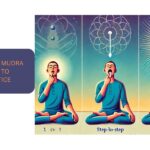
In simple terms, this Mudra is a technique of gently curling the tongue upward to touch the soft palate within the mouth cavity. Though it is physically subtle, this simple action creates a strong internal shift – it calms the restless mind, reduces the wandering of the senses, and redirects the life-force towards higher consciousness.
Sage Gheranda says –
“Yatra yatra sthito yogi sarvakaryeshu sarvada;
Urdhvajivah sthiro bhootvaa dhaarayetpavanam sadaa;
Nabhomudra bhavedeshaa yoginaam roganaashinee.”
The meaning is “Wherever one is and during all activities, a yogi should keep the tongue turned upward and retain the breath. Nabho Mudra destroys all the disorders within the body of a yogi.”
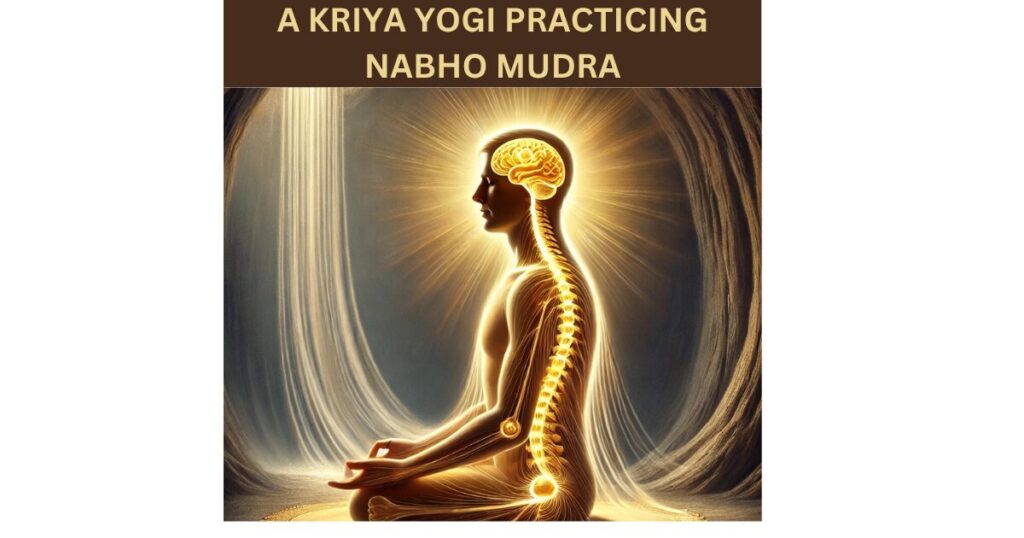
The mudras described in the Raja Yoga are similar to those explained in Hatha yoga. In Kriya Yoga (a combination of Raja Yoga and Hatha Yoga), Nabho Mudra plays an important role because it supports the union of energy (Prana) and consciousness (Chitta) through the power of breath and awareness. This mudra acts as an internal switch that helps direct the Prana (life force) upward along the spine from the lower part of the spine (Mooladhara Chakra) to the higher center (Shashrara Chakra) for profound spiritual awakening.
During Kriya Yoga, this mudra helps in maintaining mental stillness and continuous awareness, allowing the practitioners to experience the union of breath, mind, and soul. In this way, it becomes more than a physical technique – it becomes a sacred key that opens the inner pathway where energy and consciousness merge into universal oneness.
1. What is Nabho Mudra?
In simple terms, Nabho Mudra is often called “Sky Gesture”, a simple process of curling or folding the tongue upward/backward so that it lies in contact with the upper palate. In this process, the intake of air can easily be stopped when the tongue is reversed. It can be practiced with both internal and external breath retention. Here we should mention a few words about Mudra. Mudra is a posture that acts as a smaller body lock for energy. It is a well-known fact that Lord Buddha also practiced Nabho Mudra and Vipassana during his meditation for attaining higher consciousness.
2. The Symbolic meaning of Nabo Mudra:
The symbolic meaning of Nabho Mudra goes far beyond the physical action. In Sanskrit, Nabho means Sky, and Mudra is a Gesture that represents its vastness, infinity, and unbounded nature of consciousness. It symbolizes the merging of the individual self with the infinite expanse of universal awareness.
In precise terms, Nabho Mudra is not merely a gesture of the tongue but it is a gesture of transcendence – a silent act of turning the Yogi inward, expanding vast awareness, and connecting with the boundless Sky within. It signifies the journey from the finite to the infinite, from the sensory to the spiritual, and from the outer to the inner spiritual world.
3. Why is Nabho Mudra an important aspect of Kriya Yoga?
Nabho Mudra is an important aspect in Kriya Yoga because it plays a key role in balancing energy, calming the mind, and deepening awareness. Kriya Yoga is the combination of Raja Yoga and Hatha Yoga, which was popularized by the great Kriya Yogi, Shyama Charan Lahiri, a principal disciple of Babaji Maharaj. Kriya Yoga is a scientific method of spiritual evolution where breath, energy, and consciousness unite. Here, Nabho Mudra plays a silent yet powerful role by directing the Life force (Prana) upward, helping the practitioner in transcending the pull of the senses and enter a state of meditative stillness.
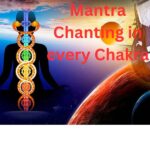
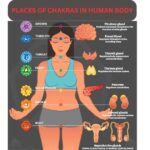
When the tip of the tongue touches the soft palate (Uvula), a subtle energetic circuit is completed within the body. This prevents the energy from coming out through the senses and instead encourages it to move upward through the Sushumna Nadi (the central energy channel of the spine). As this energy flows upward, it awakens the Chakras from Mooladhara to Sahasrara, enhancing focus, clarity, and spiritual perception.
During practicing Pranayama by keeping the tongue within the Uvula (Soft Palate), Nabho Mudra supports Kumbhaka, which helps the practitioner to remain centered in awareness. It stabilizes the mind and prepares the consciousness for deeper states like Dhyana (Meditation) and Samadhi (a prolonged state when the practitioner can unite with the Cosmic Energy.
In summary, Nabho Mudra is an essential aspect in Kriya Yoga since it transforms breath into awareness and energy into higher awareness. Without this, the inner current of the Kriya remains incomplete – with it, the practice becomes a true journey towards self-realization.
4. How to Practice Nabho Mudra Safely:
Nabho Mudra was safeguarded for thousands of years because its application may be fatal to a Kriya Yogi. Nabho Mudra/Khechari Mudra brings the practitioner a step closer to gaining full control over the process of the physical body. Nabho Mudra is an old technique to achieve peace of mind and to facilitate a state of silent and deep meditation, and hence achieve the highest state of Samadhi. The other name of Nabho Mudra is Talavya Kriya (Talu means the palate and Talavaya means the related Palate (Uvula). This practice is the foundation of a Khechari Mudra practitioner. This must be learnt from a well-trained Kriya Yogi (Guru).
Now, let us discuss the method of cleansing the tongue and lengthening the tongue for destroying old age, death, and keeping the body disease-free. Another term of this Kriya is Jiva Shodhana/Jihvamoola Dhauti. Through this practice, the length of the tongue is increased, and health is optimized. Several kinds of chemical reactions take place within the body. New cells are generated, old cells die, and waste material is excreted. The coating that develops on the tongue is the cellular debris and microorganisms that are not required by the body. Therefore, it is needed to remove these impurities daily through the practice of Jivha Dhauti.
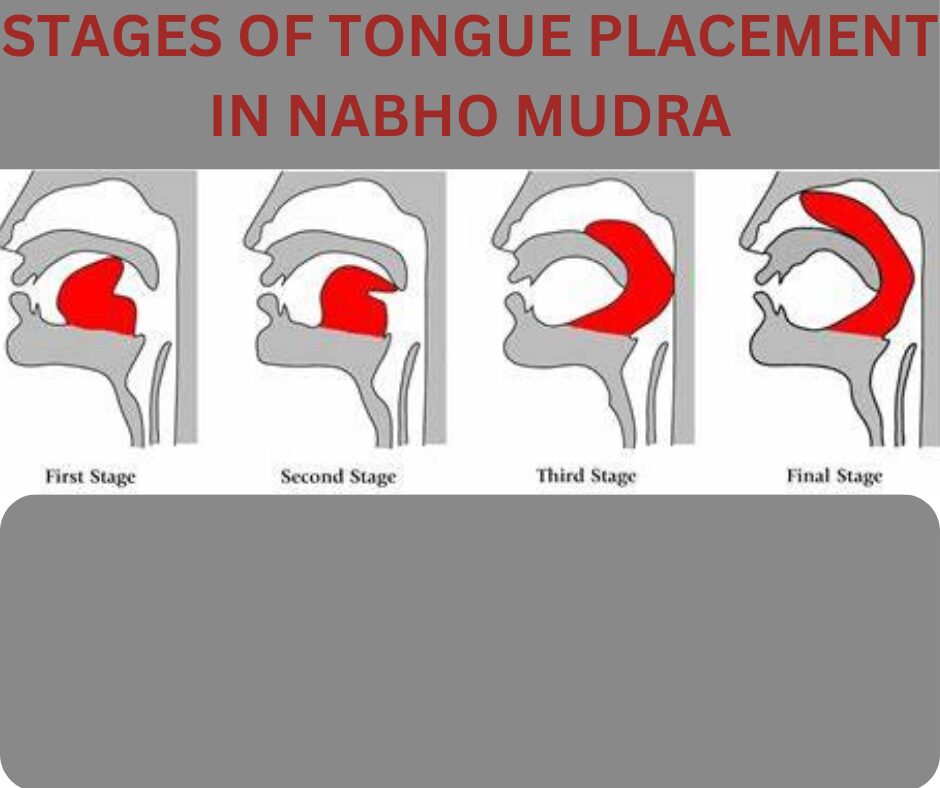
Generally, there are two methods adopted to elongate the tongue.
- One is by Dohan Kriya
- The other one is by cutting the phrenulum
Dohan Kriya is easy and simple to perform, and it is practiced by most of the Nabho Mudra seekers. Most of the new Khechari Mudra practitioners at their early age cut the frenulum for early elongation of the tongue. This practice is generally seen in high altitude Moths and Gumphas of Tibet in the Himalaya, and they also use Ankol Oil for early recovery of the cutting process. This cutting process is also seen here also.
The process of Dohan Kriya is to first clean the tongue by inserting the middle and index finger into the throat and rubbing over the tongue from the root to remove the mucus deposited. Then, some butter is to be well applied to the tongue. Now stretch the tongue outside gently and move the tongue side-by-side for massaging. The butter makes the tongue smooth and slippery. Now, push the tongue backward by placing two fingers beneath the phrenulum. This should be done regularly, if possible, seven to ten times a day.
Precaution: The fingernails nails to be cleaned before the practice. This practice is to be done gently and to be stopped if any blister is found.
Benefits of Dohan Kriya: The Tongue has a high sensory and motor function. The tongue has a strong connection with the brain. If the tongue is diseased, the thinking becomes dull, and it also affects the breathing process. Therefore, it is important to take proper care and maintenance. By massaging with milk, the mucus that is deposited on the tongue and throat is cleaned.
5. The Five Hidden Benefits of Nabho Mudra:
- It Activates the Inner Energy Circuit:
One of the most often overlooked benefits of Nabho Mudra is its strong ability to activate the inner energy circuit within the body. The human body is not to be seen as just a physical structure, but the body should be seen as an intricate network consisting of various energy channels (Nadis) through Prana (the life force) that flows constantly. When this flow is uninterrupted, the practitioner of Nabho Mudra experiences clarity, balance, and higher awareness.
By simply turning the tongue upward to touch the soft palate (Uvula), Nabho Mudra helps redirect prana (the life force) away from the senses and inward toward the Sushumna Nadi, the central energy channel. This inward redirection reduces sensory distraction and awakens the subtle flow of energy along the spine, especially around the Ajna (third eye) and Sahasrara (crown) chakras.
From the physiological point of view, Nabho mudra gently stimulates the Vagus Nerve by triggering the parasympathetic nerves and promoting deep relaxation. This calm state becomes the perfect foundation for energy to rise smoothly during Kriya Yoga, allowing the practitioner to experience a deeper connection between breath and awareness.
- Enhances Breathe Control and promotes Longevity:
Nabho Mudra bears a deep and powerful connection with Pranayama. While Pranayama focuses on controlling and refining the breath, Nabho Mudra acts silently behind to support, extend, and deepen this control. Together, they create a harmonious balance between breath, energy, and awareness, which is the foundation of Khechari Mudra in Kriya Yoga.
When the tongue touches the Uvula (the soft palate), the breath naturally slows down and encourages longer, smoother inhalation and exhalation. This helps to attain Kumbhaka, which is a key element in Pranayama that allows the Prana (Life force) to stabilize and flow inward. As the Chitta and Vritti become calm, the mind automatically becomes steady, making it easier to maintain awareness throughout the practice.
This timeless yogic principle reflects the idea that slower, steadier breathing conserves vital energy, reduces stress on the body, and supports a calm, balanced mind—key factors that contribute to enhanced longevity and overall well-being.
- Awakens Sweetness and Serenity Within:
Nabho Mudra internally stimulates the parasympathetic nervous system, creating an inner atmosphere of calm, sweetness, and gentle bliss. This simple yet profound gesture turns the mind inward, dissolves restlessness, and invites a serene, nectar-like stillness to arise from within.
In deep state of Nabho Mudra — and in more advanced Khechari Mudra — practitioners often describe a subtle sweetness arising in the mouth. Yogic texts call this essence AMRITA, the “immortal nectar.” While not a literal divine liquid, it is a physiological and energetic phenomenon triggered when the tongue gently rests upward. In the third stage of Kriya Yoga, while practicing THOKKAR KRIYA, the tongue continuously hits the Medulla Oblongata in the bottom-most part of the Brain.
This connects the Brain and the Spinal Cord and makes it a conduit for nerve signals to and from the body. It helps to control the vital processes of the body, like heartbeat, breathing, and blood pressure. On continuous hitting, a sweet juice comes out from the brain, and the Yogis call this AMRITA. This is a very secret Yogic technique. It nourishes the subtle body, quiets the mind, and supports prolonged states of meditation without discomfort or dryness. This helps a Yogi to live a longer life, even snake bites can not do any harm.
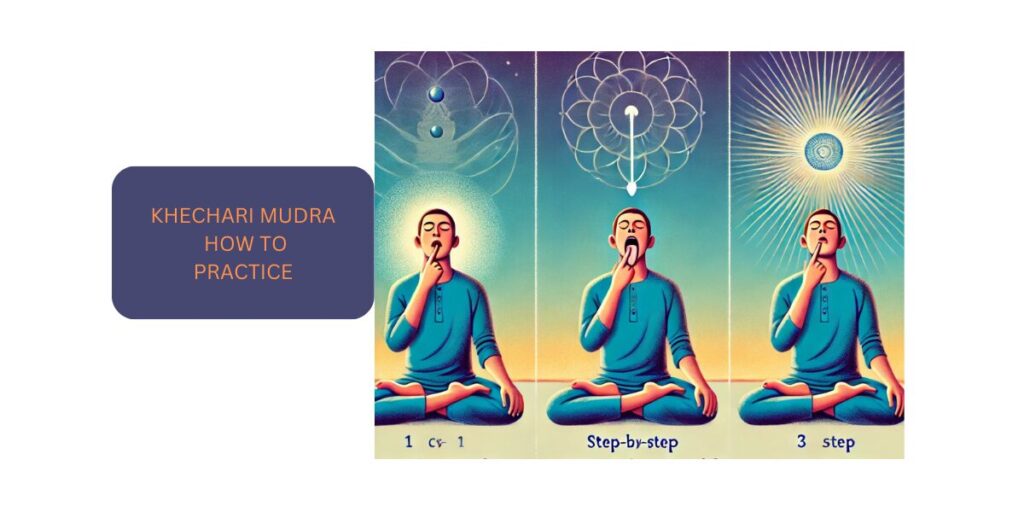
- Stillness of Mind and Deep Meditation:
Nabho Mudra gently redirects the flow of sensory energy inward. When the tongue is gently placed against the upper palate near the Medulla Oblongata, two powerful shifts occur:
- The senses naturally begin to withdraw, especially taste and speech, which are immediately neutralized.
- The mind becomes less reactive to external impressions because the upward tongue position stimulates the parasympathetic system, calming the nervous pathways responsible for outward engagement.
As a result, the Yogi experiences a gradual disconnect from external stimuli. The mind stops chasing sounds, sights, and sensations, and instead turns inward toward its own source. This inward movement is the essence of Pratyahara — the fifth limb of Yoga — where the senses no longer dominate the mind but rest quietly within. This is also a secret technique of Nabho Mudra.
In Kriya Yoga, this internalization is essential. By reducing sensory noise, Nabho Mudra prepares the practitioner for deeper breath awareness, subtler energy perception, and prolonged inner stillness. It becomes a gateway through which consciousness moves from the periphery of the senses to the inner core of meditation.
Here, a beautiful correlation is observed between Tongue Placement and Brain Quieting. Modern science, physiologically it offers an interesting perspective on why Nabho Mudra leads to inner silence. When the tongue is gently placed on the upper palate, it activates specific nerve endings connected to the Vagus Nerve and trigeminal pathways. These pathways influence the brain’s sensory-processing regions.
Studies on similar orofacial nerve stimulation show that:
- Activity in the sensory cortices decreases, meaning the brain becomes less reactive to external stimuli.
- The limbic system (emotion center) calms down, reducing stress and mental chatter.
- The parasympathetic nervous system becomes dominant, shifting the mind toward restfulness and inward focus.
In simple terms, the tongue placement in Nabho Mudra sends a “quieting signal” to the brain, slowing down sensory input and promoting stillness. This supports the yogic experience of Pratyahara — withdrawal of senses — and deepens meditation by reducing internal noise.
- Spiritual Protection and Divine Connection:
In the science of Yoga, Nabho Mudra is often described as a psychic seal that conserves and redirects Pranic Energy. When the tongue is lifted upward, it completes an internal energetic circuit, preventing prana from flowing downward and dispersing through the lower centers.
Instead, this gentle upward seal encourages:
- The upward movement of prana (Udana Vayu) toward the Brain and Sahasrara Chakra.
- Stabilization of Apana Vayu, reducing restlessness, and grounding the practitioner.
- Energetic containment, allowing prana to circulate within the central channel (Sushumna).
By preventing the subtle “leakage” of energy through the lower pathways, Nabho Mudra supports deeper absorption in meditation. It becomes a quiet guardian of inner vitality, ensuring that the energy cultivated through Kriya practices rises and nourishes higher states of awareness.
Traditionally, the Yoga Practitioners believe that Nabho Mudra protects the Yogi from any negative vibration. Practicing Nabho Mudra creates an inner shield of stability. By drawing the senses inward and sealing the pranic energy upward, the practitioner becomes less reactive to external negativity. The mind grows calm, the energy becomes centered, and the aura stabilizes. As a result, negative vibrations — whether emotional, environmental, or subtle — have less influence on the practitioner. This inner containment is believed to offer a sense of protection and heightened resilience on the spiritual path.
Symbolically, Nabho Mudra unites the “Earthly Self” with the “Cosmic Sky” by lifting awareness upward and expanding consciousness beyond the physical plane. The upward placement of the tongue represents a bridge between the human and the divine, guiding the practitioner toward a state of inner unity and higher awareness.
6. Why Every Kriya Yogi Needs to Know Nabho Mudra:
Nabho Mudra is far more than a simple physical gesture. It is a powerful inner technique that quiets the mind, awakens subtle energy, and guides the practitioner toward deeper states of meditation. By harmonizing breath, prana, and awareness, it becomes a true gateway to inner silence and energy mastery.
Without Nabho Mudra, the full transformative potential of Kriya Yoga remains incomplete, as this subtle technique unlocks the inner stillness and energetic refinement essential for advanced practice.
In the Kriya Yoga tradition taught by Mahavatar Babaji, mastery of Energy (Prana) is central to spiritual evolution. Babaji emphasized that true Kriya is not merely a set of physical techniques but a precise inner science of controlling life-force through breath, awareness, and subtle locks within the body. Among these inner locks, the position of the tongue plays a crucial role. Babaji is often quoted in Kriya lineages as saying that “When prana flows upward, consciousness rises with it,” highlighting the importance of sealing the senses and redirecting energy through internal methods.
Nabho Mudra — the gentle upward placement of the tongue — is one such method that supports the upward movement of prana through the spine. It connects breath and mind, allowing the practitioner to conserve vital energy instead of letting it dissipate downward through sensory engagement. Babaji’s teachings consistently stress that breath is the bridge between the physical and the divine, and that controlling the breath with internal mudras accelerates spiritual awakening.
By integrating Nabho Mudra into Kriya practice, practitioners follow Babaji’s original intention: to quiet the mind, awaken inner light, and channel Pranic Force toward higher consciousness.
7. Conclusion: Unlock the True Power of Nabho Mudra in Kriya Yoga:
Nabho Mudra is more than a subtle yogic gesture — it is a powerful key that completes the inner science of Kriya Yoga. By activating the upward flow of prana, calming the sensory pathways, and deepening states of meditation, this ancient mudra helps to unlock higher consciousness with precision and ease. Whether the practitioner is a beginner or an advanced Kriya practitioner, mastering Nabho Mudra adds depth, clarity, and spiritual strength to their entire practice.
If the practitioner wants to experience the hidden benefits of Kriya Yoga, increase mental stillness, protect inner energy, and accelerate spiritual progress, then start integrating Nabho Mudra into a daily routine. Its impact grows with consistency, devotion, and mindful awareness.
Begin practicing Nabho Mudra today — and feel the silent transformation within you.
FAQ :
1. Is Nabho Mudra a good practice?
Ans: Yes, Nabho Mudra is definitely a good practice for beginners who want to explore the subtle aspects of Yoga like Pranayama (Breath control) and Meditation. Although it is a simpler form of Khechari Mudra, it still offers powerful benefits if it is practiced regularly.
2. What is the difference between Nabho Mudra and Khechari Mudra?
Ans: Nabho Mudra and Khechari Mudra are almost similar, but they are not the same while practicing. Nabho Mudra is considered a beginner or a preliminary stage, while Khechari Mudra is an advanced yogic technique practiced by only a few dedicated practitioners.
3. What is Nabho Mudra according to Gheranda Samhita?
Ans: Wherever one is and during all activities, a yogi should keep the tongue turned upward and retain the breath. Nabho Mudra destroys all the disorders within the body of a yogi.
4. How does Nabho Mudra work?
Ans: This mudra works as an internal switch that helps direct the Prana (life force) upward along the spine from the lower part of the spine (Mooladhara Chakra) to the higher center (Shashrara Chakra) for profound spiritual awakening.
5. Is Nabho Mudra safe for beginners?
Yes, this Mudra is safe for beginners. It does not have many complex activities like Khechari Mudra. This practice is the foundation of a Khechari Mudra practitioner. This must be learnt from a well-trained Kriya Yogi (Guru).


I don’t think the title of your article matches the content lol. Just kidding, mainly because I had some doubts after reading the article. https://www.binance.com/pt-BR/register?ref=GJY4VW8W
Your thoughts always stimulate curiosity and offer a fresh take on perennial topics. It would be intriguing to see you scrutinize how these ideas intersect with modern shifts, like AI or sustainable living. Your knack for breaking down the complex is exceptional. Thanks for sharing such engaging content. excited for more!
Content: https://yarchatgpt.ru