
Introduction: Why Choose a Yoga Retreat in India?
A yoga retreat in India offers enormous opportunities for exploring yoga in the land from which its philosophical and spiritual traditions evolved. From the northern part of India, the Himalayan foothills, to the southern part of India’s tropical landscapes of Kerala, India attracts travellers from across the world who want to learn yoga, practise meditation, improve their daily routines, and experience a different way of life.
Unlike a normal holiday, a yoga retreat in India includes physical postures, breathing exercises, meditation, traditional philosophy, spiritual discussions, healthy meals, and quality time in nature. Some of the programs focus on relaxation and general well-being, while the other programs provide structured yoga teacher training or intensive spiritual study.
Today, international travelers are increasing day by day and are looking for quality holidays that combine travel with personal well-being. India’s cultural heritage, diverse landscapes, experienced teachers, and established ashrams and gurukuls make it a distinctive destination for this form of travel.
Whether you are a beginner, an experienced practitioner, or someone exploring meditation for the first time, choosing the right yoga retreat in India starts with understanding your goals, preferred location, and the type of program you want.
1. What Is a Yoga Retreat?
A yoga retreat is a planned and structured program in which participants spend time practicing yoga and related activities, usually away from their normal routines.
A typical retreat may include:
- Morning Yoga and gentle stretching.
- Pranayama, or traditional breathing practices.
- Guided meditation and relaxation.
- Vegetarian or locally prepared meals.
- Yoga philosophy and lifestyle workshops.
- Nature walks and periods of quiet reflection.
- Optional cultural visits or spiritual activities.
The program varies according to the different centers, teachers, and lengths of stay. Some retreats last a weekend, while others run for a week, several weeks, or longer.
A yoga retreat is not necessarily for medical treatment. Although participants may find the experience relaxing or helpful for establishing healthy habits, retreats in different locations in India should not promise guaranteed cures for medical conditions. Some of the centers in their packages also provide Ayurvedic treatments for some critical diseases.
2. Why are yoga retreats in India famous?
India’s relationship with Yoga extends beyond exercise. Traditional yoga includes physical practice, breath awareness, concentration, meditation, ethical principles, self-awareness, and self-realization.
The country’s Ashrams, Gurukuls, yoga schools, and spiritual centers provide opportunities to learn about these traditions in their cultural context. Travellers can combine their practice with visits to ancient temples, rivers, historic sites, and mountain landscapes.
A yoga retreat in India also introduces participants to different approaches, including Hatha Yoga, Ashtanga Yoga, Iyengar Yoga, restorative yoga, and meditation-based programs. Teaching methods and duration vary, so intending beginners should check the course description before booking their selected programs.
For many international visitors, the attraction is the combination of structured practice, cultural discovery, and time away from everyday distractions.
3. Yoga Retreats in India and Wellness Tourism:
Government of India’s View
The Government of India increasingly presents yoga as an important part of the country’s cultural heritage, public well-being initiatives, and tourism offering.
The Ministry of Tourism, Govt. of India, has formulated a National Strategy and Roadmap for Medical and Wellness Tourism, combining with relevant ministries, state governments, and industry stakeholders. Its wider approach includes promoting India as a destination for wellness experiences alongside its other tourism products.
The Ministry’s 2025–26 annual report also describes International Day of Yoga celebrations at 40 culturally and naturally significant tourist sites in 2025, connecting Yoga with India’s cultural and natural heritage.
Another important development is the growing international reach of the International Day of Yoga.
According to India’s Ministry of AYUSH, International Day of Yoga 2025 featured approximately 2,000 events across 191 countries, with events held at around 1,300 locations outside India. In 2026, the national Yoga Sangam initiative recorded participation exceeding 3 crore people across 780 districts in India.
These figures indicate the scale of public engagement with yoga. They are not, however, counts of people who booked a Yoga retreat or travelled specifically for yoga.
The government-supported approach creates an opportunity for India to develop responsible yoga tourism through qualified teachers, reliable accommodation, clear program information, and respect for traditional practices.
Present Statistics: Is the Yoga Retreat in the Global Market Growing?
Interest in yoga is global, but there is an important difference between the number of people practicing yoga, participation in International Day of Yoga events, and the number of people travelling for a retreat.
One commercial market analysis by Grand View Research provides a useful indicator of the wider Indian wellness-retreat sector.
| Market indicator | Reported figure |
| India’s wellness-retreat market revenue, 2025 | US$11.56 billion |
| Estimated market revenue, 2026 | US$12.83 billion |
| Forecast market revenue, 2033 | US$27.67 billion |
| Forecast annual growth, 2026–2033. | 11.6% |
| Yoga and meditation share of retreat revenue, 2025 | 35.39% |
Source: Grand View Research — India Wellness Retreats Market Outlook.
These are commercial market estimates, not official government statistics or verified revenue figures for Yoga retreats alone. The figures cover a wider wellness-retreat market, including yoga and meditation, fitness, spa services, and personal development.
Nevertheless, the analysis suggests that yoga and meditation are important components of India’s retreat economy.
For travelers and retreat operators, this creates opportunities to develop programs that combine authentic teaching, appropriate facilities, cultural experiences, and transparent pricing.
- The World’s View: Why International Travelers Choose India
Yoga has become a worldwide practice, and India’s connection with its traditional roots remains an important attraction.
The Global Wellness Institute defines wellness tourism as travel associated with maintaining or enhancing personal well-being. Its research estimates that global wellness tourism expenditure reached nearly US$894 billion in 2024.
This figure covers the wider wellness-tourism industry worldwide, not yoga retreats alone.
For international visitors, a yoga retreat in India can offer several attractions:
- Traditional learning: Participants can explore yoga philosophy and practices in their historical and cultural setting.
- Daily routine: A structured timetable can help visitors make time for movement, breathing exercises, and meditation.
- Natural surroundings: Mountain views, forests, rivers, and coastal settings provide different retreat environments.
- Cultural discovery: Retreats may include local food, traditional architecture, spiritual sites, and opportunities to learn about Indian customs.
- Personal development: Some travelers seek quiet reflection, while others want to deepen their existing practice or study to become yoga teachers.
International interest should not be confused with a guarantee that every retreat will provide the same quality or benefits. The intending visitors should research teachers, accommodation, course content, and safety arrangements prior to making a booking.
5. Best Places for a Yoga Retreat in India
India has several established yoga destinations. The best choice depends on whether you prefer mountains, beaches, traditional ashram life, a comfortable wellness resort, or a structured training course.
- Rishikesh, Uttarakhand
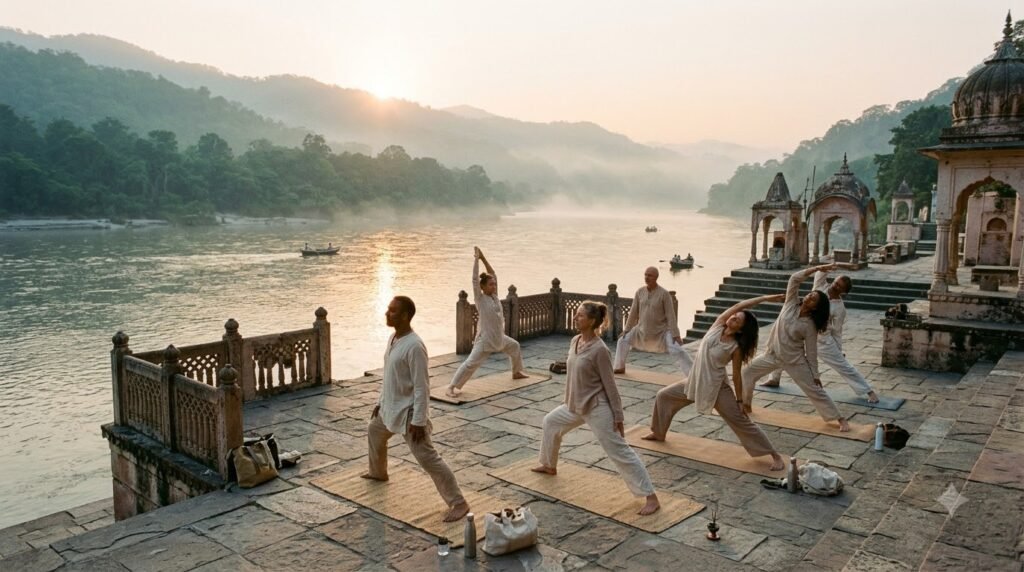
Rishikesh is among India’s best-known destinations for yoga, meditation, and yoga retreats, spreading at different locations starting from Rishikesh to higher altitudes of the Himalayas. Rishikesh is located beside the Ganges near the Himalayan foothills; it has a large network of Yoga schools, ashrams, meditation centers, and retreat facilities.
Rishikesh has been recognized as the “No. 1 Sacred Gateway” to spiritual yoga throughout the world, not for its mere popularity or tourism alone, but because it propagates spiritual authority, historical continuity, and inner transformational power. In this context, it has to be mentioned that this title, “Rishikesh,” signifies a place from where the journey towards authentic spiritual yoga begins.
A yoga retreat in India, especially in Rishikesh, may include Hatha Yoga, Kriya Yoga, pranayama, meditation, yoga philosophy, or teacher training.
Best suited for beginners, international visitors, meditation students, and people interested in traditional Yoga learning.
Before booking, compare class sizes, teaching credentials, accommodation standards, and the intensity of the programme.
- Kerala
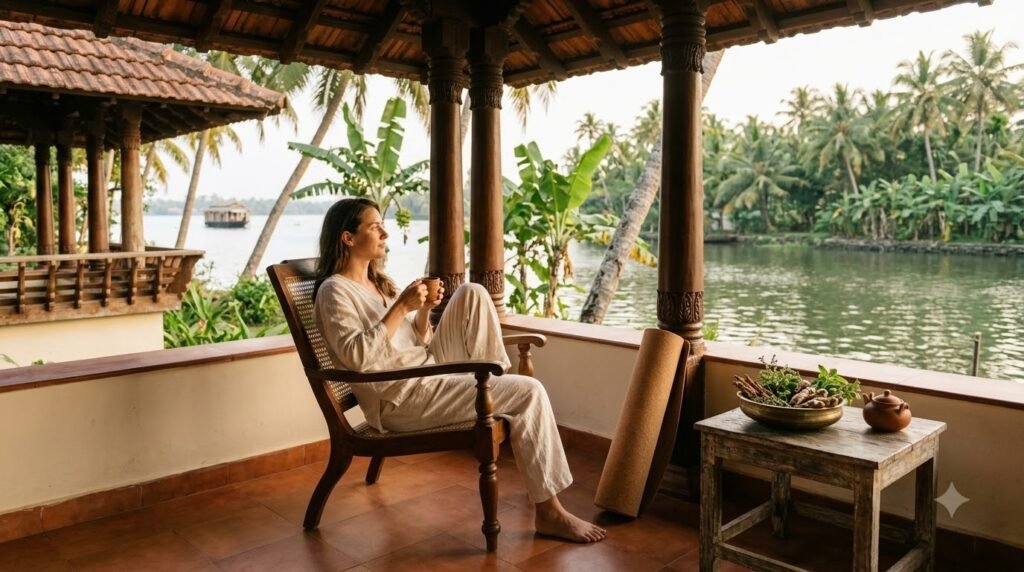
Kerala is particularly associated with Ayurveda, its tropical landscapes, and wellness resorts. A yoga retreat in India, specifically in Kerala, may combine daily yoga practice with meditation, nature activities, locally inspired meals, and optional Ayurvedic services.
Some centers offer integrated wellness programs, but the services and practitioner qualifications differ between establishments.
Best suited for travelers seeking a nature-based retreat, a relaxed environment, or a program combining Yoga with traditional wellness experiences.
- Haridwar, Uttarakhand
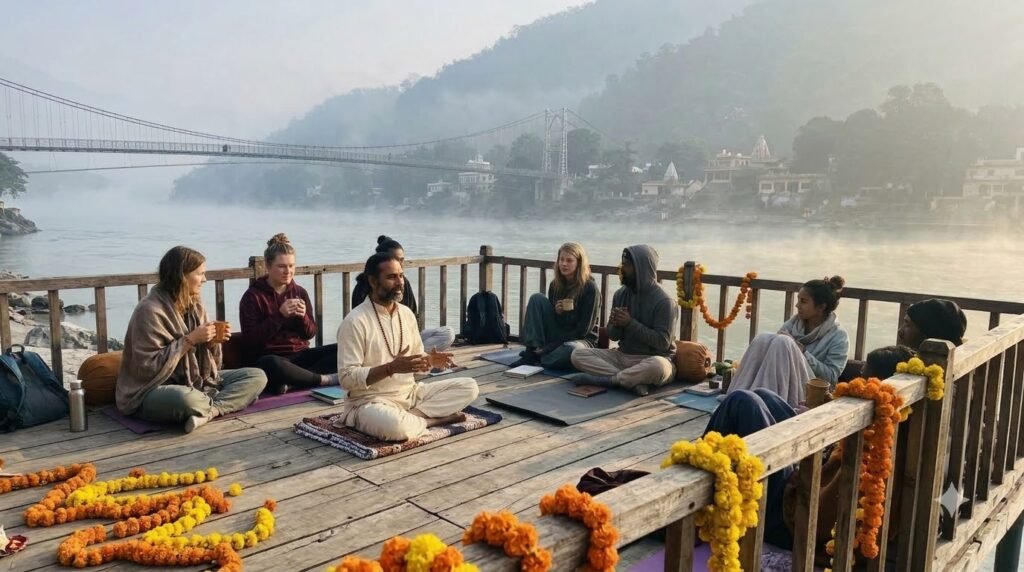
Haridwar is known for its religious heritage, temples, and Ganges Riverfront. It can suit travelers who want to combine yoga and meditation with cultural and spiritual exploration.
Best suited for: Visitors interested in spiritual traditions, ashrams, and quieter forms of learning.
- Himalayan Retreats in Uttarakhand and Himachal Pradesh
Mountain locations around Uttarakhand and Himachal Pradesh offer a different retreat environment. Depending on the centre, programs may include Yoga, meditation, hiking, relaxation, and spending time with nature.
Best suited for: Travelers who prefer mountain surroundings, outdoor activities, and time away from busy cities.
Check altitude, weather, transport access, and available medical facilities before selecting a remote retreat.
5. Goa
Goa combines coastal travel with Yoga studios, retreat centers, and wellness accommodation. Some programs emphasize gentle Yoga, meditation, movement, and relaxation.
Best suited for: Travelers looking for a beach holiday combined with daily Yoga practice.
- Mysuru, Karnataka
Mysuru is widely associated with Ashtanga Yoga and established Yoga-learning communities. It may suit practitioners seeking a more structured practice or an extended period of study.
Best suited for: Experienced practitioners and visitors interested in traditional Yoga schools.
- Tamil Nadu
Tamil Nadu offers opportunities to explore Yoga, meditation, and spiritual traditions alongside its temples and cultural heritage. The availability and style of retreats vary by location.
Best suited for: Travelers interested in combining Yoga practice with South Indian cultural experiences.
6. Spiritual Retreats in India: Beyond the Mat
Some people want more than movement. Spiritual retreats in India focus on meditation, chanting, self-enquiry, and service. Popular choices include:
- Varanasi: One of the world’s oldest living cities
- Bodh Gaya: Where the Buddha attained enlightenment, ideal for Vipassana-style practice
- Tiruvannamalai: A hill town sacred to Shiva
- Auroville and Pondicherry: Quiet community life and silent reflection
Spiritual retreats in India often ask for early rising, simple clothing, and respect for local customs. Honour these rules. They protect the peace of everyone.
7. What to Expect at a Yoga Retreat in India
A typical day might begin with morning meditation or gentle stretching, followed by a Yoga session and breakfast. Some centers schedule philosophy classes, breathing exercises, workshops, or nature walks during the day, with a further practice or relaxation session in the evening.
A retreat also offers:
- Accommodation and meals.
- Beginner or advanced Yoga classes.
- Guided meditation.
- Workshops on traditional Yoga philosophy.
- Cultural excursions.
- Optional wellness consultations.
Always confirm what the fee includes. Flights, airport transfers, excursions, specialist therapies, and personal expenses may cost extra.
8. Yoga Teacher Training Centers in India
Many travellers also search for yoga teacher training centers in India. India remains the most trusted place for this goal because you study at the source.
Here is how most courses work:
- 200-hour course: The base level, often 3 to 4 weeks
- 300-hour course: Advanced training for those who already hold a 200-hour certificate
- 500-hour course: Combined path for serious teachers
When reviewing yoga teacher training centers in India, check these points:
- Is the school registered with Yoga Alliance or with an Indian body such as the Ministry of AYUSH’s yoga certification scheme?
- Do lead teachers have at least five years of teaching experience?
- Is anatomy taught by a qualified person?
- What is the student-to-teacher ratio?
- Can you speak with past students?
The best yoga teacher training centers in India do not promise easy certificates. They promise honest work, real feedback, and a firm daily routine.
- How to Choose the Right Yoga Retreat in India
Choosing a suitable retreat is more important than selecting the destination with the strongest reputation.
- Define your goal. Decide whether you want relaxation, regular practice, spiritual study, or teacher training.
- Check teacher qualifications. Look for relevant training and clear information about the teaching team.
- Review the timetable. Ensure the level and intensity suit your experience and physical abilities.
- Compare accommodation. Check room arrangements, meals, accessibility, and facilities.
- Read independent reviews. Look for detailed feedback rather than relying only on promotional claims.
- Check health and safety arrangements. Ask about modifications, injuries, emergency support, and access to medical care.
- Understand the cost. Compare the full package rather than the advertised starting price alone.
A responsible Yoga retreat in India should clearly explain its services, respect participants’ limits, and avoid promising guaranteed medical or spiritual outcomes.
Yoga Retreats in India and the Future of Wellness Tourism:
India has an opportunity to connect its traditional Yoga heritage with contemporary interest in well-being and meaningful travel.
Government initiatives promoting medical and wellness tourism, global participation in the International Day of Yoga, and commercial research on the retreat market all point to a substantial ecosystem around wellness experiences.
However, long-term success will depend on quality, not just promotion. Qualified instructors, honest advertising, transparent prices, appropriate facilities, and respect for local communities can help establish trust among domestic and international visitors.
A Yoga retreat in India can be a valuable opportunity to learn, practise, and explore. Its value lies in the quality of the experience rather than claims that it can solve every health or personal problem.
11. Benefits of a Yoga Retreat in India
Research on yoga shows benefits for stress, sleep, flexibility and mood. A retreat adds focus and time, which makes change faster.
Key benefits
- Calmer mind: Daily meditation reduces racing thoughts
- Stronger body: Posture, balance, and core strength improve
- Better sleep: Early nights and fresh air help
- Healthier habits: Simple food resets cravings
- Emotional clarity: Quiet time brings insight
- Community: You meet kind people on the same path
Pros and cons
| Pros | Cons |
| Authentic teachers and lineages | Quality varies between centres |
| Affordable compared with the West | Basic rooms at some ashrams |
| Deep culture and spiritual setting | Travel and visa planning needed |
| Wide choice of styles and budgets | Strict rules may feel hard at first |
Being honest about the cons helps you prepare. A good retreat is not always comfortable. It is always worthwhile when it fits your needs.
12. Costs and Best Time to Visit
Prices vary widely. These are rough ranges per person per night, including meals and classes:
- Budget ashram stays: about INR 1,500 to 3,500
- Mid-range retreats: about INR 4,000 to 9,000
- Luxury wellness resorts: INR 12,000 and above
Always confirm current prices with the centre, since rates change by season and programme.
Best time to go:
- October to March: Pleasant in most of India, ideal for Rishikesh
- April to June: Good for high Himalayan yoga retreats
- June to September: Good for Kerala’s Ayurvedic monsoon programmes
- Conclusion: Begin Your Yoga Journey in India
From the Ganges in Rishikesh to the green landscapes of Kerala, from Mysuru’s Yoga-learning traditions to the quiet of the Himalayas, India offers a wide range of retreat experiences.
The right Yoga retreat in India can help you create space for regular practice, explore traditional knowledge and discover new places at a more thoughtful pace.
Before travelling, identify your goals, research your options and choose a programme that suits your experience and needs. With careful planning and responsible teaching, a Yoga retreat can become more than a holiday: it can be an opportunity to develop a lasting relationship with Yoga, an ancient heritage of India.
Frequently Asked Questions
- Which is the best place for a Yoga retreat in India?
Rishikesh is well known for Yoga and meditation, Kerala for nature-based wellness experiences, and Mysuru for Ashtanga Yoga. The best destination depends on your goals.
- How long should I stay at a Yoga retreat in India?
Short retreats may last a weekend or several days, while longer programs may run for weeks. Choose a duration that suits your schedule, experience, and budget.
- Are Yoga retreats in India suitable for beginners?
Yes. Many centers offer beginner-friendly programs. Confirm that the classes provide suitable modifications and that no previous Yoga experience is required.
- How much does a Yoga retreat in India cost?
Costs vary according to destination, accommodation, teaching, meals, programme length, and included activities. Check the full price directly with the retreat provider.
- Can foreigners attend Yoga retreats in India?
Yes. International visitors can attend retreats, subject to applicable entry and visa requirements. Visitors planning formal study or other specialized activities should confirm the appropriate visa conditions.
- What should I bring to a Yoga retreat?
Pack comfortable clothing, personal essentials, any prescribed medication, suitable footwear and a Yoga mat if the centre does not provide one.
- Are Yoga retreats the same as medical treatment?
No. A Yoga retreat is generally a wellness or educational experience, not a substitute for medical diagnosis or treatment. People with health concerns should consult an appropriately qualified healthcare professional.
- Why is Yoga retreat tourism important to India?
It connects India’s Yoga heritage with travel, accommodation, cultural exchange, and wellness services. Responsible development can support local communities while helping preserve traditional knowledge.