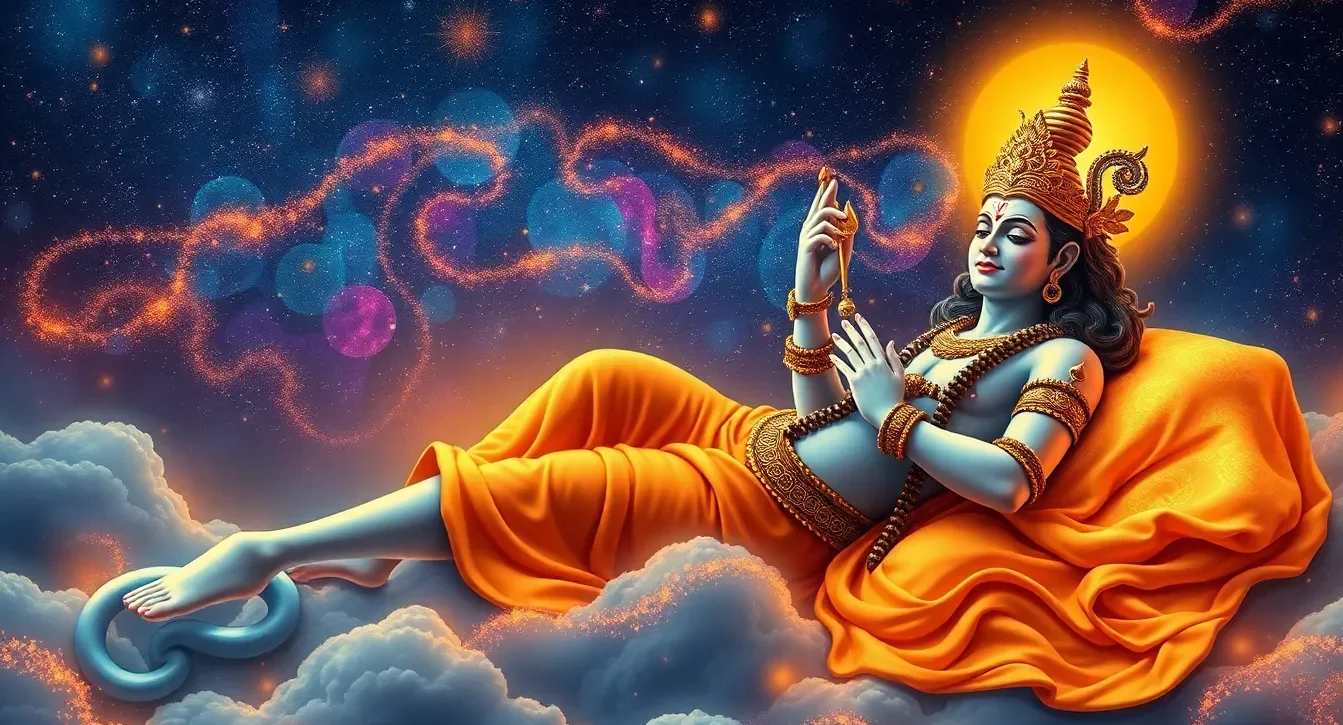
Introduction: Understanding Women Empowerment Through Ancient Indian Wisdom
Women Empowerment has drawn attention throughout the world. Women throughout the world, across different countries and cultures, have been fighting for equal rights, education, financial independence, social recognition, and leadership opportunities from time immemorial. However, significant progress has been made; gender discrimination, violence, and unequal opportunities remain serious challenges.
The Vedic period starts with the Rig Vedic period (1000 – 1500 BC) and the later Vedic period. The basic sources of our ancient history emerge from cultural, social, political, and educational studies that are the main foundation of our four Vedas (Rig Veda, Sama Veda, Atharva Veda, and Ayurveda. Later, different Upanishads provide a rich cultural heritage. From Vedic culture, we know that where goddesses are worshiped, their husbands are also worshiped and reside there.
Interestingly, ancient Indian spiritual traditions provided a unique dimension to feminine strength through the concept of Shakti, the divine energy responsible for creation, preservation, and transformation.
In Hindu mythology, there are several powerful goddesses, like Durga, Saraswati, Lakshmi, Kali, Parvati, Koushiki, etc. Each of the names provides a different dimension of feminine power, leading to women empowerment, such as courage, knowledge, prosperity, independence, and determination.
The above goddesses are more than religious symbols. Each of their stories offers philosophical lessons that can inspire modern women to recognize their abilities, challenge social restrictions, and contribute to women empowerment by extending equal opportunities and their rights.
Can the wisdom of Indian goddesses inspire women empowerment across the world? Now, let us explore their significance.
- Goddess Shakti: The Foundation of Feminine Power
The Sanskrit word “Shakti” means “energy,” “strength,” or “power.” In Hindu philosophy, particularly in Shaktism, Shakti represents the supreme feminine divine principle and is closely related to our ancient yoga system.
Shakti is not limited to physical strength. It represents intelligence, creativity, courage, determination, wisdom, inner transformation, and the ability to transform society.
The Devi Mahatmya, an important Hindu scripture, describes the Goddess as a supreme cosmic power who protects the universe and destroys negative forces.
This philosophy offers an important message for our modern society and teaches us also how to awaken our internal cosmic source of energy. Women should be recognized for their intellectual, emotional, creative, and leadership abilities, thereby leading to women empowerment.
The concept of Shakti, therefore, provides a meaningful spiritual foundation for understanding feminine independence and women empowerment.
This article will be somewhat different from yoga-related articles. This is being written to give a different taste to readers.
या देवी सर्वभूतेषु शक्तिरूपेण संस्थिता।
नमस्तस्यै नमस्तस्यै नमस्तस्यै नमो नमः॥
Ya Devi Sarva Bhuteshu Shakti Rupena Samsthita,
Namastasyai Namastasyai Namastasyai Namo Namah.
-
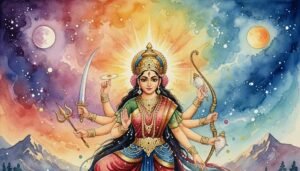
Goddess Durga: Courage, Leadership, Independence, and women empowerment:
Goddess Durga is one of the strongest symbols of feminine power in Indian mythology. If we dig into our ancient Vedas and Puranas, we can learn the meaning of Durga. Durga is the derivative of Durg meaning is forte. Our body is a forte where enormous energy is stored, and we have to energize ourselves to protect against the ominous forces all around us.
According to the Devi Mahatmya and Markandeya Purana, she emerged through the combined energies of the gods to defeat Mahishasura, a powerful demon threatening the cosmic order.
Durga’s victory represents the triumph of courage, justice, and determination over destructive forces.
Her story offers several lessons for women today:
- Courage: Women should have the confidence to challenge injustice and discrimination.
- Leadership: Durga represents the ability to make difficult decisions and lead with determination.
- Protection: Her protective nature inspires efforts to create safer communities for women.
- Independence: Her strength demonstrates that women can overcome challenges through their own abilities.
Goddess Durga reminds us that women are not merely participants in social development and women empowerment, and they can also become powerful leaders of change.
-
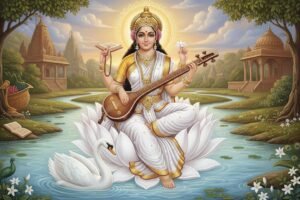
Goddess Saraswati: Education and Intellectual Independence for women empowerment:
Goddess Saraswati represents knowledge, education, wisdom, music, and creativity. These elements help establish women empowerment in the world.
Traditionally, she is depicted holding a veena and a book; she symbolizes intellectual development and the importance of learning. Her carrier is a Duck, this symbolizes the bird who can segregate milk and water, impurities and purities.
Education is one of the strongest foundations of women empowerment. An educated woman can make informed decisions, develop professional skills, understand her rights, and participate confidently in society.
The symbolism of Saraswati is particularly relevant today because millions of girls across the world still face barriers to quality education.
Her message encourages:
- Equal educational opportunities for girls.
- Women’s participation in science and technology.
- Digital literacy and professional development.
- Freedom of thought and intellectual independence.
- Greater representation of women in research and education.
Saraswati represents the belief that knowledge is a powerful instrument of freedom.
-
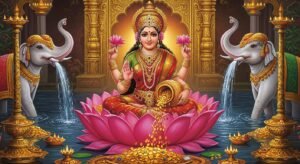
Goddess Lakshmi: Financial Freedom, Economic Independence, and Women Empowerment
Goddess Lakshmi is worshiped as the goddess of wealth, prosperity, fortune, and abundance.
Her symbolism has a strong connection with the economic independence of modern women.
Financial freedom allows women to make independent decisions for women empowerment, support their families, establish businesses, and participate in economic development.
However, financial empowerment involves more than earning an income. It also includes equal wages, property ownership, inheritance rights, and access to financial services. Without all these elements, it is quite impossible to establish women empowerment.
Lakshmi’s symbolism can inspire society to:
- Encourage women entrepreneurs.
- Promote financial literacy.
- Provide equal employment opportunities.
- Support women’s property and inheritance rights.
- Recognise women’s economic contributions.
- Increase women’s participation in business leadership.
Her message reminds us that genuine prosperity should create opportunities for everyone, regardless of gender.
-
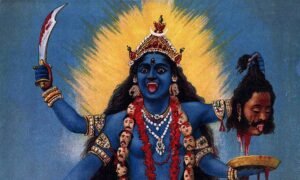
Goddess Kali: Breaking Fear and Social Restrictions
Goddess Kali represents fearlessness, transformation, and the destruction of evil.
Her powerful appearance challenges conventional expectations about feminine beauty, behavior, and social identity.
Kali symbolizes the courage to confront injustice rather than silently accepting oppression.
Her message is particularly relevant for women empowerment in facing discrimination, harassment, domestic violence, and restrictions on personal freedom.
Kali inspires women to:
- Speak against injustice.
- Challenge harmful social traditions.
- Protect their dignity and individual identity.
- Overcome fear and develop self-confidence.
- Demand equal rights and opportunities.
Her symbolism teaches that feminine power does not have to follow conventional social expectations. Women deserve the right to express their individuality, to face oppression, and to show strength.
-
Goddess Parvati: Determination, Self-Respect, and Inner Strength
Goddess Parvati represents determination, devotion, patience, and spiritual discipline.
According to Hindu mythology, she undertook intense spiritual practices to achieve her aspirations and is closely associated with her union with Lord Shiva.
Her story can be interpreted as a lesson in perseverance and personal growth.
Parvati also represents the different dimensions of feminine identity. Through her manifestations as Durga and Kali, she demonstrates that women can express gentleness, courage, strength, and determination in different circumstances.
Her symbolism encourages women to pursue their ambitions, maintain self-respect, and build relationships based on mutual understanding and dignity.

-
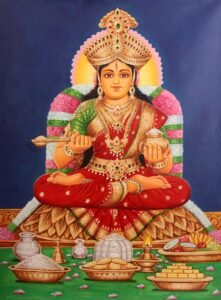
Goddess Annapurna: Nourishment and Women’s Contribution to Society
Goddess Annapurna represents food, nourishment, generosity, and abundance.
Her symbolism reminds us of the importance of food security and the contributions women make to agriculture, nutrition, and community welfare. There are lots of examples of women empowerment set forth in our modern society.
Women play an essential role in food production, household management, and rural economies. Unfortunately, much of their work remains unpaid or undervalued.
The philosophy associated with Annapurna encourages recognition of women’s contributions, better agricultural opportunities, nutritional education, and economic independence.
Her message is that a healthy society must recognize and respect those who sustain its communities.
-
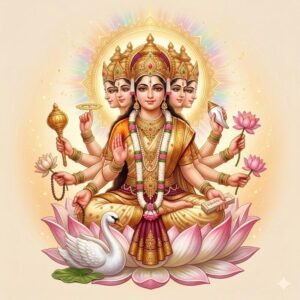
Goddess Ganga and Gayatri: Environmental and Intellectual Awakening for Women Empowerment.
Goddess Ganga symbolizes purity, life, and renewal. As a sacred river, she represents the importance of nature and the resources that sustain human civilization.
Her symbolism can inspire women to participate in environmental protection, water conservation, and sustainable development.
Goddess Gayatri, on the other hand, represents knowledge, illumination, and intellectual awakening. The Gayatri Mantra from the Rigveda expresses a prayer for the illumination of human intelligence.
Together, these traditions offer two important lessons: women should have equal opportunities to lead environmental initiatives and participate in intellectual and spiritual development.
-
Indian Goddesses and Global Women Empowerment
The values represented by Indian goddesses have relevance beyond religious boundaries.
Women from different cultures can identify with courage, education, financial independence, leadership, and freedom, regardless of their religious beliefs.
The United Nations Sustainable Development Goal 5 specifically focuses on achieving gender equality and women empowerment.
The symbolism of Indian goddesses can be connected with these global priorities:
| Goddess | Symbolic Value | Modern Relevance |
| Durga
|
Courage | Women’s leadership and safety |
| Saraswati | Knowledge | Equal education |
| Lakshmi | Prosperity | Financial independence |
| Kali | Fearlessness | Freedom from oppression |
| Parvati | Determination | Personal autonomy |
| Annapurna | Nourishment | Food security |
| Ganga | Life and purity | Environmental protection |
| Gayatri | Wisdom | Intellectual Development |
These connections are modern interpretations of traditional symbolism rather than direct descriptions of contemporary gender equality policies.
- The Historical Paradox: Worshiping Goddesses but Discriminating Against Women
An important question arises: If Indian traditions worship powerful goddesses, why have women historically experienced discrimination and unequal social opportunities?
The answer lies in the difference between religious symbolism and social practice.
India has a rich history of goddess worship, but this has not automatically guaranteed equal rights for women and women empowerment.
Ancient Indian philosophical traditions also recognize remarkable women thinkers such as Gargi and Maitreyi, who are remembered for their intellectual contributions in the Upanishadic tradition.
Similarly, female Bhakti poets such as Mirabai, Andal, and Akka Mahadevi and so on. Andal is lesser known lady demonstrated spiritual independence and creative expression. This lady fell in love with Lord Vishnu and refused to marry anyone other than Lord Vishnu. In her songs, she asks for His embrace, demands His caress. She rejects everything and everyone else.
These examples remind us that women’s intellectual and spiritual contributions have been an important part of Indian history.
True women empowerment requires more than worshiping goddesses. It requires equal education, safety, financial freedom, dignity, and participation in decision-making.
- Bringing the Philosophy of Shakti into Modern Life to Implement Women Empowerment:
The philosophy of Shakti can inspire practical changes in contemporary society.
Education: Every girl should have access to quality education and professional opportunities.
Economic independence: Women should have equal access to employment, entrepreneurship, property, and financial resources.
Leadership: Women deserve equal representation in politics, business, science, and public institutions.
Personal freedom: Every woman should have the right to make informed decisions about her own life.
Safety and dignity: Communities must work towards eliminating violence, harassment and discrimination.
Self-confidence: Women should be encouraged to recognise their strengths and participate actively in shaping society.
These principles can transform the spiritual symbolism of Shakti into meaningful social progress and women empowerment.

Conclusion: When Shakti Becomes the Strength of Society
Indian goddesses offer a remarkable understanding of feminine power and Women empowerment. Durga represents courage, Saraswati celebrates knowledge, Lakshmi symbolises prosperity, Kali challenges oppression, Parvati inspires determination, and Annapurna reminds us of collective welfare. Together, they present a powerful vision of feminine strength that remains relevant in modern society and provides inspiration for Women empowerment across the world.
However, the true significance of these traditions lies not simply in celebrating divine feminine energy but in respecting women’s abilities and rights in everyday life.
A society cannot genuinely honour Goddess Durga while denying women their freedom, or worship Goddess Saraswati while restricting girls’ education.
The world needs more than symbolic celebrations of feminine power. It needs equal opportunities, financial independence, safety, education, and respect for every woman. These are the essential foundations of Women empowerment.
The true celebration of Shakti begins when every woman has the freedom, confidence, and opportunity to realize her full potential.
FQA
Q1. How do Indian goddesses represent women’s empowerment?
Indian goddesses represent courage, wisdom, financial prosperity, independence, determination and the ability to overcome injustice.
Q2. Which Indian goddess represents women’s strength?
Goddess Durga is widely recognized as a symbol of feminine courage, protection and strength.
Q3. How does Goddess Saraswati inspire women?
Goddess Saraswati represents education, knowledge, creativity and intellectual development, which are essential foundations of women’s empowerment.
Q4. What does Shakti mean in women’s empowerment?
Shakti means power or energy and symbolizes the potential, capabilities, determination and creative strength of women.
Q5. How does Goddess Lakshmi represent financial independence?
Goddess Lakshmi symbolizes wealth and prosperity, values that can be connected with women’s economic independence and financial security.
Q6. Why is Goddess Kali considered a symbol of feminine power?
Goddess Kali represents fearlessness, transformation and the destruction of negative forces, making her a powerful symbol of resistance against oppression.
Q7. What is the importance of feminine energy in Hinduism?
Feminine energy, or Shakti, represents the creative and sustaining power of the universe and is central to several Hindu philosophical traditions.
Q8. Can Indian mythology inspire global women’s empowerment?
Yes. Its themes of courage, education, independence and justice can contribute to international conversations about gender equality across different cultures.