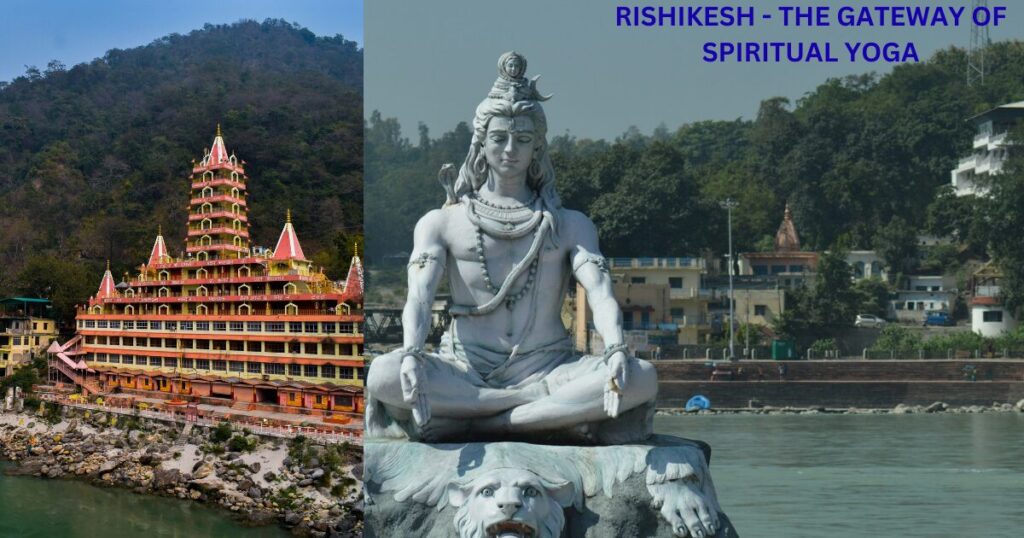
Rishikesh has been recognized as the “No. 1 Sacred Gateway” to Spiritual Yoga throughout the world, not for its mere popularity or tourism alone, but it propagates spiritual authority, historical continuity, and inner transformational power. In this context, it has to be mentioned that this title “Rishikesh” signifies a place from where the journey towards authentic spiritual yoga begins.
Gateway means the place that serves as a primary entry and exit point for business, migration, and cultural exchanges between various regions of the country or other countries. The deep-rooted association with inner transformation, purification, and self-discipline helps the yogi to move from outer life to inner awareness. Over thousands of years, this ancient yoga legacy transformed to a world yogic tradition glorifying Rishikesh as the Yoga Capital of the World and the primary Gateway to Spiritual Yoga.
Why Rishikesh has Rishikesh acquired the No. 1 place worldwide for Spiritual Yoga? There are many yoga destinations that emphasize physical fitness or commercial retreats, but Rishikesh preserves the classical yoga wisdom, references of which are available in various ancient spiritual texts and ancient spiritual traditions. The presence of a thumping number of Ashrams, Gurukuls, and ancient living lineages gives Rishikesh a spiritual depth that cannot be found elsewhere.
The word sacred has been used here because Rishikesh highlights the spiritual energy of the land. Rishikesh is situated in the Himalayan foothills along the bank of the Holy Ganga and is believed to be a natural energy center that helps with meditation, inner awakening, and self-enquiry. The environment is silent, with ringing bells, chanting of mantras, and a disciplined life, which are helpful for introspection and balance.
Therefore, we can unequivocally term Rishikesh as the No. 1 Sacred Gateway for the world’s foremost entry point into spiritual yoga, where spiritual yoga is lived, not merely practiced. The seekers can get in touch with various yoga masters living in the caves of the Himalaya, from Rishikesh to the Shangri-La of Tibet. Therefore, numerous visitors across the world visit here every year either for natural healing, self-realization, moksha, or to learn yoga for their livelihood.
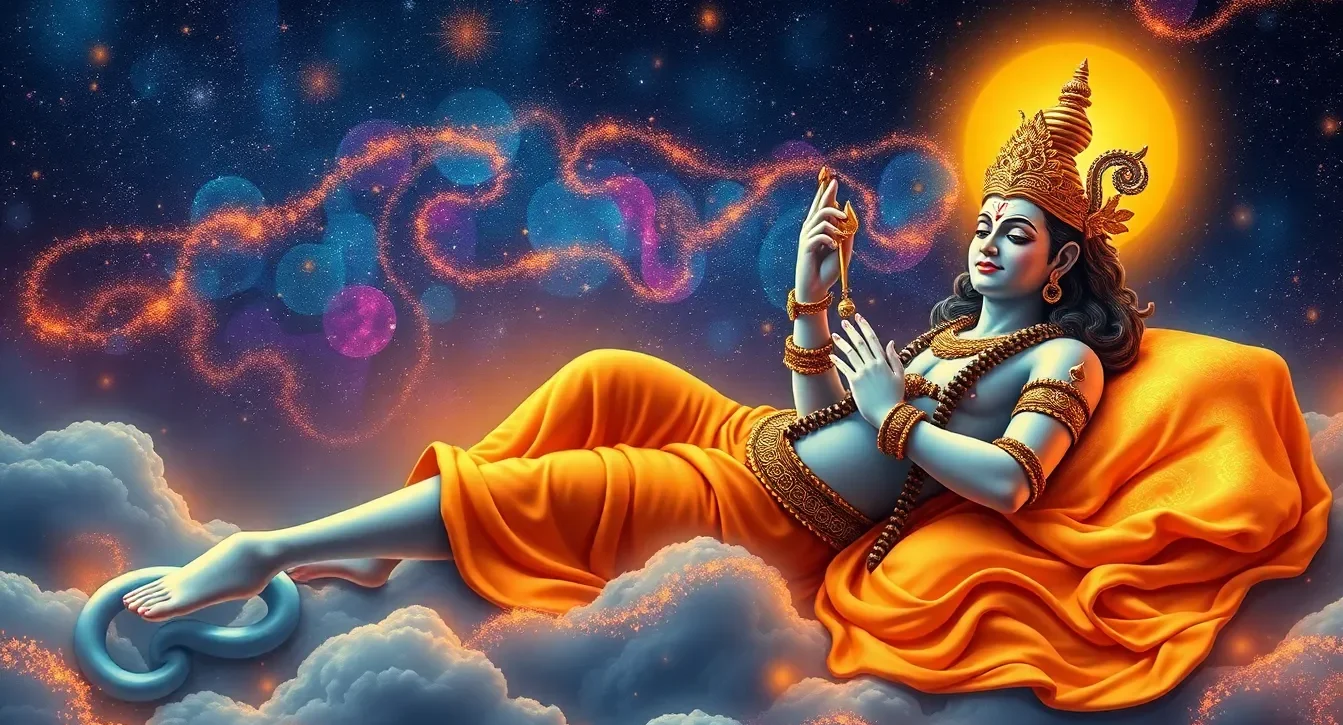
01. Etymology and Spiritual Meaning of Rishikesh: The word “Rishikesh” has been derived from two Sanskrit Words, “Rishi” means Sage and “Kesh” means hair (a sensory organ of the body) but in this context “Kesha” symbolizes the Lord himself (Lord Vishnu), who is also known as “Rishikesh”, the Lord of the senses. Thus, the name Rishikesh collectively refers to “hair of a sage”, more esoterically, “Lord of the senses”.
Spiritually, Rishikesh can be described as a place where the human senses are brought under conscious control rather than dominating the mind. For spiritual awakening, the first and foremost duty of a Yogi is to get mastery over his senses. Without sensory control, the yogic activities and self-realization is impossible.
In our sacred scripture, like the Shrimad Bhagwat Gita, the name of Lord Krishna is used as Rishikesh, who has complete command over his senses. Therefore, the name of this highly revered place is aligned with higher consciousness, self-mastery, and divine order. This place is ideal for practicing Yoga, Meditation, and Inner Discipline.
Therefore, the name Rishikesh is not limited to spiritual meaning; it reflects its energetic purpose. It stands as a living symbol of yogic transformation, where senses are refined, the mind becomes purified, and the yogi is guided towards self-realization. Hence, Rishikesh is revered as the Sacred Gateway to Spiritual Yoga.
2. Rishikesh in Ancient Scriptures and Yogic History: Rishikesh has acquired a significant place in Hindu Mythology and scriptures for centuries. According to the Skanda Puran, Rishikesh is a holy place favored by various sages for meditation and their penance. In the 19th century AD, this place is said to have established by Adi Sankaracharya. Lord Rama did his penance here for killing Ravana. His brother, Lakshmana, crossed the river Ganges using two jute ropes at the point where the present Lakshman Jhoola is present. This reinforces the connection of Rishikesh as a landscape shaped by epic spiritual events rather than mere geography.
From a yogic perspective, this place has occupied its place in the world map as a center for the practice of Raja Yoga, Kriya Yoga, and Bhakti Yoga. Various renowned Yogis practiced Pranayama, Meditation, and sensory withdrawal in the secluded Himalayan foothills following the principles of Raja Yoga and Kriya Yoga through the Guru Shishya Parampara (Teacher-Student lineage). This uninterrupted yogic heritage has preserved the place’s spiritual authenticity.
Thus, the presence of Rishikesh in ancient scriptures and yogic history confirms a role of a living spiritual continuum.
3. Why Rishikesh is ranked No. 1 in Spiritual Yoga?
Rishikesh has been ranked no. 1 throughout the world because of its authenticity, lineage, conducive environment, and holding the ancient yogic tradition. For centuries, this place has followed the path of Guru-Shishya Parampara. The living lineage ensures that Yoga in Rishikesh continues the path of Yoga Sutras of Patanjali, Vedanta, Classical spiritual texts, rather than modern fitness trends.
Yoga in Rishikesh offers a complete yogic education, not as a short and fragmented practice. Here, the Masters teach students to follow ethical living (Yama and Niyama), Pranayama, Asana, Bandha, Chanting Mantra, Self-study, and Seva. Every morning and evening, various Ashrams and Yoga Centers start Mantra Chanting, Prayers, Yoga practices, and other spiritual activities.
This place plays an important role in dispersing yoga throughout the world. Many well-known yoga teachers of the western world were trained and inspired in Rishikesh. Still now, Rishikesh attracts a thumping number of Western serious yoga seekers for their deeper spiritual practice, sense mastery, and inner awakening.
Therefore, Rishikesh is universally regarded as the world’s foremost spiritual yoga center and is considered as the No. 1 sacred gateway to authentic yoga transformation.
4. The Classical paths of Yoga practiced in Rishikesh:
Rishikesh is regarded as a spiritual yoga capital throughout the world because it preserves and practices the four important classical paths of yoga as mentioned in the Shrimad Bhagavat Gita. The present-day yoga centers mainly focus on yoga postures (Yoga Asana), but here, a complete spiritual framework is taught. These paths talk about different human temperaments, which all lead to self-realization.
Karma Yoga: Karma Yoga is the Yoga of Action. It is also called Karma Marga, which is one of the four important spiritual paths as mentioned in the Shrimad Bhagavad Gita. Karma Yoga. It is the spiritual practice of selfless action performed for the overall benefit of others. This path is deeply practiced in Hrishikesh Ashrams through seva (selfless activities for the benefit of others). Here, the seekers clean the Ashram, cook, teach, and serve the community as part of their life.
Bhakti Yoga: Bhakti Yoga is to participate in divine love, offering love from the heart to God, thoughts, and actions as an expression of connecting with God. Daily Kirtans, Bhajan, temple rituals, and Ganga Arati for cultivating devotion and emotional purification. Bhakti Yoga helps the yogis to dissolve their sense of separation between the individual and the divine. I have experienced this in Rishikesh through heartfelt chanting, prayer, and surrender to the Almighty.
Jnana Yoga: The path of knowledge and self-enquiry: The meaning of Jnana is knowledge or awareness, and Yoga means to unite the self with reality. Combining these two, we get awareness and understanding of the self. Various scriptures like Upanishads, Shrimad Bhagwat Gita, Vedas, and other scriptures are taught at Rishikesh for creating curiosity within oneself to know “Who am I, what for I have come to this world”, what is the nature of reality etc. This path helps to understand what is real and illusory. Under the proper guidance of experienced Teachers at Rishikesh, the seekers can anticipate and gain insight into transcending ignorance and realize the inner truth.
Raja Yoga: In Sanskrit, Raja means the King or Royal, and Raja Yoga refers to the principal form of Yoga. Traditionally, Raja Yoga connects to both the goal of yoga and the method of how to attain it. According to Patanjali’s Ashtanga Yoga, it includes Yama, Niyama, Asana, Pranayama, Pratyahara, Dharana, Dhyana, and Samadhi.
In the serene environment of Rishikesh – Himalayan foothill, forests, caves, and the flowing revered Ganga naturally help for deep meditation. Here, Raja Yoga is taught by the experienced Yoga Masters not just on the mat, but through daily life, leading to mental clarity, inner stillness, and spiritual awakening.
The above four paths are taught not in isolation, together they create a balanced and complete yogic life. This integrated approach makes Rishikesh the world’s No. 1 Gateway to Spiritual Yoga, where every seeker – regardless of their temperament can find the right path, which can lead to self-realization.
5. My Journey towards Self-realization:
My journey towards self-realization did not begin with ambition, but it began with firmness in mind and an inner call to attain higher. In Rishikesh, on the banks of the revered Ganga, I first came across a way of life where knowledge was not collected but lived. The Ashrams, the disciplined routine, the silence, all these turned my attention inward. What started as learning Yoga technique gradually pushed me towards a deeper enquiry into WHO AM I?
Rishikesh laid my foundation through the study of Yoga Sutras of Patanjali, Meditation, Core meaning of Shrimad Bhagwat Gita, Upanishads, and more over clarity in mind. I realized that liberation (Moksha) is not an idea but an inner experience. Yet, as the mind grew quieter, another wave emerged within the mind towards the Higher Himalayas, towards the legendary Mahabatar Babaji and other legendary Monks.
6. My Sacred Journey for Self-Realization: From Rishikesh to Uttarkashi
After a month-long stay at Rishikesh, I gathered information from various Monks, Ashram dwellers, and various Puranas, just like a collection of pebbles of various sizes from the seashore. Various waves from the vast sea hit my heart, which helped me to fix my target to reach up to Tibet border to offer myself to the lotus feet of the Almighty (The Shiva). A small group has been formed consisting of four members, two of whom were my friends, and one member from the local area who was well acquainted with the entire route.
We hired a vehicle from a tour operator of Haridwar, who was luckily a known person. As the day approached, the Driver of the vehicle (Man Singh) knocked at our door to start our journey early so that we could reach Karnaprayag by evening. It takes generally 7-8 hours, provided there is no roadblock.
We started our journey at about 6.00 a.m. in the sunny morning of October with our winter clothes to combat the harsh cold at a higher altitude. We began our journey remembering my Guruji and Lord Shiva from Rishikesh, where revered Ganga still laughs like a restless child, clear and playful before she comes down and gathers the weight of the plain. As we left the Ghats behind, the vehicle curved gently into the hills, and with every kilometer, the noise of the world softened.
7. Journey from Rishikesh to Devaprayag:
The scenic beauty of the Himalaya attracted me at the right hand of the road, where the revered Ganga is still flowing gently. We took our first pause at Devaprayag (74 Kms) from Rishikesh and took about 3.5 hrs. Devaprayag is the confluence of river Alkananda and Bhagirathi, where the turquoise and emerald waters merge into one divine flow, and from here revered Ganga forms. We stopped at Devaprayag for half an hour to take our breakfast near a small restaurant near the confluence, watching the rivers dissolve into each other as my scattered thoughts were doing the same.
From Devaprayag, we started our journey, leaving Alkananda and the high mountain hills of the Great Himalaya towards Srinagar, which is a distance of about 105 Kms from Rishikesh. The road climbed steadily upward towards Srinagar, which is the largest town in Garhwal. The hill is quite wide here; the river is flowing quietly beside the busy life of Srinagar. There are a number of Shops, Large houses, Hemavati Nandan Bahuguna University, and other offices. We decided to take our lunch here and refuel our vehicle, and quietly observe how spirituality and daily life co-exist here.
8. Journey from Deva Prayag to Rudra Prayag:
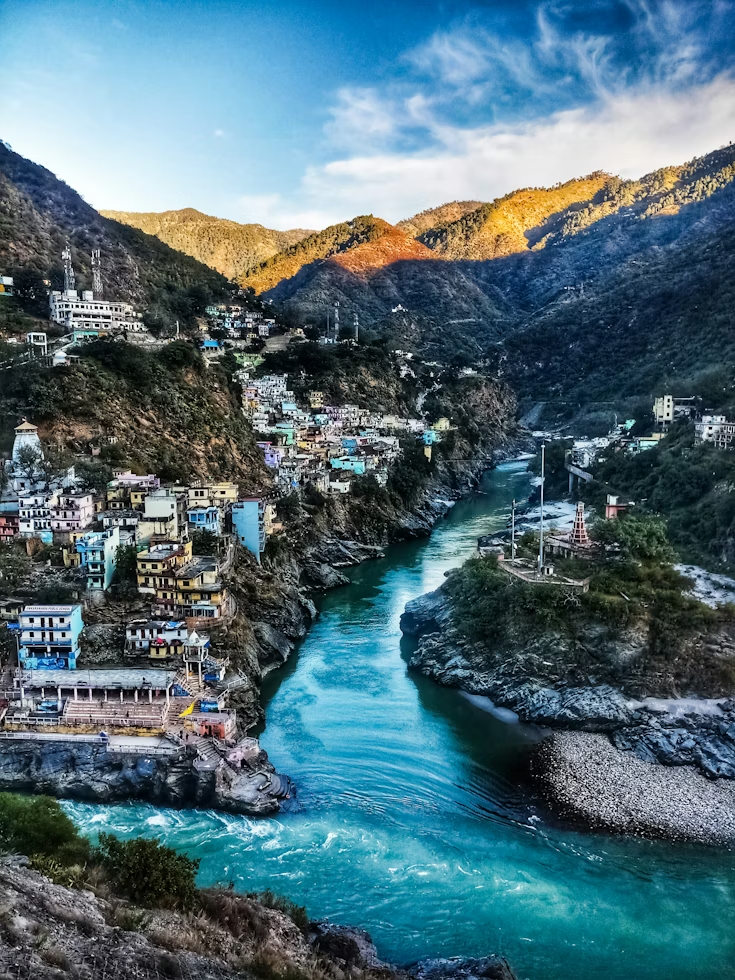
After taking our lunch and refueling our vehicle, we further started our journey towards Rudra Prayag, which is nearly 40 kms by road. We reached Rudra Prayag by 3.00 p.m. Rudra Prayag is a town located in the district of Rudra Prayag of Uttarakhand and is placed at the confluence of Alkananda and Mandakini rivers, which merge here. Mythologically, it is believed to be the place where Lord Shiva appeared to bless Narad Muni. Therefore, this place has been named after “Rudra,” referring to Lord Shiva. This town serves as a gateway to several important pilgrimage destinations like Kedarnath and Badrinath.
9. From Rudra Prayag to Karna Prayag:
Finally, in the evening, by about 5.30 p.m., we reached our target place, which is Karna Prayag, which is about 175 Kms. away from Rishikesh. This place is situated at the confluence of the Alka Nanda and the Pindar Rivers. This town gets its name from Karna of the Mahabharata. From history, it is known that Karna did penance here and pleased the Sun God (Surya). In turn, he received blessings in the form of impenetrable armor and a quiver of arrows that could never be exhausted.
However, we unloaded our luggage from the vehicle and parked the car at a nearby parking place. Two rooms were booked earlier from Rishikesh at Alka Nanda Homestay. The place was nice, and the arrangements and hospitality were nice as well. We stayed there for three days.
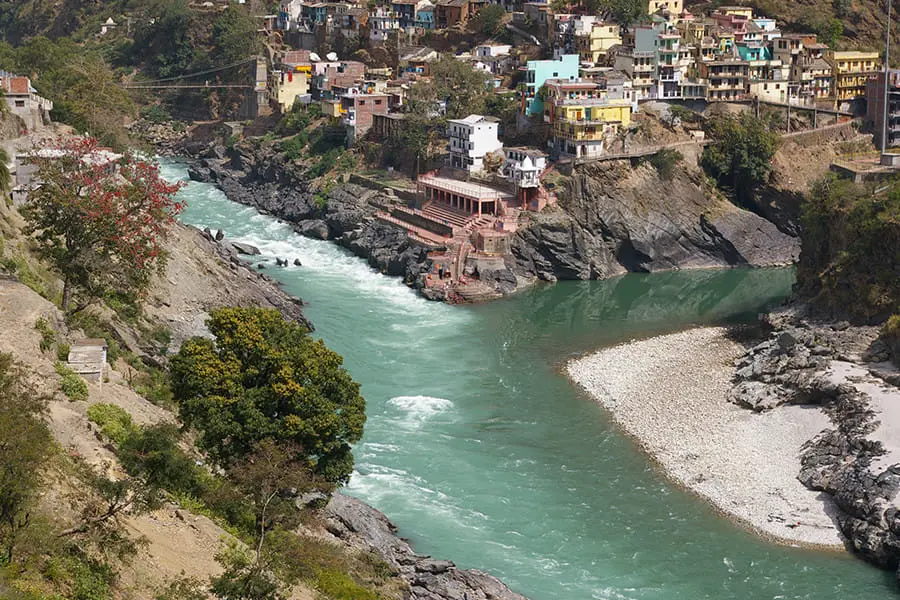
The first light of the sun touched the peak of the hill and slipped at the confluence of Alka Nanda and Pindar Rivers. A thin mist floats above the confluence, turning the air cool and sacred. The temple bells started ringing from the Uma Devi temple. After taking our breakfast early, we started our trek to gather new information from the locals and visit those places where pilgrims rarely visit, and also find out the legendary monks to know from them, “WHO AM I”?
The first information gathered was very interesting. The story is that “after the battle of Kurukshetra, Lord Krishna cremated the body of Karna, a great warrior and a tragic hero who fought with the Kauravas in the 18-day-long battle of Kurukshetra, at this place where a temple is dedicated to Karna. It is also believed by the locals that the temple dedicated to Karna that stands today was once underwater, and only a tip of a stone called “Karna Shila” was above the water. Here Lord Krishna cremated Karna by balancing his palm on Karna Shila.”
Another legend is that Karna Prayag is associated with Uma, wife of Lord Shiva, who was born in a field of SANKRISERA to Dimri Brahmins, who were the only authorized priests of Badrinath Temple, and this place is considered the maternal home of Uma and the Shiva Temple at KAPRIPATTI village as her in-laws.
Another story we get from Abhijnana-Shakuntala and also from the locals is that Shakuntala and King Dushyanta were married here. Also, recently in the year 1890, Swami Vivekananda meditated here for 18 days along with Turianand Ji and Akhandanand Ji. We tried our best to find out the exact place, but could not trace it. Thereafter, we visited the very common places like Uma Devi Temple, Holy Confluence, Karna Temple, Adi Badri, Gauchar plains, and Nauti Village.
10. Journey from Karna Prayag to Uttarkashi:
The next morning, after taking our breakfast, we were about start for our next destination, UTTARKASHI, my most favorite place for spiritual yoga, a man approached us to take him along with us. Since there was enough place at our vehicle, we decided to accommodate him. The distance between Karna Prayag and Uttarkashi is about 220 Kms, and the distance from Rishikesh is nearly 300 kms. Our journey started at about 5.30 a.m. so as to reach there before evening because sunset at the hill is early.
The journey from Karna Prayag to Uttarkashi was very enchanting. The two-way road started climbing higher through small roadside villages with occasional glimpses of Bhagirathi announcing our approach to RUDRAPRAYAG. Rudra Prayag is regarded as a revered place because it is one of the Pancha Prayags in the Garhwal region, each of them is holding spiritual significance.
The name Rudra Prayag has been derived from “Lord Shiva,” who is also known as “Rudra,” and it is believed that Lord Shiva appeared here to bless Narada with divine knowledge. It is the confluence of the ALAKANANDA and the MANDAKINI rivers.
Leaving Rudra Prayag, our vehicle started climbing the hill through the serpentine road. Sometimes the road was steep, leaving the gorges at the right hand, we reached CHAMIYALA through the Uttarkashi bypass. We stopped here to take our lunch at a Pahari Restaurant and some rest near Raj Rajeshwari Temple. After taking our lunch at about 3.30 p.m., we prepared ourselves to start our journey to Uttarkashi.
We started our journey remember Guruji and Lord Shiva. The road was sometimes steep and one-way through the jungle. Near Likhwar Gaon (Likhwar Village), the car suddenly felt a jolt and stopped. The driver reported a mechanical defect, and there was no servicing center nearby. Sunset was approaching fast. We decided to stay in the car and spend the night anyhow, since there was no alternative way.
By this time, the stranger travelling with us from Karna Prayag advised us to stay at his relative’s home in a nearby village. After consulting with each other, we decided to go along with him and told the driver. The driver did not agree to go along with us, leaving the car on the road.
After an hour’s walk, we saw a dim light within a cottage. All the mobile phones suddenly switched off, maybe due to a shortage of charge, and we forgot to bring the chargers. The stranger knocked on the door, and a lady aged around 60 years opened the door and welcomed us. The house was full of cobwebs and old, and felt some pungent smell emanating from one of the rooms. The lady and another old man started preparing our food and our sleeping. The sleeping arrangement was three beds within one room, and the other man who was travelling with us from Karna Prayag was accommodated along with the house owner.
After taking our dinner, we entered the room to sleep. The room was dirty and seemed no man is living for a long time. The mattresses provided were also for a long time. However, we slept fast due to our tiredness. At about midnight, all of us heard a groaning sound from the top of the house and felt a severe jolt. We woke up and could not find anything, but continued to hear the groaning sound above. Our instinct whispered that we had become prey of some EVIL SPIRITS. We started praying to Lord Shiva from the imminent danger. We could not understand the motive behind this. We spent the night sleepless.
As the dawn approached, we jumped out of the room, but we could not find anyone within the house, not even the man who accompanied us from Karna Prayag. We started running a marathon to reach the highway. We saw our car standing nearby. On reaching the car, the driver opened the car and started trying to start the vehicle. On the blessings of the Almighty, the car started, and we requested the driver to leave this place at the earliest. The vehicle further started moving towards Uttarkashi. When we reached PRATAPNAGAR, we stopped at a roadside Dhaba for refreshment and breakfast.
Kamlesh Singh, the owner of the Dhaba welcome us and requested us to stay and take his service. After some refreshment, we told our last night’s story. Before hearing us completely, he started to tell our whole story. He told us that we are not only the prey; every month, he hears the same from different pilgrims. He also cautioned us not to stay anywhere before reaching Uttarkashi. After taking our breakfast, we started our journey further.
10. Our Journey to Uttarkashi – Ultimate Destination:
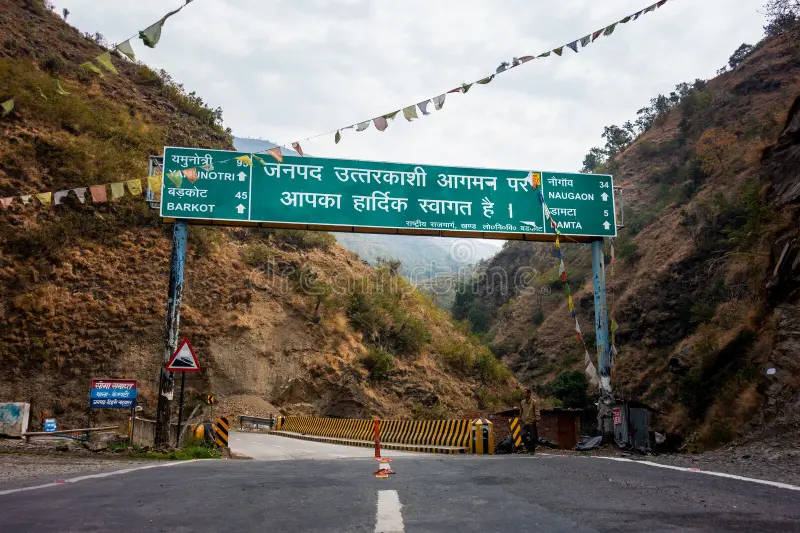
We reached UTTARKASHI at about 9.30 a.m. We get frightened whenever we remember this incident. A three-bed room for stay was booked earlier in Jai Maa Ganga Homestay from Rishikesh, but due to our late arrival and since they were not informed, the hotel manager was about to cancel our booking. We unloaded our luggage and entered the hotel. Without wasting time, we took our bath and breakfast, and came out of the Hotel.
Uttarkashi is a serene hill town in the Garhwal region of Uttarakhand, situated on the banks of the river Bhagirathi. Surrounded by dense pine forest, snow-clad peaks, and ancient temples, it is known as a cultural and spiritual hub of the Himalayas. Uttarkashi is regarded as Somyakashi by the locals, according to ancient scriptures. Somya means calm/gentle, and Kashi in the north, indicating the spiritual magnet of Varanasi in the plains.
This place is also regarded as Kshetra, a sacred place where a number of sages, either in physical body or subtle place, visit this place after attaining their Moksha (Liberation). The idea of Deva Bhoomi, Uttarakhand, becomes complete here since shrines, stones, village temples, and glacier sources all feed into a single imagination, Lord Shiva as Kashi Viswanath, the Ganga as Bhagirathi, the Yamuna at Yamunotri, and a number of village Devatas carried in palanquins from one fair to another.
Uttarkashi literally refers to “Kashi of the North” (Uttar – North). Uttara Kashi derives its name from the Kashi Vishwa Nath Temple at Varanasi, Uttar Pradesh. This place is located at 1150-1200 meters on the bank of the Asi River, adjacent to Varnavat Hill. Therefore, its name is Varanasi (Varuna + Asi River).
From Rishikesh, I heard about Yog Niketan Ashram, where Siddha Yogis often visit either in their physical form or in their subtle body. This Ashram is a unique place and is located near Kedar Ghat of the river Ganga. Uttarkashi is another gateway to start the Chardham Yatra (Kedar Nath, Badri Nath, Gangotri, and Yamunotri).
Uttarkashi is a living example of Hindu Mythology. According to ancient scriptures like The Mahabharata, this place was called “Varnavat Gram” (Varnavat Village) situated at the base of Varnavat Mountain on the confluence of Varuna and Asi rivers. Near the Laksheshwar Mahadev temple, there is a tunnel that was built to save the Pandavas from the Lakshagraha, which is said to have an exit point from Uttarkashi.
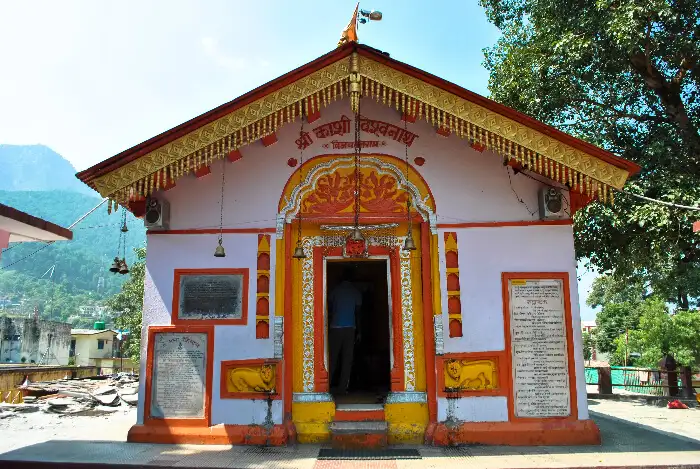
The main deity of Uttarkash is Lord Shiva. According to the local people, one of the three spikes of Lord Shiva’s Trident is Kashi, Uttarkashi, and Gupta Kashi. Uttarkashi is the replica of Kashi of Varanasi. According to the Skanda Puran or Varnavat Mahatya, Uttarkashi replaces Kashi as Lord Shiva’s main home in Kali Yuga. Uttarkashi’s Ghats are a treasure of spiritual yoga. Right on the Kedar Ghat, there is an ancient Shiva Linga. This Shiva Linga is said to have manifested together with the Panch Kedar Lingas during the Pandavas’ time. The main attractions of this place are:
- Kashi Vishwanath temple
- Bhagirathi River and Ghats
- Nehru Institute of Mountaineering
- Maneri Dam
- Dayara Bugyal
- Dodital Lake
- Gangotri National Park
- Nachiketa Tal
But my main intention was to fill my spiritual treasure from the sages who have attained salvation. But, what I learnt from the monks from various temples is that one Shrimad Shankar Swami Ji Maharaj is residing at Sikhar Dham of Varnavat Hilltop. But, at Yoga Niketan Ashram, I learned some important Mudras, various techniques of Pranayama, and how to integrate various Mantras with KHECHARI MUDRA and PRANAYAM. Swami Shraddha Nanda, whom I met there, advised me not to disclose these techniques to common people.
These practical trainings, I did not get at Rishikesh. Continue to practice these two important techniques, keeping faith in the Almighty. He also told me that some more important techniques will be taught during my next visit. Filling this knowledge into my bag, I started to end my journey here.
11. CONCLUSION: In conclusion, I have to mention here that both Rishikesh and Uttarkashi stand out as destinations where spirituality, nature, history, and adventure come together in perfect harmony. Starting from revered River banks, important temples in high altitude meadows, ringing bells in the morning from temples, serene lakes, and thrilling trekking routes, every attraction reflects the natural beauty, sunrise reflecting lights from the snowy hilltops, and sunset reflecting the timeless beauty of Rishikesh. Deva Prayag, Karna Prayag, and Uttarkashi. Whether you seek inner peace, spiritual depth, or an escape into untouched landscapes, both Rishikesh and Uttarkashi offer an enriching experience that will stay with me for a long time, even after the journey of SOUL SEARCHING.
FAQ:
1. Why is it called the Yoga Capital of the World?
Ans: Rishikesh is called the Yoga Capital of the world because it is the place where numerous Ashrams, Yoga Schools, both at Haridwar and Rishikesh, and Meditation Centers are there. This place attracts spiritual seekers across the world, and this place is closely associated with ancient yogic traditions and the sacred river Ganga.
2. What makes Uttarkashi spiritually important?
Ans: Uttarkashi is spiritually important because of its presence of ancient Yogic culture, presence of historical places like Varnavat Village, Kashi Vishwanath Temple, and its location along the river Varuna and Asi River (Bhagirathi), presence of Lakshagriha, and various caves for performing meditation. It is the Gateway of Chardham Yatra and a route to Shangri-La (Gyanganj).
3. Which destination is better for Yoga and Meditation, Rishikesh or Uttarkashi?
Ans: Rishikesh is ideal for structured Yoga courses, retreats, and Yoga Teacher training programs, while Uttarkashi offers a quieter and more traditional yoga environment for meditation, spiritual practices, and self-realization.
4. What are the important attractions in Rishikesh?
Ans: Rishikesh is known for the Ganga Ghats, Laxman Jhula, Ram Jhula, Neer Garh Waterfall, Neel Kanth Mahadev temple, and the surrounding Himalayan foothills. It also offers river rafting and nature walks.
5. What are the top natural attractions at Uttarkashi?
Ans: Major natural attractions in Uttarkashi include Dayara Bugyal, Dodital Lake, Maneri Lake, Nachiketa Tal, and the scenic landscapes of Gangotri National Park. Apart from these, the Bhagirathi River, Kashi Vishwanath Temple, Kedar Ghat, Manikarnika Ghat, various caves for meditation, Lakshagriha, etc.
6.Are Rishikesh and Uttarkashi suitable for family travel?
Ans: Yes, both these two destinations are suitable for family travel. Rishikesh offers spiritual training and gentle adventurous activities, while Uttarkashi offers a peaceful environment with natural beauty suitable for all ages.
7. How do Rishikesh and Uttarkashi complement each other in a spiritual journey?
Ans: Rishikesh is introduced as a Yogic learning center for seekers throughout the globe, whereas Uttarkashi deepens the experience through the silence, nature, and traditional Himalayan Spirituality, making them ideal destinations for a complete spiritual journey.
A really good blog and me back again.