Kapalbhati Pranayama Benefits Heart are best understood as part of a comprehensive breathwork approach that can influence cardiovascular function through autonomic nervous system regulation. Kapalbhati Pranayama benefits the heart, involving short, forceful exhales that can train the lungs, diaphragm, and nervous system to respond more efficiently to daily stressors. When practiced correctly, this technique may support heart rate regulation, vascular health, and breathing efficiency, especially for healthy adults who are new to controlled breathing. In this article, we will explain how Kapalbhati Pranayama Benefits Heart can influence heart health, how to practice safely, and practical steps to integrate it into a balanced wellness routine.
LEARN HOW TO KEEP HEART HEALTH IMPROVED
01. What is Kapalbhati Pranayama?
Definition: Kapalbhati is a yogic pranayama characterized by rapid, forceful exhales through the nose, followed by passive inhales.
Core mechanism: Short, powerful exhales engage the abdominal muscles and diaphragm, stimulating the expiratory muscles and creating a rhythmic breathing pattern.
Purpose in practice: Beyond lung expansion, Kapalbhati Pranayama is used to sharpen mental focus, cleanse the respiratory system, and help regulate the autonomic nervous system.
02. How Kapalbhati Pranayama Benefits Heart Health:
Kapalbhati Pranayama Benefits Heart stem from its potential to influence autonomic balance, blood pressure, and oxygen delivery. While individual responses vary, many practitioners report improved breathing efficiency, reduced perceived stress, and better control over breathing during daily activities. The heart benefits are typically most noticeable when the practice is performed consistently, safely, and as part of a broader lifestyle strategy that includes physical activity and a heart-healthy diet.
03. The Autonomic Nervous System Connection
Sympathetic vs. parasympathetic: Kapalbhati can shift autonomic balance toward parasympathetic dominance after the initial exhale phase, promoting relaxation after breathwork.
Heart rate variability (HRV): Regular practice may help improve HRV, a marker of autonomic flexibility linked to cardiovascular resilience.
Stress response: By moderating sympathetic arousal, Kapalbhati may reduce chronic stress exposure, which is a known risk factor for cardiovascular issues.
Oxygenation and Circulation
Oxygen delivery: Efficient exhalations and diaphragmatic engagement can improve alveolar ventilation and help optimize oxygen exchange.
Circulatory efficiency: Enhanced breathing mechanics can reduce the work of breathing during rest and exercise, potentially easing the heart’s workload over time.
Endurance and energy: Practitioners often report steadier energy levels, which can support consistent physical activity—an important heart-protective habit.
– May help reduce stress-related blood pressure spikes when practiced safely
– Can be a time-efficient breathing practice for busy schedules
– Encourages mindful breathing and body awareness
Cons / Cautions
– Not suitable for everyone, especially those with certain heart conditions or respiratory limitations
– Must be learned from a qualified teacher to avoid hyperventilation or dizziness
– Overdoing it or performing on a full stomach can cause discomfort or nausea
– Should be paused during acute illness, pregnancy, or if you experience chest pain or irregular heartbeats
05. Who Should Avoid Kapalbhati or Seek Guidance
– People with uncontrolled hypertension or recent heart surgery (consult a physician)
– Individuals with vertigo, hernias, or severe abdominal issues
– Those with pregnancy-related discomfort or high-risk pregnancy
– Beginners with a history of fainting or dizziness during breathwork
06. Practical Steps to Practice Kapalbhati Safely:
Introduction to a safe, beginner-friendly approach:
– Start slow: 20–40 seconds of practice with 1–2 rounds, gradually increasing as comfort grows
– Sit tall: Choose a stable seated posture with a neutral spine and relaxed shoulders
– Relax the breath between rounds: Return to natural breathing before attempting another set
Step-by-step guide
1) Posture and preparation
– Sit cross-legged or on a chair with a back supported
– Keep spine lifted, chin level, and jaw relaxed
– Place hands on the knees or thighs to guide posture
2) Gentle warming breath
– Begin with 2–3 cycles of slow, relaxed diaphragmatic breathing to settle the nervous system
3) Kapalbhati technique (for beginners)
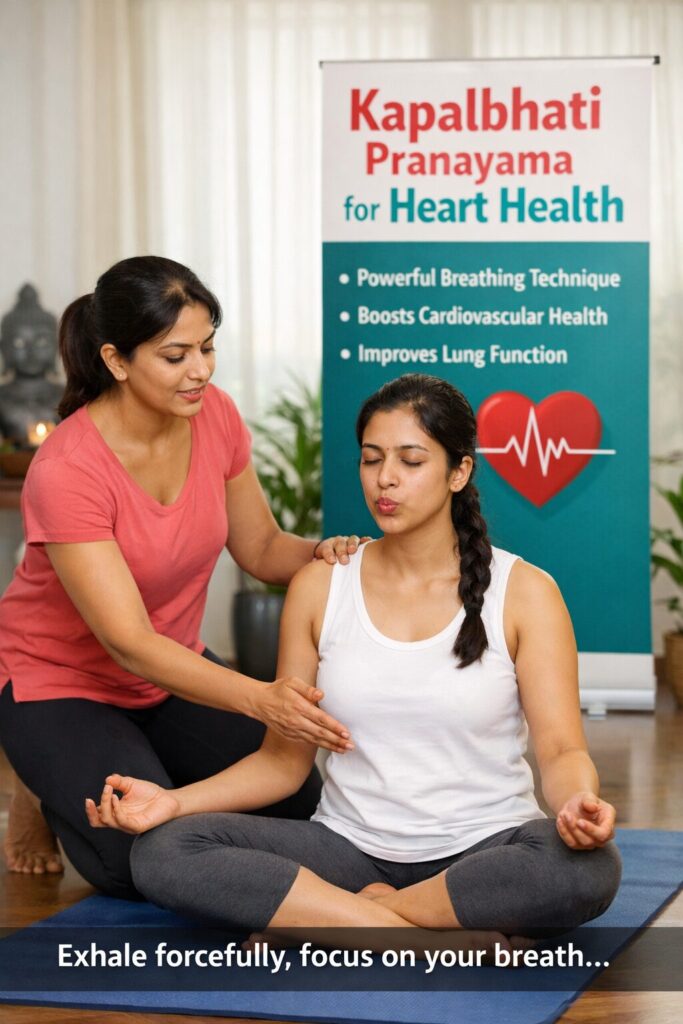
– Inhale naturally through the nose, then perform forceful exhalations through the nose using the abdominal muscles
– Exhales should be short and brisk; inhales will occur passively between exhales
– Start with 10–20 rapid exhalations per cycle, then pause and resume as you feel comfortable
4) Build gradually
– Increase to 2–3 rounds of 20–40 exhalations each over several weeks
– Always end with a few rounds of deep, slow breathing to restore calm
5) Safety cues
– Stop if you feel lightheaded, dizzy, chest tightness, or nausea
– Do not practise on a full stomach; wait 2–3 hours after meals
– Hydrate after practice to support airway clearance and recovery
6) Frequency and integration
– 3–5 sessions per week is a common starting point
– Pair Kapalbhati with gentle stretches or a short meditation for overall heart health
Tips for heart-focused practitioners
– Pair with cardio-friendly habits: Regular walking, cycling, or swimming to complement breathwork
– Monitor blood pressure and heart rate during early sessions if you have a known condition
– Use a calm, social environment or guided session to reduce performance pressure
07. Expert Opinion and Real-World Examples
Expert perspective
– A seasoned yoga instructor and pranayama specialist notes that Kapalbhati, when taught gradually and practiced with consistency, can support a calmer autonomic tone and improved respiratory efficiency. The emphasis is on safety, correct abdominal engagement, and progressive exposure—especially for individuals with cardiovascular concerns.
Real-world example
A 45-year-old professional who integrated Kapalbhati into a morning routine alongside 30 minutes of brisk walking and a heart-healthy diet. After 8–12 weeks, they reported improved breath control during daily tasks, reduced morning stress, and a more comfortable experience with light exercise. This kind of integrated approach helps ensure that heart health benefits are supported by overall lifestyle choices rather than breathwork alone.
Key insights and practical recommendations
– Start with fundamentals: Master diaphragmatic support and passive inhalation before increasing speed or volume of exhalations.
– Progress mindfully: Avoid rushing to higher counts; gradual increases support long-term adherence and safety.
– Use symptom awareness: Pay attention to signs of overexertion or discomfort and adjust cadence or intensity accordingly.
– Complement with lifestyle strategies: Combine with aerobic exercise, a balanced diet, and sleep optimization to maximize heart health benefits.
– Seek professional instruction: A qualified instructor can tailor Kapalbhati practice to your cardiovascular profile and fitness level.
08. Kapalbhati Pranayama for Heart Safety:
The practitioners should watch whether there is any pain or dizziness is experienced. If any pain or dizziness occurs while practicing Kapalbhati Pranayama, the practitioner should stop the practice and sit quietly for some time. When the sensation is over, restart the practice with more awareness and less force. If the problem continues, consult a Yoga Teacher.
Kapalbhati Pranayama Contraindications: Kapalbhati Pranayama should not be practiced by those who are suffering from heart disease, high blood pressure, vertigo, epilepsy, stroke, hernia, or gastric disorder.
Kapalbhati Pranayama for Beginners: Kapalbhati Pranayama is a simple yet powerful breathing technique from traditional yoga. It involves short, forceful exhalations through the nose while the inhalation happens naturally. Beginners should sit comfortably with a straight spine, relax their shoulders, and place their hands on their knees. Start with 20–30 gentle strokes per round and focus on a steady rhythm rather than speed. Practice on an empty stomach and stop if you feel dizzy. Regular practice may improve lung capacity, digestion, and mental clarity. If you have high blood pressure, a hernia, or are pregnant, consult a qualified yoga teacher before practicing.
Kapalbhati Pranayama – Breathwork for Cardiovascular Health
Kapalbhati Pranayama is a dynamic yogic breathing technique known for its energizing and cleansing effects. Often called “skull-shining breath,” it involves rapid, forceful exhalations and passive inhalations. While traditionally linked to detoxification and respiratory strength, it may also support cardiovascular health when practiced correctly.
How Kapalbhati Pranayama helps to improve Heart Health:
Kapalbhati Pranayama stimulates the diaphragm and improves oxygen exchange, which can enhance circulation. The rhythmic abdominal contractions may help regulate blood flow and improve vascular tone. Some small clinical observations suggest that regular practice can assist in reducing resting heart rate and improving heart rate variability—both markers of better cardiac function.
Kapalbhati Pranayama Benefits Heart: Kapalbhati Pranayama purifies Ida and Pingala Nadis, and also removes sensory distractions from the mind. It is used to energize the mind for mental work, to remove dizziness, and to prepare the mind for Meditation. It has a similar effect on asthmatics and those who are suffering from emphysema, bronchitis, and tuberculosis. After a few months of proper preparation, it can be effective for women to use during childbirth. It also balances and strengthens the nervous system and tones the digestive organs. For spiritual aspirants, this practice arrests thoughts and visions.
08. How to maximize the heart-focused benefits of Kapalbhati Pranayama:
– Combine with regular aerobic activity to improve cardiovascular fitness
– Use a consistent schedule; most people see benefits after several weeks of practice
– Practice in a well-ventilated space and avoid overexertion
– Balance breathwork with other healthy habits, including stress management and a nutrient-rich diet
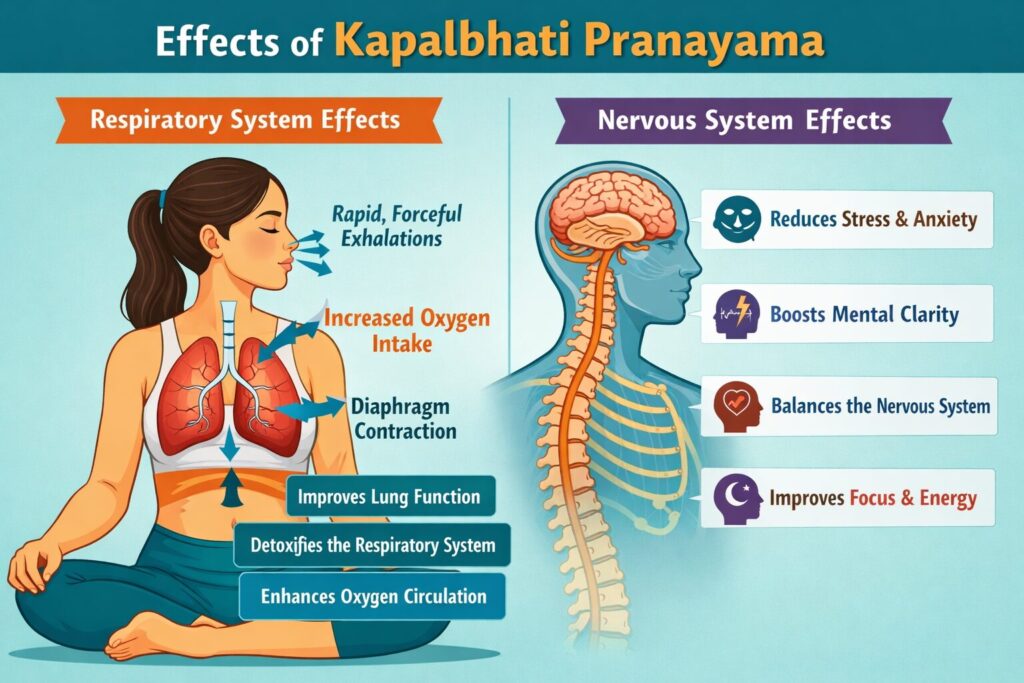
Image showing the respiratory and nervous system effects of Kapalbhati pranayama
Kapalbhati Pranayama Benefits Heart reflects how a disciplined, well-taught breathing practice can influence heart health through autonomic regulation, improved breathing efficiency, and enhanced stress resilience. When integrated with a balanced lifestyle and performed under safe guidelines, Kapalbhati can be a valuable addition to a cardiovascular wellness plan. By starting slowly, prioritizing safety, and pairing breathwork with physical activity and heart-healthy habits, you can experience meaningful, sustainable improvements in how your heart responds to daily life.
FQA:
1) What is Kapalbhati Pranayama?
Kapalbhati Pranayama is a breathing technique that uses rapid, forceful exhales through the nose with passive inhales to train the respiratory system and autonomic nervous system.
2) How do Kapalbhati Pranayama Benefits the Heart?
The intense exhalations can influence autonomic balance and breathing efficiency, which may help regulate heart rate and blood pressure when practiced safely and consistently.
3) Is Kapalbhati safe for everyone?
No. People with certain heart conditions, high blood pressure, respiratory issues, vertigo, or recent surgery should seek medical and professional yoga guidance before trying Kapalbhati.
4) What are the safety tips for beginners?
Start slowly, focus on diaphragmatic engagement, avoid full stomach practice, monitor for symptoms of dizziness or chest discomfort, and use guided instruction.
5) How often should I practice Kapalbhati for heart health?
A typical starting routine is 3–5 sessions per week, gradually increasing duration and rounds as comfort allows while keeping other healthy habits in balance.