Introduction: Free online yin yoga for beginners is one of the most accessible and rewarding ways to start a yoga practice at home. Whether you have never stepped on a mat or you are returning after a long break, free online yin yoga for beginners gives you everything you need to build flexibility, reduce stress, and restore balance — all from the comfort of your living room. But what is the best part? Free online yin yoga for beginners requires no expensive studio membership, no special equipment, and no prior experience.
Yin yoga is a slow, meditative style of yoga where poses are held for two to five minutes (sometimes longer). Unlike the fast-paced flow of vinyasa or the intense heat of Bikram, yin yoga targets the deep connective tissues — fascia, ligaments, and joints — that other styles largely ignore. According to a 2019 study published in the Journal of Alternative and Complementary Medicine, regular yin yoga practice is associated with significant reductions in anxiety and improvements in sleep quality, making it a powerful tool for modern-day stress management.
We will delve into everything – the science behind yin yoga, a beginner yin yoga sequence at home, a practical 15-minute yin yoga for beginners’ routine, and expert tips to help you build a consistent, effective practice. Now, let’s begin.
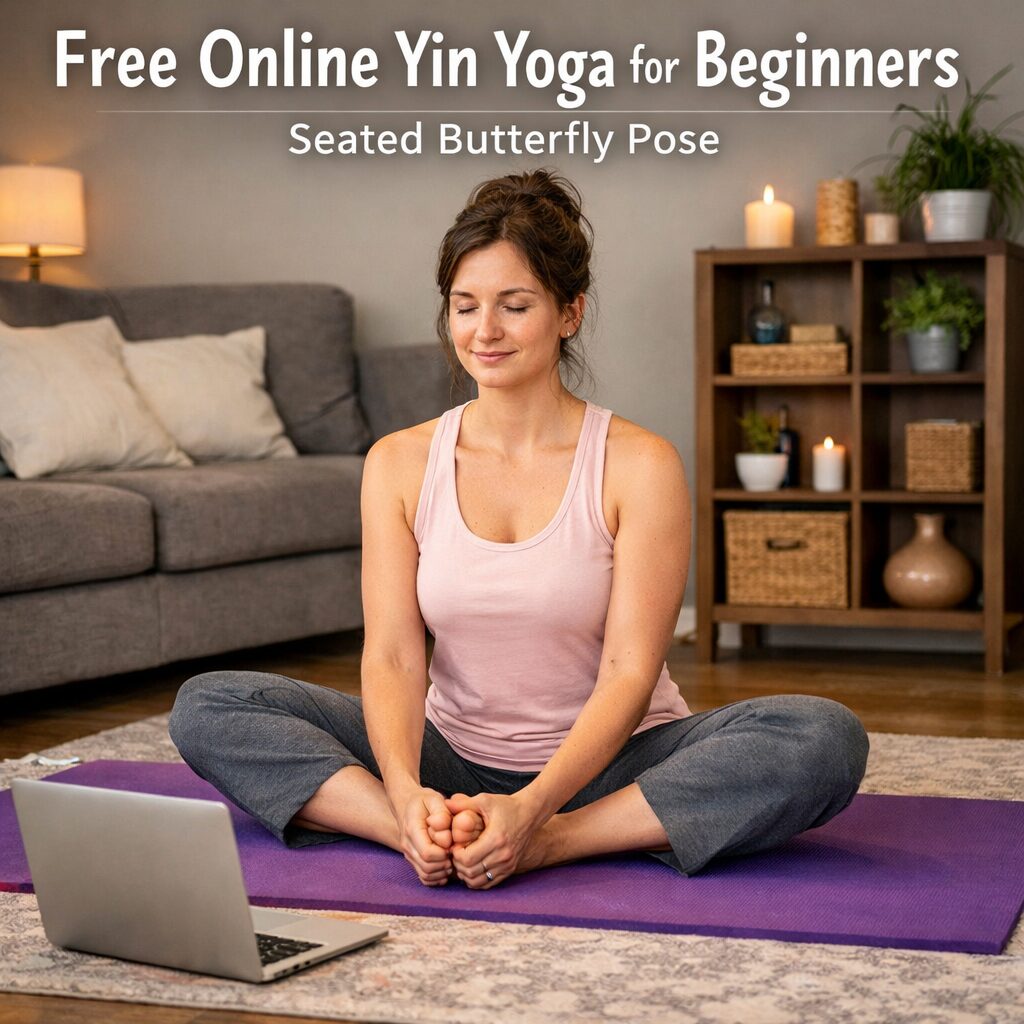
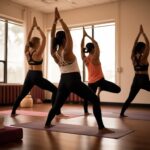
“Woman practicing free online yin yoga for beginners in a seated butterfly pose on a purple mat at home.”
What Is Yin Yoga? Understand the Practice Before You Begin:
Yin yoga draws from traditional Chinese medicine and Taoist philosophy. It was popularized in the West by Paul Grilley and Sarah Powers in the 1980s and 1990s. The philosophy is simple: while “yan” yoga styles (like ashtanga or power yoga) target the muscles through repetitive, dynamic movement, yin yoga works on the body’s deeper, more “yielding” structures.
Every pose in a yin yoga practice is held in stillness for an extended period. This gentle, sustained compression and traction stimulates the production of hyaluronic acid in the fascia, improves joint lubrication, and increases range of motion over time. It’s one of the most evidence-backed approaches for yin yoga for flexibility and mobility for beginners.
Yin vs. Restorative Yoga: What Beginners Need to Know:
Many beginners confuse yin yoga with restorative yoga. Here is a clear breakdown:
Yin Yoga: Mild to moderate discomfort is expected. Poses target connective tissue through light stress. The goal is to find your “appropriate edge.”
Restorative Yoga: Fully supported by props. No discomfort whatsoever. Pure rest and nervous system recovery.
Both are valuable. However, if your goal is yin yoga for flexibility and mobility, yin yoga will produce measurably greater gains in range of motion.
The Science-Backed Benefits of Yin Yoga for Beginners
Research and clinical evidence consistently support the following benefits of a regular yin yoga practice for stress relief, relaxation, and beyond:
Physical Benefits
Improved flexibility and joint mobility: Holding poses for 2–5 minutes creates a safe, gradual lengthening of the fascia. A 2020 review in Frontiers in Psychology found that yin yoga significantly improved hip and lower back flexibility in just eight weeks.
Reduced chronic pain: Sustained compression stimulates mechanoreceptors that help down-regulate pain signals. Practitioners with lower back pain report notable relief after four weeks of consistent practice.
Enhanced circulation: Deep tissue compression followed by release flushes old blood and nutrients into the area, accelerating tissue recovery.
Better posture: Targeting the hips, spine, and shoulders directly counteracts the effects of prolonged sitting.
Mental and Emotional Benefits
Stress relief and relaxation: Sustained stillness activates the parasympathetic nervous system. In one study, cortisol levels dropped measurably after a single 75-minute yin yoga session.
Reduced anxiety: The meditative, breath-focused quality of a yin yoga practice for stress relief and relaxation trains the mind to sit with discomfort without reacting — a core skill in anxiety management.
Improved sleep quality: The deep relaxation response makes it an ideal evening practice.
Emotional processing: Yin yoga is increasingly used in trauma-informed therapeutic settings to help release stored tension in the hips and pelvis.
Pros and Cons of Yin Yoga for Beginners: A Comparative View
PROS
CONS
No prior experience needed
Discomfort in poses can feel confronting at first
Free routines available online
Progress is gradual; not for those wanting quick results
Requires minimal space and no equipment
Not ideal as your only form of exercise
Excellent for yin yoga practice for stress relief and relaxation
Some poses require modifications for joint injuries
Scientifically supported for flexibility and mental well-being
Can be underwhelming for those used to active workouts
How to Set Up for a Beginner Yin Yoga Sequence at Home:
One of the greatest strengths of a beginner yin yoga sequence at home is that it demands very little in terms of equipment or space. Here is what you need before your first session.
Essential Props and Space Requirements:
Yoga mat: A standard 6mm mat is sufficient. A thicker mat (8–10mm) adds cushioning for longer holds.
Two yoga blocks: Foam blocks support you in deep hip and spine openers. Cork blocks offer firmer support.
One yoga bolster or firm pillow: Critical for chest and shoulder openers.
One blanket: Useful for knee and ankle support, and for Savasana at the end of every gentle yin yoga routine for full body relaxation.
A timer: Your phone works. Set it for each pose so you are not watching the clock.
Quiet space: You need roughly a 6×4-foot area — the size of a standard mat.
Best Time of Day for Your Yin Yoga Practice at Home:
Yin yoga can be practiced at any time, but certain windows are optimal:
Morning: Your body is stiff, which actually makes yin yoga especially effective. A gentle yin yoga routine for full body relaxation in the morning primes the joints for the day ahead.
Evening: The most popular choice. A gentle yin yoga routine for full body relaxation before bed dramatically improves sleep quality.
After cardio or strength training: Pairing yin yoga with other exercise is ideal for recovery and long-term yin yoga for flexibility and mobility, of course, with the advice from a doctor or Yin Yoga Trainer.
How to Practice Yin Yoga at Home Step by Step:
Knowing how to practice yin yoga at home step by step is the single most important foundation for a safe, sustainable practice. These principles apply whether you are doing a 15-minute yin yoga for beginners’ routine or a 60-minute deep dive.
The Three Principles of Yin Yoga (Paul Grilley’s Framework):
Come into your appropriate edge. Move into each pose until you feel a mild, sustainable sensation of stretch or compression. You should never feel sharp, shooting, or nerve pain. If you do, back off immediately.
Be still. Resist the urge to fidget or shift position. Stillness is what allows the fascia to gradually release. Small micro-adjustments are fine, but constant movement defeats the purpose.
Hold for a time. Beginners typically start with 1–2 minutes per pose. Work toward 3–5 minutes as your practice matures.
Breath: Your Most Powerful Tool in Yin Yoga
Breath is the anchor of a yin yoga practice for stress relief and relaxation. Here is how to use it:
Inhale for 4 counts, exhale for 6–8 counts. The longer exhale activates the vagus nerve and deepens the parasympathetic response.
Use each exhale to soften slightly deeper. Do not force. Let gravity and time do the work.
Avoid breath-holding. Held breath creates physical and mental tension — the opposite of what you want.
15 Minute Yin Yoga for Beginners: Your First Full Routine:
This 15-minute yin yoga for beginners’ routine is designed to be your go-to starting point. It targets the hips, lower back, and spine — the areas most affected by sedentary modern life. This is also a complete gentle yin yoga routine for full body relaxation that you can do every day.
Total time: 15 minutes – Poses: 5 – Props needed: Mat, optional blocks, and blanket
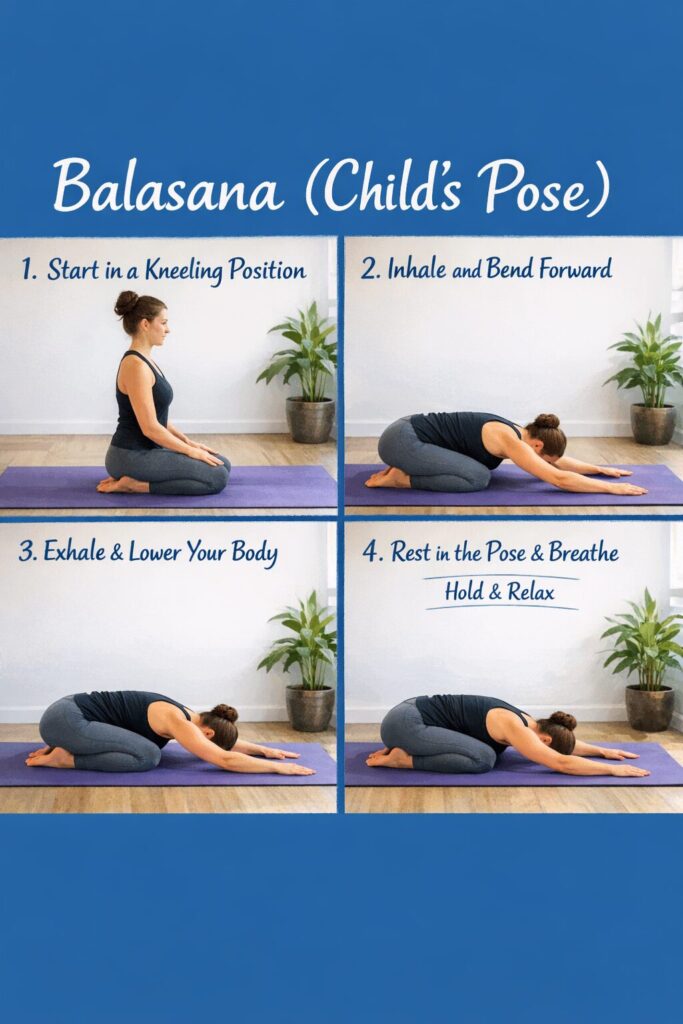
Pose 1: Child’s Pose (Balasana) — 2 Minutes
Target area: Hips, lower back, ankles
Kneel on the mat with your big toes touching and knees wide apart.
Fold forward, extending your arms in front of you or resting them alongside your body.
Let your forehead rest on the mat or a folded blanket.
Close your eyes and breathe slowly for 2 minutes.
Beginner modification: Place a bolster under your torso for full support.
Pose 2: Butterfly (Baddha Konasana) — 3 Minutes
Target area: Inner groin, lower back, hips
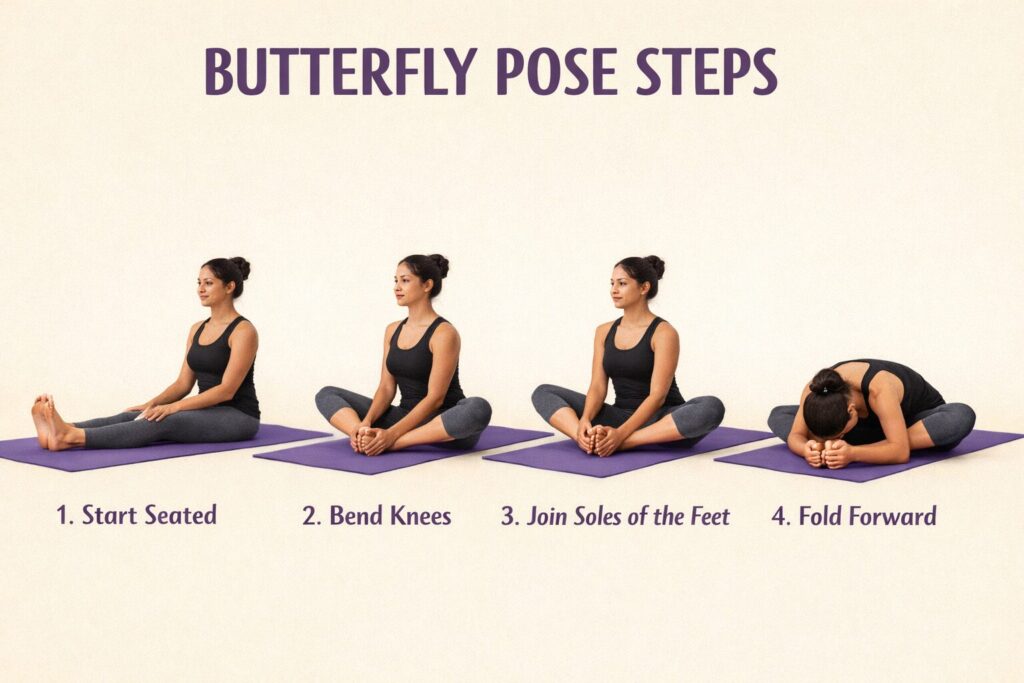
Sit with the soles of your feet together and let your knees fall open to the sides.
Hold your feet and fold forward, allowing your spine to round naturally.
Let your head hang heavy. Do not pull or force.
Hold for 3 minutes, breathing deeply.
Beginner modification: Sit on a folded blanket to elevate the hips. Place blocks under each knee for support.
BUTTERFLY POSE STEPS
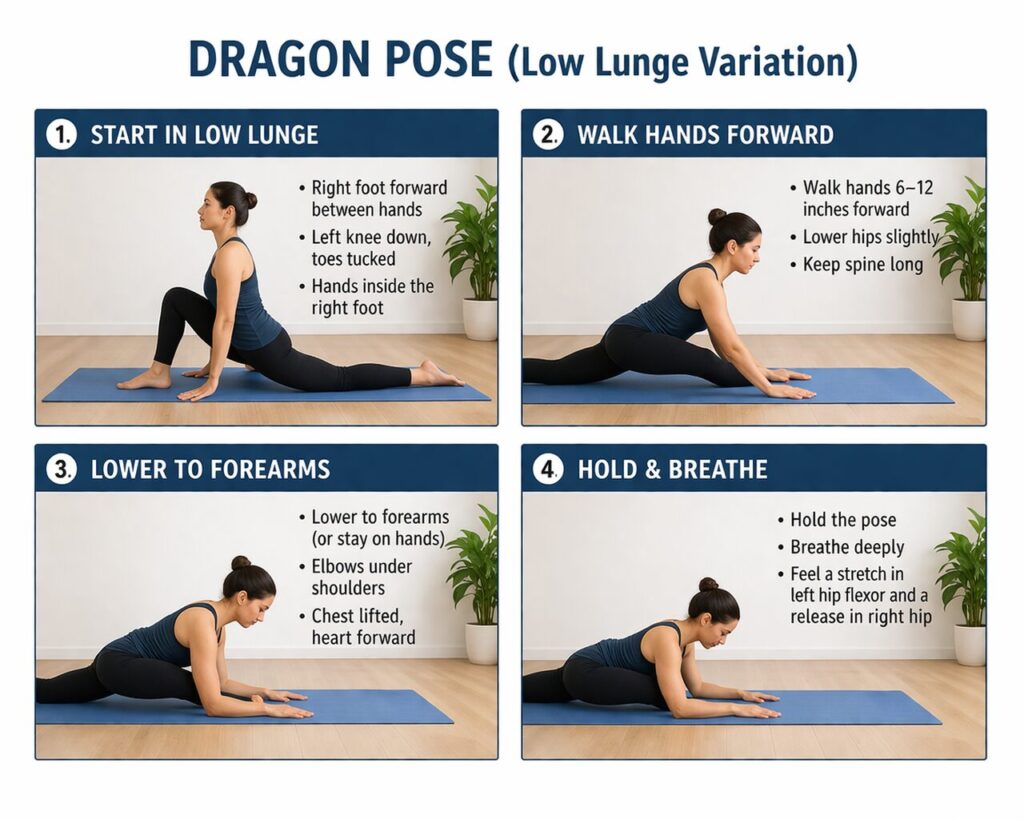
Pose 3: Dragon (Low Lunge) — 2 Minutes Each Side
Target area: Hip flexors, quadriceps, groin
From all fours, step your right foot forward between your hands.
Lower your left knee to the mat (place a folded blanket under it for comfort).
Let your hips sink forward and down. Place your hands on blocks if needed.
Hold for 2 minutes per side.
This is one of the most effective poses for yin yoga for flexibility and mobility for beginners, particularly targeting tight hip flexors from prolonged sitting.
Fold forward from the hips, allowing your spine to round completely.
Let your arms rest on your legs or on the floor. Do not grip.
Hold for 3 minutes, surrendering to gravity with each exhale.
Beginner modification: Bend your knees slightly. Sit on a folded blanket to tilt the pelvis forward.
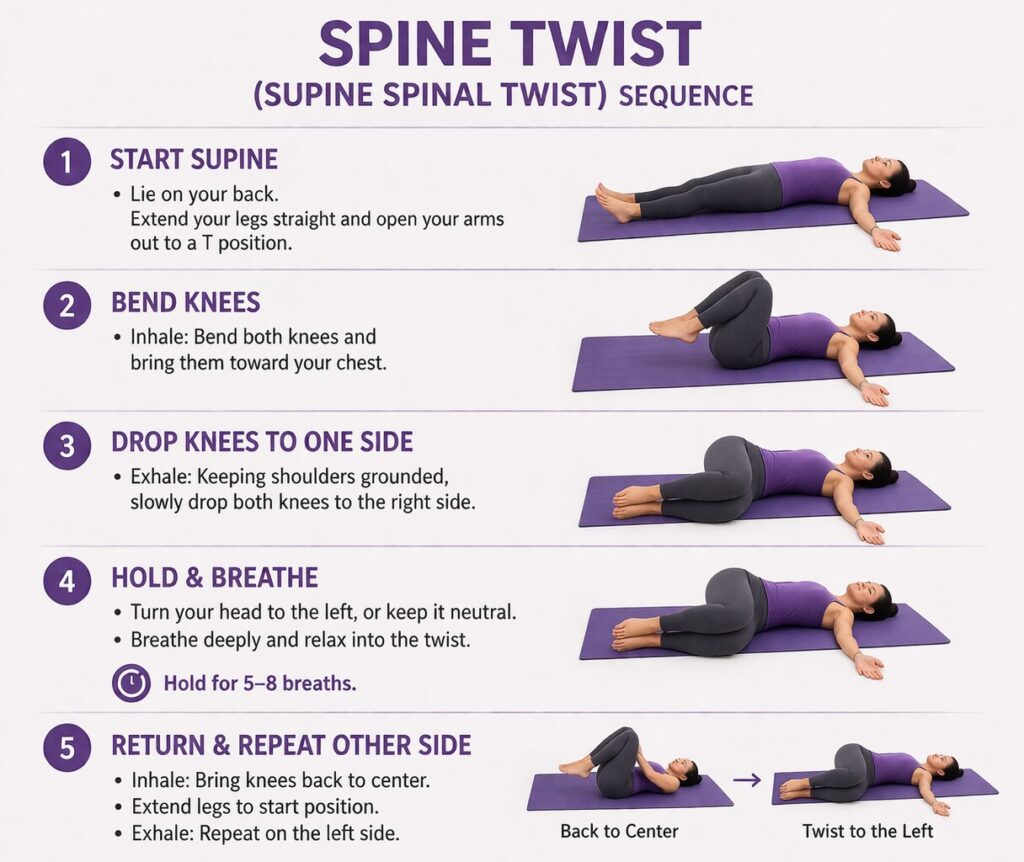
Pose 5: Spine Twist (Savasana Twist) — 2 Minutes Each Side + Savasana 3 Minutes:
Target area: Spine, outer hips, IT band
Lie on your back. Draw your right knee toward your chest.
Gently guide it across your body to the left side.
Extend your right arm out to the side. Turn your gaze gently to the right.
Hold 2 minutes, then switch sides.
Finish in Savasana (flat on your back, arms at sides, eyes closed) for 3 minutes. This is the most important pose in any gentle yin yoga routine for full body relaxation — never skip it.
A Comprehensive sequence for free online yin yoga for beginners at Home for Full Body Release:
Once you are comfortable with the 15-minute routine above, graduate to this full beginner yin yoga sequence at home. It takes approximately 45–60 minutes and provides a comprehensive, head-to-toe release. This is the kind of routine you will find in most free online yin yoga for beginners’ video libraries.
Full Sequence at a Glance (45–60 Minutes)
Pose
Hold Time
Primary Target
1
Child’s Pose
3 min
Lower back, hips
2
Butterfly
4 min
Inner groin, hips
3
Dragon (Right)
3 min
Hip flexors
4
Dragon (Left)
3 min
Hip flexors
5
Square / Fire Log
3 min each side
Outer hips, piriformis
6
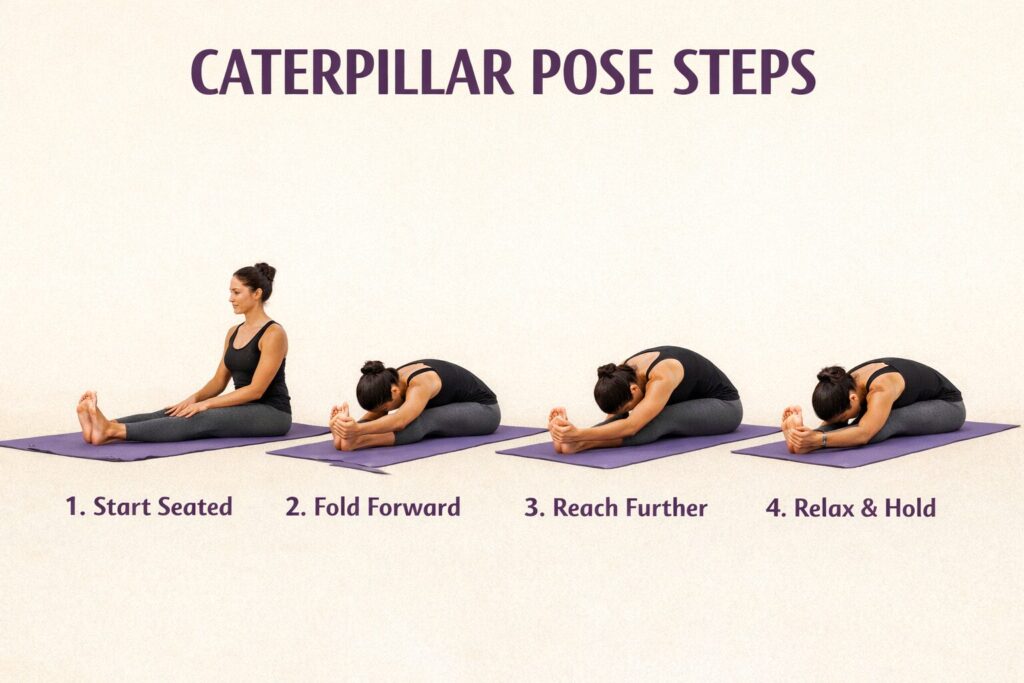
Caterpillar
4 min
Hamstrings, spine
7
Sphinx / Seal
4 min
Lower back, spine
8
Swan / Sleeping Swan (Right)
4 min
Glutes, IT band
9
Swan / Sleeping Swan (Left)
4 min
Glutes, IT band
10
Twisted Roots (Right)
3 min
Spine, outer hips
11
Twisted Roots (Left)
3 min
Spine, outer hips
12
Savasana
5 min
Integration, nervous system
Best Free Online Yin Yoga for Beginners Resources in 2026:
The internet is saturated with yoga content, but genuine, high-quality free online yin yoga for beginners’ resources are concentrated in a handful of places. Here are the most reliable, expert-vetted options.
Top YouTube Channels for Free Yin Yoga Instruction:
Yoga with Kassandra: Kassandra Reinhardt is a certified yin yoga teacher whose channel offers hundreds of free classes, including dedicated playlists for how to practice yin yoga at home step by step. Her 15-minute yin yoga for beginners videos are among the most-watched online.
Yin Yoga with Travis Eliot: Travis’s teaching integrates Taoist meridian theory with anatomical instruction. His free beginner yin yoga sequence at home videos are particularly effective for those with chronic tension.
Yoga with Adriene: While Adriene’s channel covers all yoga styles, her yin and restorative playlists are excellent for a gentle yin yoga routine for full body relaxation and are highly beginner-friendly.
Bernie Clark’s YinYoga.com: The definitive educational resource for yin yoga theory. The website offers free pose libraries, anatomy guides, and sequences ideal for those who want to understand the “why” behind the practice.
Apps That Offer Free Online Yin Yoga for Beginners Content:
Insight Timer: Offers thousands of free guided yin classes, including specific searches for yin yoga for flexibility and mobility for beginners and yin yoga practice for stress relief and relaxation.
Down Dog Yoga App: Includes a yin-specific mode with customizable session lengths. Free tier available.
How to Evaluate the Quality of a Free online Yin Yoga for beginners Video:
Not all free content is created equal. When choosing a class for your free online yin yoga for beginners practice, check for these quality indicators:
The instructor has a verifiable yoga teacher training certification (200-hour minimum, yin-specific training preferred).
The class begins with a clear explanation of the three principles of yin yoga.
Modifications and prop options are offered for every pose.
Contraindications are mentioned (for example, not performing certain poses during pregnancy or with knee injuries).
Savasana is included at the end.
Experts’ view: What Yin Yoga Teachers Want Beginners to Know:
Sarah Powers, co-founder of the Insight Yoga Institute and one of the world’s most respected yin yoga authorities, has consistently emphasized in her teachings that beginners make one critical mistake: they treat yin yoga like a flexibility exercise.
“The goal is not to be flexible,” Powers explains in her teacher training materials. “The goal is to learn to be with yourself — with sensation, with emotion, with breath. Flexibility is a side effect, not the destination.”
This philosophy was propagated by Dr. Biff Mithoefer, a licensed clinical social worker and yin yoga teacher whose work bridges therapeutic psychology and yin practice. In his clinical experience, the meditative quality of a yin yoga practice for stress relief and relaxation produces measurable changes in how students relate to physical discomfort, directly translating to improvements in anxiety and chronic pain management.
The practical implication for anyone starting a beginner yin yoga sequence at home: come with curiosity, not ambition. The only job is to show up, breathe, and let time do the rest.
Real-World Example: How a 30-Day Yin Yoga Challenge Changed One Student’s Life:
Maya S., a 34-year-old software engineer from Bangalore, India, began a free online yin yoga for beginners challenge in January 2024 after experiencing chronic lower back pain and anxiety. Following a 15-minute yin yoga for beginners’ routine five days a week — sourced entirely from free YouTube content — she reported the following outcomes at the 30-day mark:
Lower back pain was reduced by approximately 60% (self-reported).
Sleep onset improved from 45 minutes to under 15 minutes.
Full forward fold improved: fingers moved from mid-shin to floor.
Reported feeling “significantly less reactive” at work.
Maya’s experience, as explained what the research predicts — and it illustrates perfectly why a consistent, daily gentle yin yoga routine for full body relaxation is such a powerful practice for modern life.
Common Mistakes Beginners Make in Yin Yoga (and How to Avoid Them):
Mistake 1: Going Too Deep Too Soon
Beginners often believe that a deeper stretch is a better stretch. In yin yoga, this is dangerous. Overstretching the fascia before it is ready can cause micro-tears and inflammation. When learning how to practice yin yoga at home step by step, always begin at 50–60% of your maximum depth and work progressively over weeks.
Mistake 2: Skipping Savasana
Savasana is not optional. It is the period during which the nervous system integrates the effects of the practice. Ending a gentle yin yoga routine for full body relaxation without Savasana is like baking a cake and removing it from the oven two minutes early. Minimum three minutes; five is ideal.
Mistake 3: Practicing with Sharp or Shooting Pain
There is a clear distinction in yin yoga between “transitional discomfort” (dull, diffuse, bearable) and pain (sharp, electric, stabbing, or nerve-related). The former is appropriate and productive. The latter is a signal to come out of the pose immediately. This is the most important safety principle in any yin yoga practice for stress relief, relaxation, or flexibility work.
Mistake 4: Holding Your Breath
Breath-holding activates the sympathetic nervous system — the fight-or-flight response. This defeats the entire purpose of yin yoga. If you notice yourself holding your breath during a yin yoga for flexibility and mobility beginners pose, it is a signal that you are working at too much intensity. Back off slightly and re-establish a steady, slow breath.
Mistake 5: Expecting Instant Results
Fascial remodeling — the process by which yin yoga creates lasting change in connective tissue — takes a minimum of four to eight weeks of consistent practice. Studies show that meaningful gains in how to practice yin yoga at home step by step, outcomes (flexibility, stress reduction, sleep) are typically measurable at the four-week mark. Consistency is everything.
How to Build a Sustainable Free Online Yin Yoga for Beginners Practice:
The most common reason beginners quit yoga is not difficulty — it is inconsistency. Here is a practical, research-backed framework for building a sustainable free online yin yoga for beginners practice that sticks.
Week-by-Week Beginner Progression Plan:
Week 1–2: Follow the 15-minute yin yoga for beginners’ routine above, three times per week. Focus on learning the three principles and finding your appropriate edge. Holds: 1–2 minutes per pose.
Week 3–4: Increase to four sessions per week. Extend holds to 2–3 minutes. Begin exploring the full beginner yin yoga sequence at home in the table above.
Week 5–6: Aim for five sessions per week. Introduce a 45–60-minute session once a week. Begin targeting specific areas (for example, a hip-focused sequence for yin yoga for flexibility and mobility for beginners, or a spine-focused sequence for stress relief).
Week 7–8 and beyond: You now have the foundations of a true yin yoga practice. Experiment with different teachers and styles from free online yin yoga for beginners’ resources. Hold poses for 3–5 minutes consistently.
Mixing Yin Yoga with Other Exercise for Maximum Benefit:
Yin yoga complements all forms of exercise. Here is how to pair it strategically:
After running or cycling: Focus on the beginner yin yoga sequence at home on the hips, IT band, and hamstrings.
After strength training: A gentle yin yoga routine for full body relaxation, targeting the muscles worked, is ideal for recovery.
On rest days, A full-body yin session for yin yoga practice for stress relief and relaxation actively accelerates recovery while training the nervous system.
Before bed: The 15-minute yin yoga for beginners’ routine is ideal as a nightly wind-down ritual.
Conclusion: Your Journey Starts with a Single Pose:
Free online yin yoga for beginners is more than just a cost-effective alternative to a yoga studio — it is a complete, scientifically supported system for transforming your body and mind from the inside out. Whether your goal is yin yoga for flexibility and mobility, a reliable yin yoga practice for stress relief and relaxation, or simply to learn how to practice yin yoga at home step by step, the resources available today make it easier than ever to start.
You do not need perfect posture, maximum flexibility, or hours of free time. A consistent beginner yin yoga sequence at home — even just a 15-minute yin yoga for beginners’ routine, three to five days a week — is enough to produce tangible, lasting change.
Start with the 15-minute routine in this guide tonight. Find a quiet space, roll out your mat, set a timer, and breathe. That single decision is the foundation of a gentle yin yoga routine for full body relaxation and resilience that can last a lifetime.
The mat is waiting. Your body is ready. Start right now without any fear or hesitation.
FAQ:
Q1: How often should I do free online yin yoga for beginners?
A: For beginners, three to four sessions per week is ideal. Even a 15-minute yin yoga for beginners’ routine practiced consistently three times per week will produce measurable improvements in flexibility and stress levels within four weeks. As your body adapts, you can increase to daily practice. Yin yoga is gentle enough to be practiced every day because it targets connective tissue rather than muscle, which requires less recovery time.
Q2: Can complete beginners do yin yoga at home without an instructor?
A: Yes. Free online Yin yoga for beginners content provides everything a self-guided student needs. The key is to learn the three principles (appropriate edge, stillness, hold for time) before starting, choose a qualified teacher’s free video, and always honor the distinction between productive discomfort and pain. Following a structured guide on how to practice yin yoga at home step by step minimizes injury risk significantly.
Q3: What is the difference between yin yoga and restorative yoga?
A: Yin yoga involves mild to moderate discomfort and targets connective tissue through light, sustained stress. It is highly effective for yin yoga for flexibility and mobility for beginners. Restorative yoga uses extensive props to fully support the body with zero discomfort, targeting purely the nervous system. Both offer a yin yoga practice for stress relief and relaxation, but yin yoga produces greater flexibility gains, while restorative yoga is better for acute fatigue or injury recovery.
Q4: How long should I hold poses in a beginner yin yoga sequence at home?
A: Beginners should start with one to two minutes per pose and work progressively toward three to five minutes over four to six weeks. The connective tissue targeted in a beginner yin yoga sequence at home responds to duration rather than intensity. Holding a moderate stretch for three minutes is far more effective than forcing a deep stretch for 30 seconds. Always use a timer so you are not checking the clock.
Q5: Is yin yoga good for lower back pain?
A: Yes, when practiced carefully. Many poses in a gentle yin yoga routine for full body relaxation — including Child’s Pose, Caterpillar, and Dragon — directly target the hip flexors and hamstrings, which are primary contributors to lower back tension. A 2020 clinical review found that yin-style yoga produced significant reductions in chronic lower back pain after six weeks. Always consult your doctor or physiotherapist before starting if you have a diagnosed spinal condition.
Q6: What do I need to start free online yin yoga for beginners at home?
A: Very little. The bare minimum for a free online yin yoga for beginners practice is a yoga mat and a quiet space. Ideally, add two foam yoga blocks, a firm pillow or bolster, and a blanket. A timer (your phone works) is essential so you can track holds. For video guidance, YouTube channels such as Yoga with Kassandra offer hundreds of free beginner yin yoga sequences at home, including dedicated 15-minute yin yoga for beginner’s routines.