Introduction
The benefits of inversion yoga are far more profound than most people realize. The benefits of inversion yoga range from improved circulation and core strength to deep stress relief and better mental clarity. In fact, the benefits of inversion yoga have been documented by sports scientists, physical therapists, and yoga practitioners across the globe for decades.
Whether you are a seasoned yogi or just beginning to explore yoga inversion poses, flipping your body upside down even for a few minutes a day, can rewrite the way your nervous system, lymphatic system, and musculoskeletal system function.
This guide covers everything you need to know — from the science behind inversions to safe yoga inversions for beginners and a clear look at both the benefits and drawbacks of the practice.
Now, let us delve into the details of the benefits of Inversion Yoga.
01. What Is Inversion Yoga? A Clear Definition
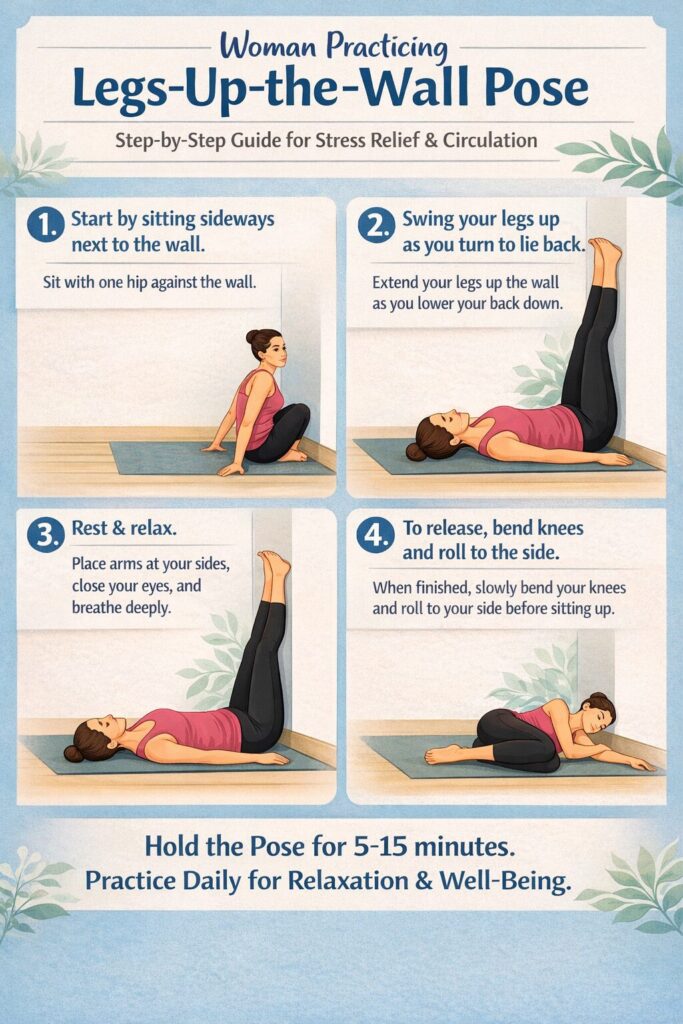
An inversion is any yoga pose that places your head below your heart. This covers a wide spectrum, from gentle poses like Legs-Up-the-Wall (Viparita Karani) to advanced poses like a full Headstand (Sirsasana) or Handstand (Adho Mukha Vakrasasana).
The key mechanism is simple: you reverse the effects of gravity on your body. Blood, lymph, and cerebrospinal fluid all shift direction, creating a cascade of physiological benefits.
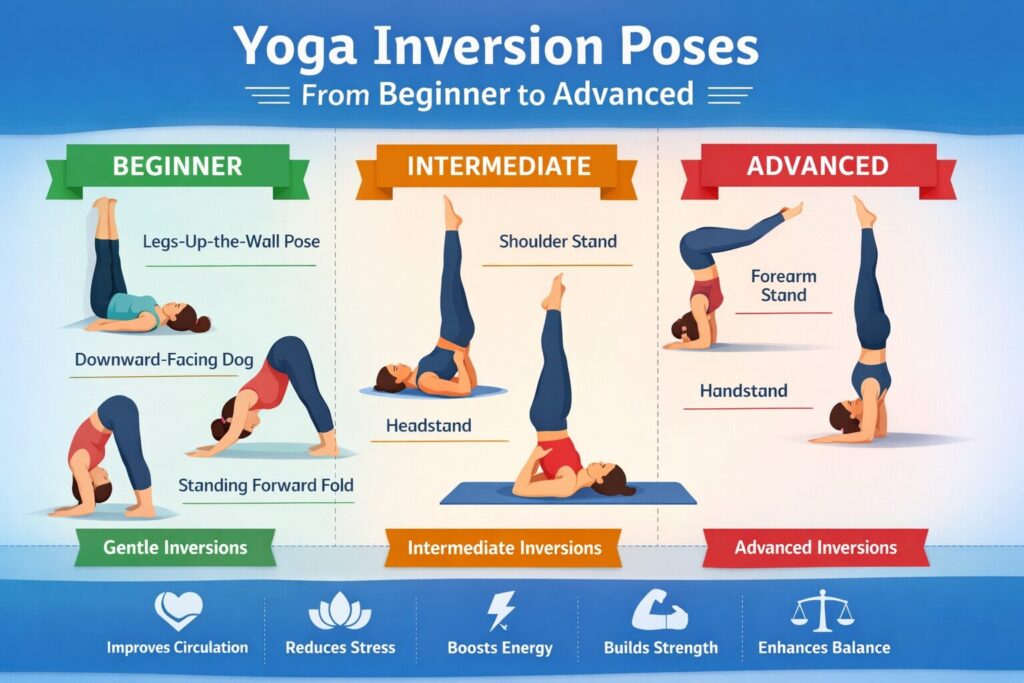
Categories of Yoga Inversion Poses
- Mild inversions: Downward Dog, Standing Forward Fold, Legs-Up-the-Wall
- Moderate inversions: Shoulder Stand (Sarvangasana), Plow Pose (Halasana)
- Advanced inversions: Headstand (Sirsasana), Handstand (Adho Mukha Vrksasana), Forearm Stand (Pincha Mayurasana)
Inversions yoga for beginners typically starts with mild and moderate poses to build strength, body awareness, and confidence before progressing.
02. The Top 12 Benefits of Inversion Yoga
1. Improved Circulation and Cardiovascular Health
When you invert, gravity assists venous blood return to the heart. This reduces the workload on the heart and can improve overall circulatory efficiency. In this way, the practitioners get the benefit of inversion yoga. A 2018 study in the Journal of Bodywork and Movement Therapies found that regular inversion practice positively influenced blood pressure regulation and peripheral circulation in healthy adults.
The benefits of inversion yoga for the cardiovascular system are especially notable for people who sit for long hours, as inversions counteract venous pooling in the legs.
2. Yoga for Core Strength: Building a Rock-Solid Foundation
Holding any inversion demands intense engagement from your core muscles — including the transverse abdominis, multifidus, and pelvic floor. This is not surface-level ab work; this is functional stability training.
Yoga for core strength through inversions activates stabilizer muscles that traditional gym exercises often miss. In continuous practice, practitioners report better posture, reduced lower back pain, and a stronger, more coordinated trunk, and extend a coordinated benefit of inversion yoga.
3. Yoga for Stress Relief Through Nervous System Regulation
Inversions activate the parasympathetic nervous system — your rest-and-digest mode. Poses like Legs-Up-the-Wall trigger the vagus nerve, lowering cortisol levels and promoting relaxation within minutes.
A landmark study from Harvard Medical School found that yoga for stress relief reduced self-reported anxiety by 36% over an 8-week period, with inversion yoga cited as particularly effective. The act of going upside down literally shifts your perspective and interrupts stress patterns stored in the body.
4. Yoga for Balance and Stability
Inversions are unmatched for developing a proper perception on your body’s ability to sense its position in space. Every time you work toward a headstand or handstand, you are training thousands of tiny stabilizing muscles and the neural pathways that control them. This extends a tangible benefit of inversion yoga.
Yoga for balance and stability through inversions has been shown to reduce fall risk in older adults. A 2020 study in Frontiers in Human Neuroscience found that regular inversion practice significantly improved postural control and single-leg balance scores.
5. Lymphatic Drainage and Immune Support
Unlike the cardiovascular system, the lymphatic system has no pump. It relies on muscle contractions and gravity reversal to move lymph fluid. Inversions accelerate lymphatic drainage, flushing toxins, bacteria, and cellular waste more efficiently.
This is one of the benefits of inversion yoga that practitioners often overlook, yet it has real implications for immune function, inflammation, and recovery from illness or injury.
6. Spinal Decompression and Back Pain Relief
Gravity compresses the spine all day long. Inversions create traction — gently elongating the vertebral column and creating space between discs. This can relieve chronic back tension and improve spinal mobility over time.
Yoga inversion poses like Downward Dog and Forward Fold provide mild, accessible decompression without the risks of extreme inversions, making them suitable for almost anyone.
7. Mental Clarity and Cognitive Function
Increased blood flow to the brain during inversions has been linked to improved focus, sharper memory, and enhanced mood. Many practitioners describe a mental ‘reset’ after even five minutes of gentle inversion work.
The benefits of inversion yoga for the mind are supported by neuroscience: increased cerebral perfusion stimulates neuroplasticity and the release of neurotransmitters, including dopamine and serotonin.
8. Enhanced Respiratory Function
In an inverted position, the diaphragm moves against gravity, which strengthens it over time. Additionally, abdominal organs shift slightly, creating more space in the thoracic cavity. This allows for deeper, more efficient breathing.
Inversion Yoga poses are frequently recommended by respiratory therapists as supplementary practices for people with mild asthma or chronic shallow breathing patterns.
9. Hormonal Balance
Inversions stimulate glands, including the pituitary and thyroid. The pituitary, often called the master gland, regulates nearly every hormonal process in the body. Regular inversion practice is thought to improve hormonal balance, contributing to better mood, metabolism, and reproductive health.
10. Athletic Recovery
Inversions yoga for beginners and advanced athletes alike serves as a powerful recovery tool. Elevating the legs reduces lactic acid build-up, speeds muscle recovery, and reduces swelling after intense training.
Elite running coaches and triathlon trainers routinely include Legs-Up-the-Wall in post-workout protocols for exactly this reason.
11. Improved Digestion
Inverting stimulates the enteric nervous system and can help move stagnant digestive content through the intestines. Poses like Shoulder Stand are traditionally used in Hatha yoga specifically to address sluggish digestion and constipation.
12. Increased Body Awareness and Confidence
Mastering any yoga inversion pose builds a powerful sense of accomplishment and body literacy. Over time, practitioners report a more positive relationship with their body, increased self-confidence, and a deeper understanding of their physical limits and capabilities.
03. Inversion Yoga Benefits and Drawbacks: An Honest Assessment
No practice is entirely without risk. Here is a balanced look at inversion yoga benefits and drawbacks so you can make an informed decision.
Benefits of Inversion Yoga at a Glance
- Reverses gravitational stress on joints, spine, and vessels
- Builds yoga for core strength and functional stability
- Offers yoga for stress relief through vagal activation
- Supports hormonal, lymphatic, and immune function
- Improves yoga for balance and stability in all age groups
- Accelerates athletic recovery
Potential Drawbacks and Contraindications
- Risk of neck and shoulder injury in unsupported headstands
- Contraindicated for people with glaucoma, detached retina, or uncontrolled hypertension
- Not recommended during menstruation (by traditional yoga schools) or late pregnancy
- Can cause dizziness or disorientation in those new to the practice
- Risk of falls for beginners practicing without supervision
The inversion yoga benefits and drawbacks balance strongly in favor of the practice when practiced correctly, with qualified instruction from an Inversion Yoga Teacher and appropriate modifications.
04. Safe Yoga Inversions: How to Start Without Getting Hurt
Safe yoga inversions are built on a foundation of preparation, progression, and awareness. Skipping steps is the primary cause of inversion-related injuries.
The 5-Step Framework for Safe Yoga Inversions
- Assess your baseline: Consult a doctor if you have any neck, shoulder, or cardiovascular conditions.
- Start mild: Begin with Legs-Up-the-Wall and Downward Dog for 2–4 weeks.
- Build prerequisite strength: Develop yoga for core strength and shoulder stability before attempting headstands or handstands.
- Use props and walls: A wall is your best training tool for any inversion. Use it until you are confident and consistent.
- Work with a qualified teacher: Learn alignment fundamentals in person before practicing advanced inversions alone.
Best Safe Yoga Inversions for Beginners
- Legs-Up-the-Wall (Viparita Karani): Zero load on the neck; pure circulatory benefit
- Downward Facing Dog (Adho Mukha Svanasana): Foundational; builds shoulder and core strength
- Standing Forward Fold (Uttanasana): Gentle spinal decompression; accessible at any fitness level
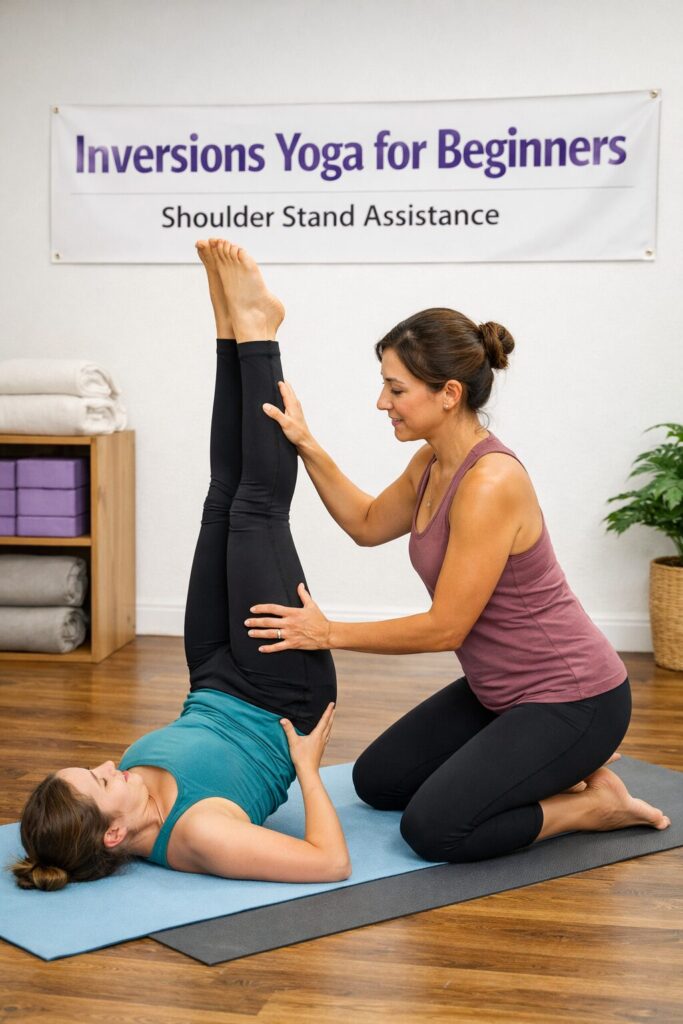
- Supported Shoulder Stand (Sarvang asana): Use blankets under the shoulders to protect the cervical spine
05. Inversions Yoga for Beginners: A 4-Week Starter Plan
If you are new to the practice, this progressive plan safely introduces the benefits of inversion yoga without overloading your nervous system or joints.
Week 1–2: Foundation Building
- Daily: Legs-Up-the-Wall — 5 to 10 minutes
- Daily: Standing Forward Fold — 8 breaths, 3 rounds
- Focus: Experience the gravitational shift; build comfort with being inverted
Week 3–4: Strength and Progression
- Daily: Downward Dog — 10 breaths, 5 rounds
- 3x per week: Core drills (Plank, Boat Pose) for yoga for core strength
- Introduce: Supported Shoulder Stand against a wall
After four weeks, most beginners have built enough baseline strength and comfort to explore more advanced yoga inversion poses safely.
05. Expert Perspective: What the Research and Practitioners Say
From the Research:
Dr. Loren Fishman, a Columbia University physiatrist and renowned yoga researcher, has published extensively on the therapeutic benefits of inversion yoga poses. His work demonstrates that regular inversion practice — even mild inversions — produces measurable improvements in bone density, balance, and autonomic nervous system tone.
A meta-analysis published in Evidence-Based Complementary and Alternative Medicine (2021) reviewed 28 studies on yoga and found that inversion-dominant practices produced statistically significant improvements in cortisol levels, mood scores, and physical performance compared to non-inversion yoga styles.
From Experienced Practitioners
Senior yoga teacher and former gymnast Sarah Mitchell (20 years of teaching experience) notes: ‘The biggest mistake beginners make is rushing to a headstand without building the prerequisite shoulder and core strength. When the foundation is right, the benefits of inversion yoga unfold naturally and safely.
Physical therapist and yoga teacher Dr. Arjun Mehta emphasizes the value of inversions yoga for beginners in clinical rehabilitation: ‘I use Legs-Up-the-Wall with post-surgical patients as early as week two of recovery. The lymphatic and circulatory benefits are immediate and measurable.’
06. Quick Reference: Inversion Yoga Benefits and Drawbacks
| Benefits | Drawbacks / Cautions |
| Improves circulation and heart efficiency | Risk of neck injury without proper alignment |
| Builds yoga for core strength | Contraindicated with glaucoma or hypertension |
| Delivers yoga for stress relief | Dizziness possible in beginners |
| Enhances yoga for balance and stability | Not suitable during late pregnancy |
| Supports lymphatic drainage and immunity | Requires warm-up and preparation |
| Speeds athletic recovery | Falls risk without wall support initially |
07. Conclusion: Why the Benefits of Inversion Yoga Are Worth Pursuing
The benefits of inversion yoga are broad, well-documented, and accessible to almost every body type and fitness level. From circulation and core strength to stress relief and hormonal balance, flipping your perspective — literally — can profoundly transform your health.
The key is progression. Start with safe yoga inversions, build your foundation through consistent inversions for beginner’s practices, and progress to more advanced yoga inversion poses only when your body is ready.
The benefits of inversion yoga compound over time. A five-minute Legs-Up-the-Wall session today leads to a confident Shoulder Stand in a month, and perhaps a full Headstand in a year. Every step of that journey delivers real, measurable benefits.
Whatever your starting point, make the benefits of inversion yoga part of your regular practice. Your circulatory system, nervous system, spine, and mind will thank you.
FAQ:
Q1: What are the main benefits of inversion yoga?
The main benefits of inversion yoga include improved blood circulation, spinal decompression, enhanced core strength, lymphatic drainage, stress relief through parasympathetic activation, and better yoga for balance and stability. Regular practice also supports hormonal health, respiratory function, and cognitive clarity.
Q2: Are yoga inversion poses safe for beginners?
Yes, many yoga inversion poses are safe for beginners when approached progressively. Start with mild inversions like Legs-Up-the-Wall and Downward Dog. Inversions yoga for beginners should always begin with wall support and ideally under the guidance of a qualified teacher to ensure proper alignment and safe yoga inversions technique.
Q3: How long should I hold an inversion pose?
For mild inversions like Legs-Up-the-Wall, 5 to 15 minutes is appropriate. For more intense yoga inversion poses like Headstand or Shoulder Stand, beginners should start at 30 seconds and gradually increase to 3–5 minutes over weeks of consistent practice. Listen to your body and come down at the first sign of discomfort.
Q4: Can inversion yoga help with back pain?
Yes. Yoga inversion poses create traction on the spine, gently decompressing vertebral discs and relieving chronic tension. Poses like Downward Dog and Standing Forward Fold are particularly accessible. Always consult a healthcare provider if you have a diagnosed spinal condition before attempting inversions.
Q5: What are the drawbacks of inversion yoga?
The main inversion yoga benefits and drawbacks to consider include risk of neck and shoulder injury in unsupported headstands, contraindication for people with glaucoma, uncontrolled high blood pressure, or detached retina, and possible dizziness for beginners. With proper preparation and safe yoga inversion techniques, these risks are significantly minimized.
Q6: How often should I practice yoga inversions?
For most people, practicing safe yoga inversions 3–5 times per week yields optimal benefits. Even a daily 5-minute Legs-Up-the-Wall session delivers measurable improvements in circulation and stress relief. More advanced yoga inversion poses can be integrated 2–3 times weekly as part of a balanced yoga for core strength and flexibility routine.