
How an Ancient Practice Became a Global Health Revolution
Introduction
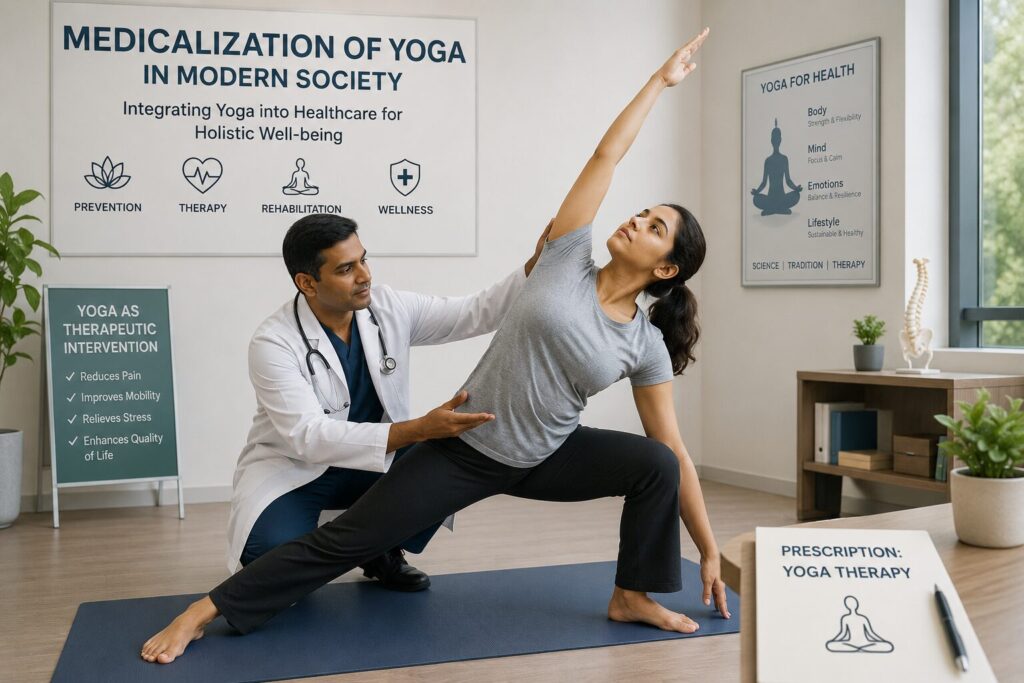
The medicalization of yoga in the modern world, the medicalization of yoga in modern society, and the medicalization of yoga in the modern world as a health framework — these are not just buzzwords. They represent one of the most profound cultural and scientific transformations of our time. Over the past five decades, yoga has traveled from the ashrams of ancient India into hospital wards, research laboratories, corporate wellness centers, and mental health clinics across the globe. What was once an exclusively spiritual discipline is now a clinically recognized therapeutic tool—and that shift changes everything.
The relevance of yoga in modern society cannot be overstated. The World Health Organization estimates that stress-related disorders affect more than 264 million people worldwide. Cardiovascular disease, anxiety, chronic pain, and lifestyle disorders are reaching epidemic proportions. In this context, the integration of yoga into healthcare is not a trend — it is a response to a global crisis.
But the story of yoga’s medicalization is not simply a clinical one. It is also a story about identity, transformation, cultural exchange, and the age-old search for meaning. To truly understand where yoga stands today, we must first understand where it came from. Now, let us delve into the details of “Medicalization of Yoga in the Modern World.”
The Evolution of Yoga
Through the Ages: Roots Deeper Than We Think:
The evolution of yoga through the ages spans at least 5,000 years. The earliest references to yoga appear in the Rigveda (approximately 1500–1200 BCE), where the Sanskrit root “yuj”—meaning “to join or unite”—described a practice of uniting individual consciousness with universal consciousness. This was not an exercise. This was a complete science of human evolution.
The Classical Period: Patanjali’s Yoga Sutras and the Eight Limbs
Around 400 CE, the sage Patanjali codified yoga in the Yoga Sutras—a collection of 196 aphorisms that defined the eight-limbed path (Ashtanga). These eight limbs included ethical disciplines (Yamas and Niyamas), physical postures (Asanas), breath control (Pranayama), sensory withdrawal (Pratyahara), concentration (Dharana), meditation (Dhyana), and ultimate absorption (Samadhi). In this original framework, the physical postures—what most Westerners call “yoga”—comprised only one-eighth of the practice.
This context is crucial because the medicalization of yoga in the modern world has largely focused on the asana (posture) and pranayama (breathwork) components, often detaching them from their original spiritual framework. Whether that represents progress or loss is a debate that continues among practitioners, scholars, and clinicians.
Yoga, Universal Wisdom, and the Connection to Christian Contemplative Tradition:
What many people do not know is that the ancient disciplines described in yogic texts bear a striking resemblance to the contemplative practices described in early Christian mystical traditions. Scholars such as Raimon Panikkar and Bede Griffiths—Christian monks who studied deeply in India—drew parallel lines between the yogic concept of union with the Divine and the Christian mystical tradition of union with God through prayer and silence.
Jesus Christ, in the Gospel of John (17:21), prayed “that all of them may be one, Father, just as you are in me and I am in you.” This prayer—a longing for the deepest union between human and divine—mirrors the core intention of yoga: union, wholeness, and transcendence. The spiritual growth and social development that yoga promises are universal in nature, crossing the boundaries of religion, culture, and time.
Father Thomas Keating, the Trappist monk who pioneered Centering Prayer, explicitly acknowledged resonances between Christian contemplation and yogic meditation. This cross-tradition connection reveals that the essence of yoga — the turning inward, the stilling of the mind, the opening to transcendence — is a human universal, not a Hindu monopoly.
The Medicalization of Yoga in the Modern World: How Did It Happen?
The formal medicalization of yoga in the modern world gained momentum in the 1970s and 1980s, when pioneering researchers began subjecting yoga practices to scientific inquiry. Dr. Herbert Benson of Harvard Medical School published “The Relaxation Response” in 1975, demonstrating that meditation and breath-focused practices could reverse the physiological stress response—lowering blood pressure, cortisol levels, and heart rate. This was a turning point.
Key Scientific Milestones in Yoga Research
The evidence base for therapeutic yoga has grown exponentially since those early studies. Here are the landmark findings that accelerated the medicalization of yoga in modern society:
- 1998 — Dr. Dean Ornish’s landmark study showed that yoga, as part of a lifestyle program, could reverse coronary artery disease.
- 2011 — A major review in the Journal of Alternative and Complementary Medicine found yoga effective for reducing anxiety and depression across 17 clinical trials.
- 2016 — The US National Institutes of Health (NIH) funded over $15 million in yoga research, validating its role in pain management, especially chronic back pain.
- 2018 — The American College of Physicians officially recommended yoga as a first-line treatment for chronic low back pain.
- 2021 — A meta-analysis in the British Journal of Sports Medicine confirmed yoga’s efficacy in reducing HbA1c levels in Type 2 diabetes patients.
- 2023 — The Global Wellness Institute valued the yoga market at $180 billion, reflecting both its cultural reach and clinical penetration.
These milestones chart the remarkable journey of yoga from the margins of alternative medicine to the mainstream of evidence-based healthcare. The medicalization of yoga in the modern world is no longer hypothetical—it is documented, peer-reviewed, and institutionally accepted.
Modern Globalization of Yoga: A Practice Without Borders
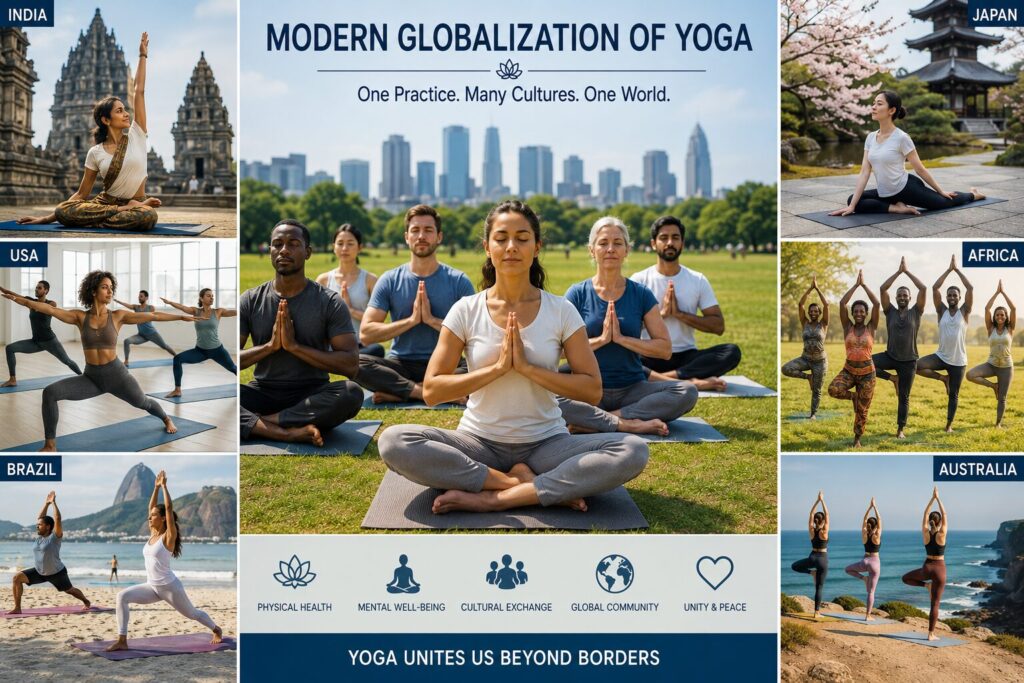
The modern globalization of yoga is one of the most striking cultural phenomena of the twentieth and twenty-first centuries. Swami Vivekananda introduced yoga to the Western world at the 1893 Parliament of the World’s Religions in Chicago. Within a century, yoga studios outnumbered churches in many American cities. Today, an estimated 300 million people practice yoga worldwide.
Yoga by the Numbers: The Scale of Global Reach
- 300 million yoga practitioners worldwide (Yoga Alliance, 2023)
- 36 million yoga practitioners in the United States alone
- $180 billion global yoga industry valuation
- June 21 has been recognized by the UN as International Day of Yoga since 2015
- Over 6,000 peer-reviewed studies on yoga’s health effects (PubMed, 2024)
- Yoga is practiced in 100+ countries with formal instructor certification programs
This modern globalization of yoga has carried both gifts and complications. On one hand, it has spread awareness of breath-body practices to millions who would never have accessed traditional yogic teachings. On the other hand, it has raised pointed questions about cultural appropriation, commercialization, and the dilution of a profound spiritual tradition into a fitness product.
The Relevance of Yoga in Modern Society: Why Billions Are Turning to the Mat?
The relevance of yoga in modern society/globalization of yoga are directly tied to the crises of modern living. Urbanization, digital overload, social disconnection, chronic sedentary behavior, and pharmaceutical dependency have created a population desperately searching for holistic healing. Yoga offers something rare: a practice that simultaneously addresses the body, mind, and spirit.
A 2022 survey by Yoga Alliance and Yoga Journal found that 87% of people who try yoga report improvements in mood, 78% report better sleep, and 69% say it reduces their reliance on pain medication. These are not trivial numbers. They reflect a deep societal need that conventional medicine alone is failing to meet.
Integration of Yoga in Modern Institutions: From Clinics to Corporations
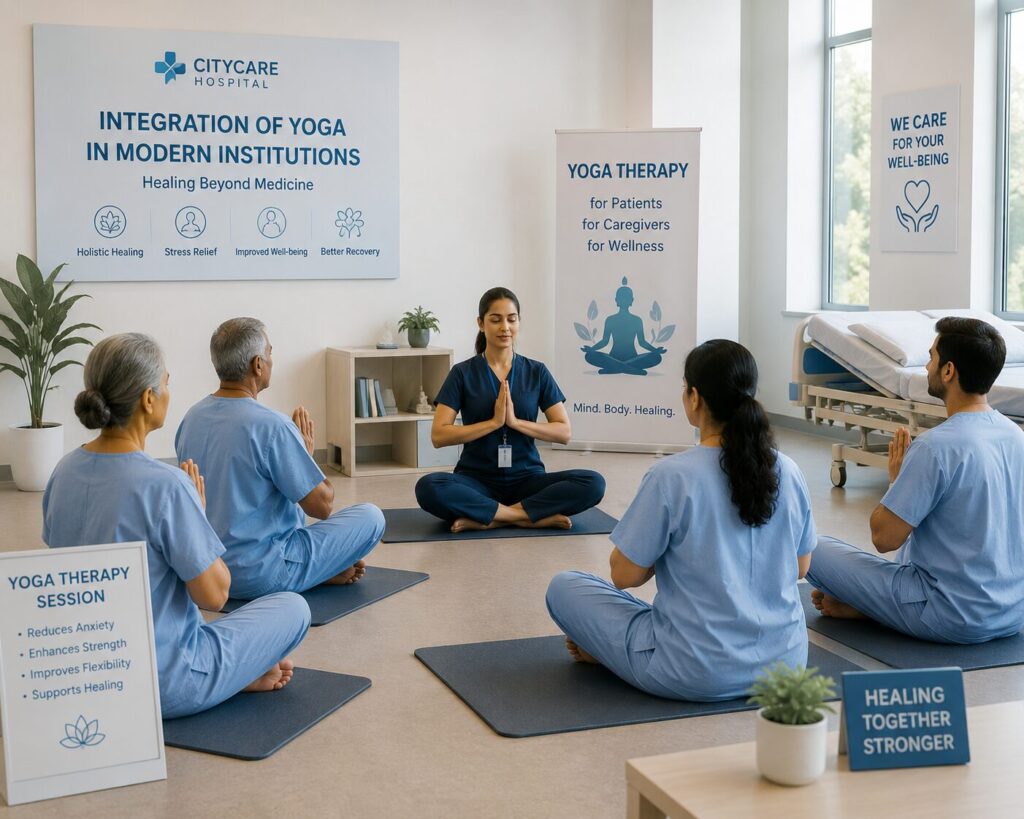
The integration of yoga in modern institutions marks the most visible expression of its medicalization. Across the world, yoga is now embedded in the operational frameworks of hospitals, schools, prisons, military organizations, and Fortune 500 corporations.
Healthcare Integration: Yoga as a Clinical Tool
- The Cleveland Clinic, Johns Hopkins, and Mayo Clinic all offer yoga as part of integrative oncology and cardiac rehabilitation programs.
- The US Department of Veterans Affairs (VA) has deployed yoga and mindfulness-based programs to treat PTSD in combat veterans, with clinical outcomes showing a 41% reduction in PTSD symptom scores.
- India’s AIIMS (All India Institute of Medical Sciences) has a dedicated Department of Integrative Medicine offering certified yoga therapy as part of standard treatment protocols.
- NIMHANS (National Institute of Mental Health and Neurosciences, Bangalore) runs certified yoga therapy programs for depression and schizophrenia.
- The UK’s National Health Service (NHS) now recommends yoga for chronic pain, stress, and anxiety as a cost-effective alternative to prolonged pharmaceutical intervention.
Yoga in Corporate and Educational Settings
Google, Apple, Nike, and Aetna are among hundreds of corporations that have integrated yoga into their employee wellness programs. Aetna’s CEO Mark Bertolini—himself a yoga practitioner—credited yoga with his recovery from a near-fatal ski accident and subsequently introduced yoga to all 50,000 Aetna employees, reporting a $2,000 per employee increase in productivity and a $2,000 per employee decrease in healthcare costs.
In education, Harvard University, Oxford, and over 400 schools across the UK have embedded yoga and mindfulness into curricula, reporting reductions in student anxiety, improved concentration, and better academic performance. The integration of yoga in modern institutions has become a measurable driver of human capital development.
Spiritual Growth and Social Development Through Institutional Yoga:
What is most remarkable about institutional yoga programs is that, despite the clinical framing, practitioners consistently report outcomes beyond the physical. Spiritual growth and social development emerge spontaneously — practitioners report increased compassion, a sense of interconnectedness, reduced aggression, and greater emotional resilience. These are not clinical endpoints on a pharmaceutical trial. They are markers of human flourishing.
In India’s Tihar Jail — one of the world’s largest prisons — a yoga program introduced in the 1990s produced documented reductions in prisoner violence, recidivism rates, and psychological distress. This is spiritual growth and social development translated into the language of public safety. It is evidence that even in the most medicalized settings, yoga retains its transformative essence.
Benefits of the Medicalization of Yoga in the Modern World:
The medicalization of yoga in modern society has unlocked benefits that extend from the individual body to the global health system. Here is a structured overview:
Clinical Benefits
- Cardiovascular Health: Reduces blood pressure by an average of 5–10 mmHg (systolic) in hypertensive patients (AHA, 2019).
- Mental Health: Equivalent efficacy to antidepressants for mild-to-moderate depression in multiple RCTs.
- Chronic Pain: 40–50% reduction in chronic low back pain intensity per Cochrane Review (2017).
- Metabolic Health: Significant reduction in blood glucose and HbA1c in Type 2 diabetics.
- Cancer Care: Reduces cancer-related fatigue, improves quality of life, and lowers inflammatory markers in oncology patients.
- Neurological: Increases grey matter density in brain regions associated with self-regulation and emotional processing (Harvard Medical School, 2011).
- Immune Function: Regular yoga practice has been shown to upregulate anti-inflammatory gene expression.
Challenges and Misconceptions of Modern Yoga:
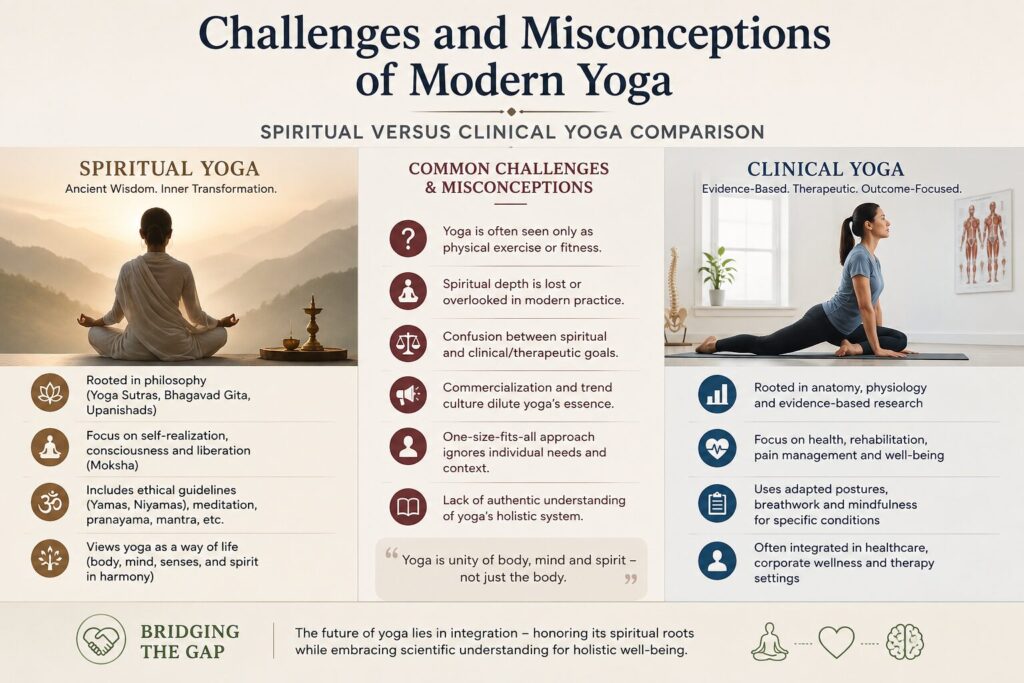
The challenges and misconceptions of modern yoga are numerous, and they deserve honest examination. As yoga has moved from the ashram to the clinic to the studio to the Instagram feed, a series of distortions has accumulated.
The Top Misconceptions
Misconception 1: Yoga is only for the flexible
Yoga is a practice of progressive awareness, not an athletic performance. Flexibility is an outcome, never a prerequisite. Therapeutic yoga is specifically adapted for seniors, people with disabilities, post-surgical patients, and those with chronic conditions.
Misconception 2: Yoga is a Hindu religious practice—therefore, exclusionary.
While yoga has Hindu philosophical roots, its practices—breath control, postural alignment, and meditation—are not religious rituals. They are techniques. Just as using algebra does not make you Arab, practicing yoga does not make you Hindu. Science is universal.
Misconception 3: Medicalized yoga is not “real” yoga
This is perhaps the most contentious challenge. Many traditional practitioners argue that stripping yoga of its spiritual context renders it mere stretching. The authentic response is nuanced: yoga is a vast system, and introducing its techniques to suffering people — even in secular form — is consistent with its deepest intention: the reduction of suffering.
Misconception 4: Yoga is a luxury practice for the privileged
While premium yoga studios are expensive, therapeutic yoga is increasingly delivered in hospitals, community centers, schools, and prisons — free or subsidized. Digital platforms have also democratized access globally.
The Cultural Appropriation Debate: Challenges and Misconceptions of Modern Yoga
Among the most heated challenges and misconceptions of modern yoga is the cultural appropriation debate. Critics — many from the South Asian diaspora — argue that yoga has been stripped of its Indian identity, commercialized by Western corporations, and returned to India as an expensive lifestyle brand. This criticism is legitimate and important.
The response lies not in restricting yoga but in insisting on attribution, education, and cultural respect within the practice. A yoga teacher who teaches pranayama should know it comes from the Hatha Yoga Pradipika. A hospital that offers yoga therapy should acknowledge its debt to Indian civilization. Acknowledgment is not restriction—it is integrity.
Spiritual Growth and Social Development: The Deeper Promise of Yoga:
Beneath all the clinical data, market reports, and institutional programs lies yoga’s original and irreducible promise: spiritual growth and social development. This is not mystical language — it is a description of what happens when human beings learn to quiet the noise of the mind, fully inhabit the body, and relate to others from a place of inner clarity.
Research on long-term yoga practitioners shows significantly higher scores on measures of empathy, compassion, and pro-social behavior. A 2020 study published in Psychological Science found that mindfulness-based practices — the cognitive core of yoga — reduced implicit racial bias and increased altruistic behavior. This is spiritual growth and social development made empirically measurable.
Yoga as a Tool for Social Healing
Organizations like Street Yoga (USA), Yoga Behind Bars, and the Art of Living Foundation have deployed yoga for trauma recovery among marginalized populations — homeless youth, incarcerated individuals, survivors of sexual violence, and refugees. The results consistently show not only personal healing but also community cohesion: reduced conflict, increased cooperation, and greater civic participation.
This is the evolution of yoga through the ages, coming full circle. From ancient forest teaching on the banks of the Ganges, to the global ashrams of the twentieth century, to the hospital wards and community centers of today, yoga’s core offering has never changed. It offers human beings a path back to themselves.
Practical Steps: How to Engage with Medicalized Yoga Intentionally
Whether you are a healthcare professional, a patient, a student, or simply a curious seeker, here is how to engage with the medicalization of yoga in the modern world in a way that honors both its science and its soul:
- Choose a trained yoga therapist: Look for credentials from the International Association of Yoga Therapists (IAYT) for clinical settings or a 500-hour Registered Yoga Teacher (E-RYT 500) from Yoga Alliance for general wellness.
- Seek evidence-based programs: For specific conditions (back pain, anxiety, diabetes), look for yoga programs that have been clinically tested and peer-reviewed, such as Viniyoga Therapy, Iyengar Yoga for medical conditions, or Yoga for Cancer protocols.
- Maintain the full spectrum: If your goal extends beyond the physical, seek teachers who teach pranayama, meditation, and yogic philosophy — not just asana. The whole is greater than the sum of its parts.
- Integrate, do not replace: Use yoga as a complement to, not a substitute for, conventional medical care — especially for serious conditions. The most effective models are integrative, not either/or.
- Start where you are: A 10-minute daily pranayama practice—four counts inhale, retain for four, and exhale for eight—can demonstrably reduce cortisol and improve heart rate variability within eight weeks.
- Study the tradition: Read the Yoga Sutras of Patanjali, the Hatha Yoga Pradipika, or B.K.S. Iyengar’s “Light on Yoga” to understand the depth behind the postures.
- Advocate for institutional access: If you work in healthcare, education, or policy, advocate for the integration of yoga in modern institutions as part of preventive and rehabilitative care. The evidence supports it. The need demands it.
Expert Opinion: What Leading Voices Say About Yoga’s Medical Future:
Dr. Sat Bir Singh Khalsa — Harvard Medical School
Dr. Khalsa, a leading yoga researcher at Harvard Brigham and Women’s Hospital, has spent over two decades studying yoga’s effects on the nervous system. His research demonstrates that yoga activates the parasympathetic nervous system, reduces amygdala reactivity, and increases GABA levels in the brain, producing effects comparable to anti-anxiety medications without the side effects. He has been a consistent advocate for the integration of yoga in modern institutions as a cost-effective public health strategy.
Dr. Timothy McCall—Author of “Yoga as Medicine”
Dr. McCall, a board-certified internist who left mainstream medicine to study yoga therapy, wrote what many consider the definitive clinical text on therapeutic yoga. He argues that the medicalization of yoga in the modern world must be accompanied by rigorous teacher training standards, evidence-based protocols, and humility about yoga’s limitations. “Yoga,” he writes, “is not a cure-all, but for many conditions, it is the single best tool we have.”
Swami Vivekananda’s Enduring Vision
When Swami Vivekananda stood at the World’s Parliament of Religions in Chicago in 1893 and declared that “each soul is potentially divine,” he was making a medical claim as much as a spiritual one. He was insisting that human beings carry within themselves the capacity for radical healing, transformation, and wholeness—and that yoga is the systematic methodology for accessing that capacity. Over a century later, medical science is catching up.
The next step is to begin the practice:
If you have read this far, something in you already knows that yoga is not merely a fitness trend. It is a map — ancient, tested, and increasingly validated — for the journey back to health, wholeness, and purpose. You do not need a perfect body, a special mat, or a spiritual background. You need only the willingness to begin.
Find a qualified teacher. Commit to 21 days of practice. Notice what changes — not just in your body, but in your mind, your relationships, and your relationship with life itself. The medicalization of yoga in modern society has given us science. The ancient tradition gives us the soul. Together, they offer something the world urgently needs.
Conclusion: The Medicalization of Yoga in the Modern World — An Unfinished Revolution:
The medicalization of yoga in the modern world is not the end of yoga’s story—it is the beginning of its next chapter. After 5,000 years of evolution, yoga has arrived at a crossroads where ancient wisdom and contemporary science are, for the first time, speaking the same language. The body is not separate from the mind. The mind is not separate from the spirit. Prevention is better than treatment. Community is a health variable. These are ancient yogic propositions that modern medicine has finally verified.
The relevance of yoga in modern society is not in question. The challenges and misconceptions of modern yoga are real but surmountable. The modern globalization of yoga carries both promise and peril—and navigating both requires wisdom, cultural sensitivity, and scientific rigor. The integration of yoga in modern institutions is accelerating, and the evidence base supporting it grows stronger every year.
Above all, the spiritual growth and social development that yoga promises—the deeper human flourishing that transcends clinical metrics—remain yoga’s most powerful offering. Whether accessed through a hospital program, a corporate wellness initiative, a community center class, or a solitary morning practice at sunrise, yoga continues to do what it has always done: meet human beings in their suffering and offer them a path toward wholeness.
The evolution of yoga through the ages has brought us here. Where it goes next depends on us — practitioners, researchers, teachers, institutions, and individuals — and the choices we make about how to honor, share, and embody this extraordinary inheritance.
FAQ:
Q1. What does the medicalization of yoga in modern society mean?
The medicalization of yoga in modern society refers to the process by which yoga—originally a holistic spiritual and philosophical discipline—has been adopted, studied, and applied within the frameworks of biomedicine and clinical healthcare. This includes its use in hospitals, clinical trials, rehabilitation programs, and institutional wellness initiatives as a recognized therapeutic tool for physical, mental, and emotional health conditions.
Q2. What does the scientific research say about the health benefits of yoga?
Over 6,000 peer-reviewed studies have examined yoga’s health effects. Key findings include a reduction of blood pressure by 5–10 mmHg in hypertensive patients; efficacy comparable to antidepressants for mild-to-moderate depression; a 40–50% reduction in chronic low back pain; a significant reduction in HbA1c in Type 2 diabetics; improved quality of life in cancer patients; and increased grey matter density in brain regions associated with self-regulation. The American College of Physicians now recommends yoga as a first-line treatment for chronic low back pain.
Q3. How has the modern globalization of yoga impacted traditional practice?
The modern globalization of yoga has expanded access to hundreds of millions of people worldwide but has also introduced challenges. Critics note that yoga has often been stripped of its cultural context, commercialized, and reduced to its physical dimension. The response advocated by experts involves maintaining cultural attribution, ensuring comprehensive teacher training that includes philosophy and breathwork, and honoring the full eight-limbed system rather than focusing exclusively on postures.
Q4. What are the biggest challenges and misconceptions of modern yoga?
The most significant challenges and misconceptions of modern yoga include: the belief that yoga requires physical flexibility; the assumption that yoga is exclusively Hindu and therefore exclusionary; the argument that medicalized yoga is not authentic yoga; the perception that yoga is only for the privileged; and concerns about cultural appropriation. Addressing these requires education, inclusive programming, cultural sensitivity, and recognition that yoga’s therapeutic techniques are universal even as their origins are culturally specific.
Q5. How is the integration of yoga in modern institutions being implemented?
The integration of yoga in modern institutions is occurring across healthcare (Mayo Clinic, NHS, and AIIMS); education (Harvard, Oxford, and schools in 40+ countries); corporations (Google, Apple, and Aetna); the military (US VA for PTSD treatment); and penal systems (Tihar Jail, India). Programs range from yoga therapy for specific medical conditions to general mindfulness-based stress reduction. The IAYT certifies yoga therapists for clinical settings, while the Yoga Alliance sets standards for general teaching.
Q6. Can yoga replace conventional medical treatment?
Yoga should be understood as a powerful complement to conventional medical treatment, not a replacement. The most effective models are integrative—combining yoga’s evidence-based benefits with conventional pharmacological and surgical care where appropriate. For certain conditions (chronic back pain, mild-to-moderate anxiety and depression, hypertension, and type 2 diabetes), yoga can reduce or defer the need for medication. However, patients should always work with qualified healthcare providers when making treatment decisions.